Dresden goldsmith Johann Christian Neuber created portable masterpieces that he said merged “luxury, taste, and science.” Often, the 18th-century jeweler’s masterworks were mini-geological collections, accompanied by a catalog, with entries numbered to match and detail the stones. These portable curiosity cabinets proved popular diplomatic gifts for discerning gentlemen who embraced the growing penchant for scientific discovery in the Age of Enlightenment.
Neuber (1736–1808) knew “luxury, taste, and science” well, having served aristocrats and royals. He became a master of the goldsmith’s guild in Dresden in 1762 and, in 1769, became the director of Dresden Castle’s Green Vault, one of the largest collections of treasure in Europe. In 1775, Neuber was appointed court jeweler to Frederich Augustus III, Elector of Saxony.
According to The Frick Collection, in New York City, a 1782 travel book praised Neuber’s “extraordinary dexterity.” It also noted, “the goldsmiths and jewelers of Dresden are very famous. But the jeweler of the Court has so much taste, that his best works are, rightly, widely admired and sought-after.”
A Diplomatic Masterpiece
In 2015, the Louvre in Paris acquired Neuber’s best work, “The Breteuil Table” or “The Teschen Table,” an oval gilt-bronze table inlaid with 128 semiprecious stones (each cataloged in a booklet), and Meissen porcelain medallions depicting allegories of peace.Sometimes known as “The Table of Peace,” the table was presented by Frederich Augustus to diplomat Louis Charles Auguste Le Tonnelier, Baron de Breteuil, in 1780. According to the Louvre, it is “emblematic of the Treaty of Teschen. Diplomats consider this the first modern treaty through which two nations, France and Russia, acted as guarantors of the peace established between Austria and Prussia and, more broadly, of European security as a whole.”
‘Zellenmosiac’
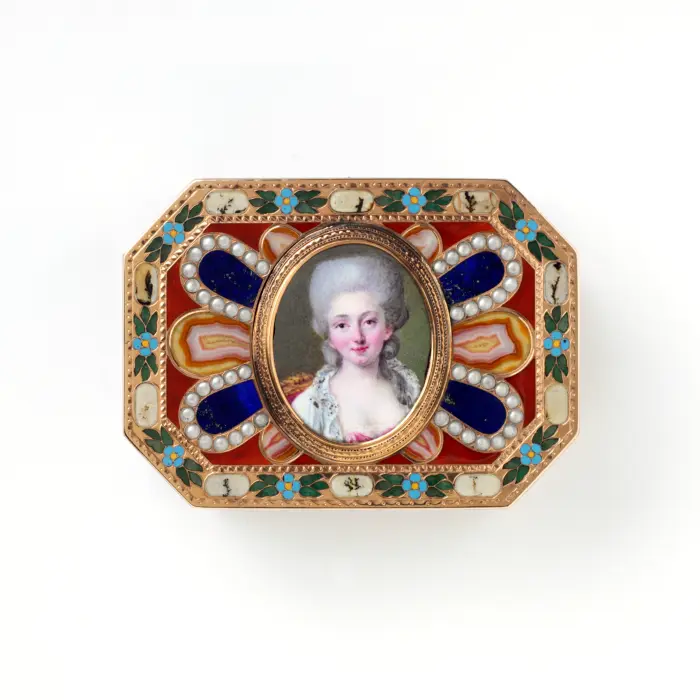
Neuber designed “The Breteuil Table” and small gold boxes in which Saxon stones were individually numbered and set using the “Zellenmosaic” technique, where mineral hardstone mosaics were inlaid between gold. The process is similar to cloisonné enameling.As an avid amateur scientist, Neuber studied Saxon hardstones in local quarries that he rented. According to Sotheby’s, he often combined imported hardstones such as Egyptian porphyry and lapis lazuli with local hardstones, such as agate from Schlottwitz, just south of Dresden. Neuber also often applied a thin layer of colored cement to the hardstone to enhance its natural color.
Two of Neuber’s hardstone masterpieces at the Rijksmuseum in Amsterdam demonstrate the goldsmith’s virtuosity in design and execution.
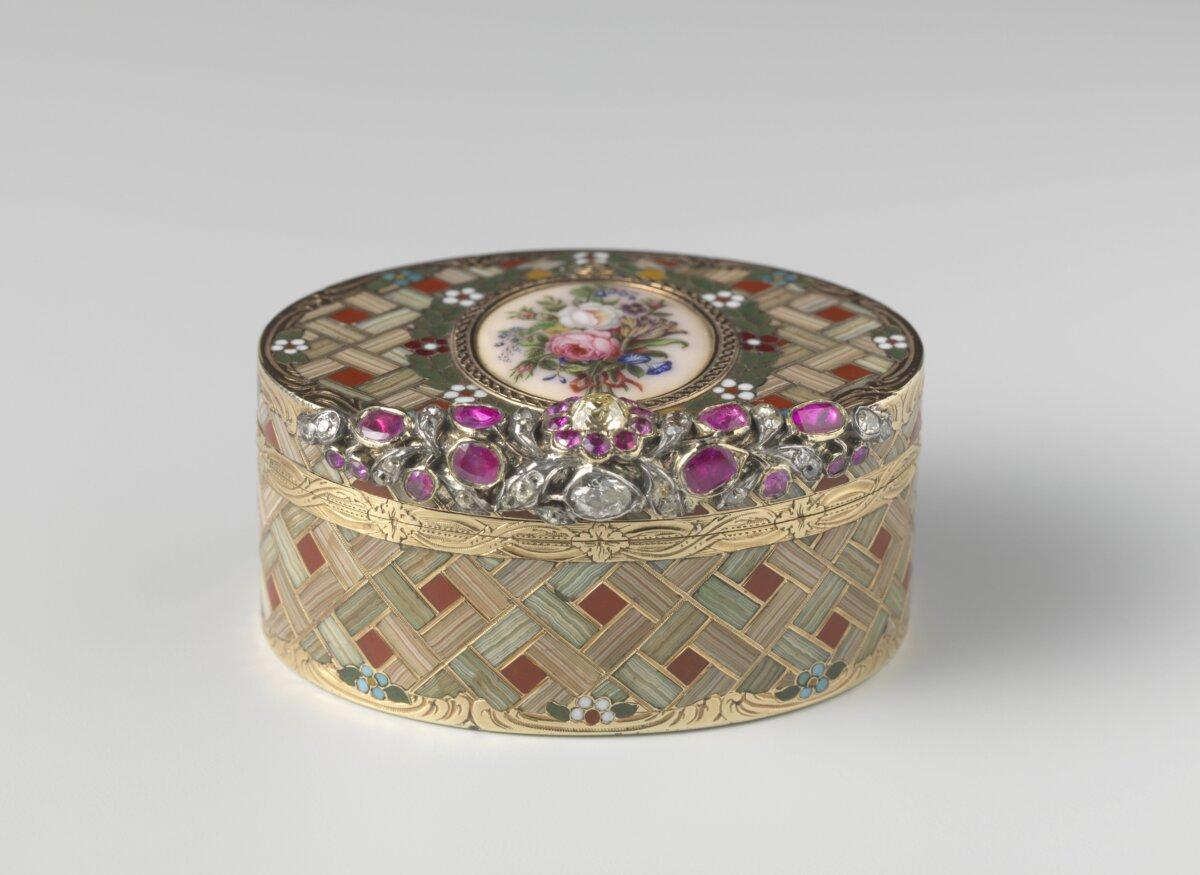
Snuffbox, 1770, by Johann Christian Neuber. Gold inlaid with banded agate and carnelian mosaic, enamel, rubies, and diamonds; 1 3/8 inches by 2 1/2 inches by 2 inches. Rijksmuseum, Amsterdam. Public Domain
Around 1770, Neuber crafted an oval snuffbox inlaid with a zellenmosiac of gold, banded agate, and carnelian that mimicked wickerwork. He inlaid the center of the lid with an oval-shaped enamel bouquet in a gold frame, and he embellished the top edge on one side of the lid with a festoon of rubies and diamonds.
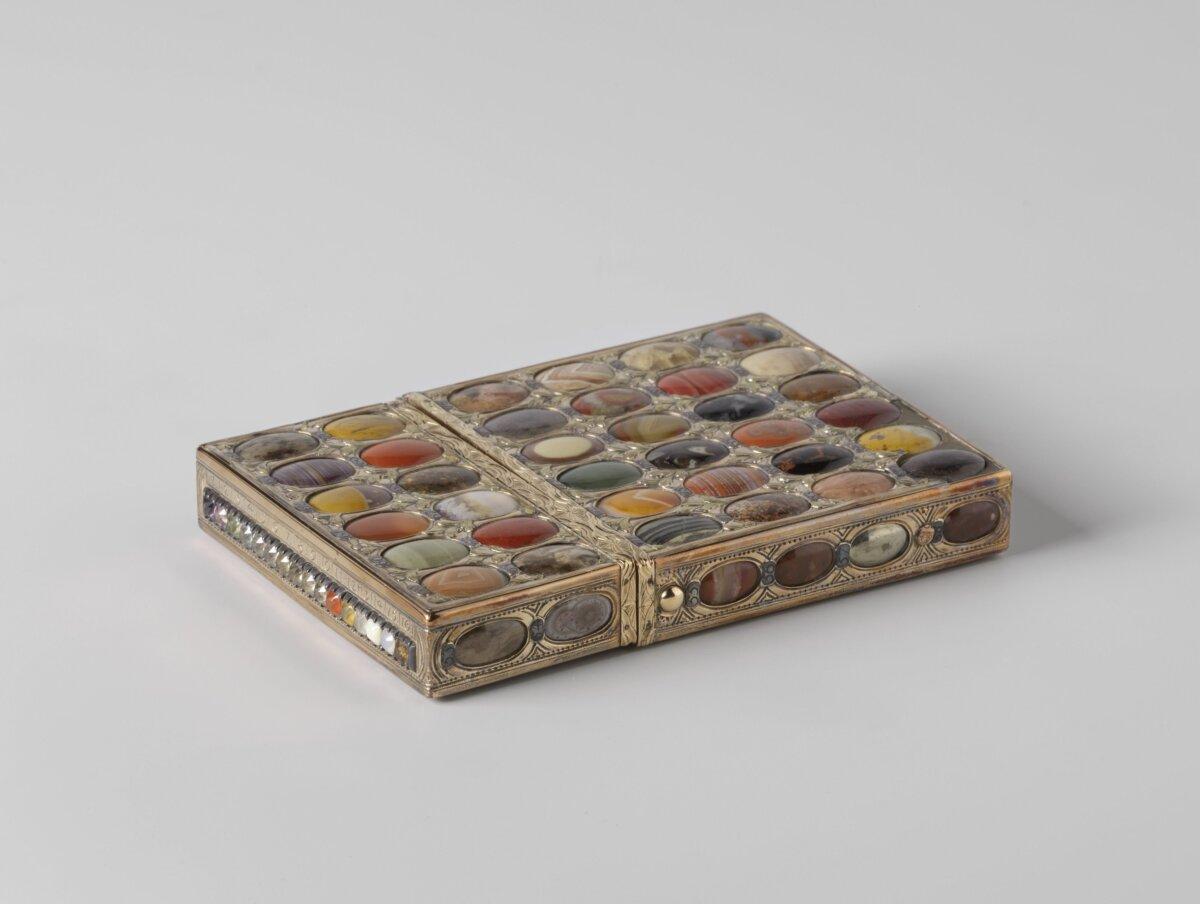
Case, circa 1770, by Johann Christian Neuber. Gold inlaid with Saxon hardstones; 3 1/2 inches by 2 3/8 inches by 3/8 inch. Rijksmuseum, Amsterdam. Public Domain
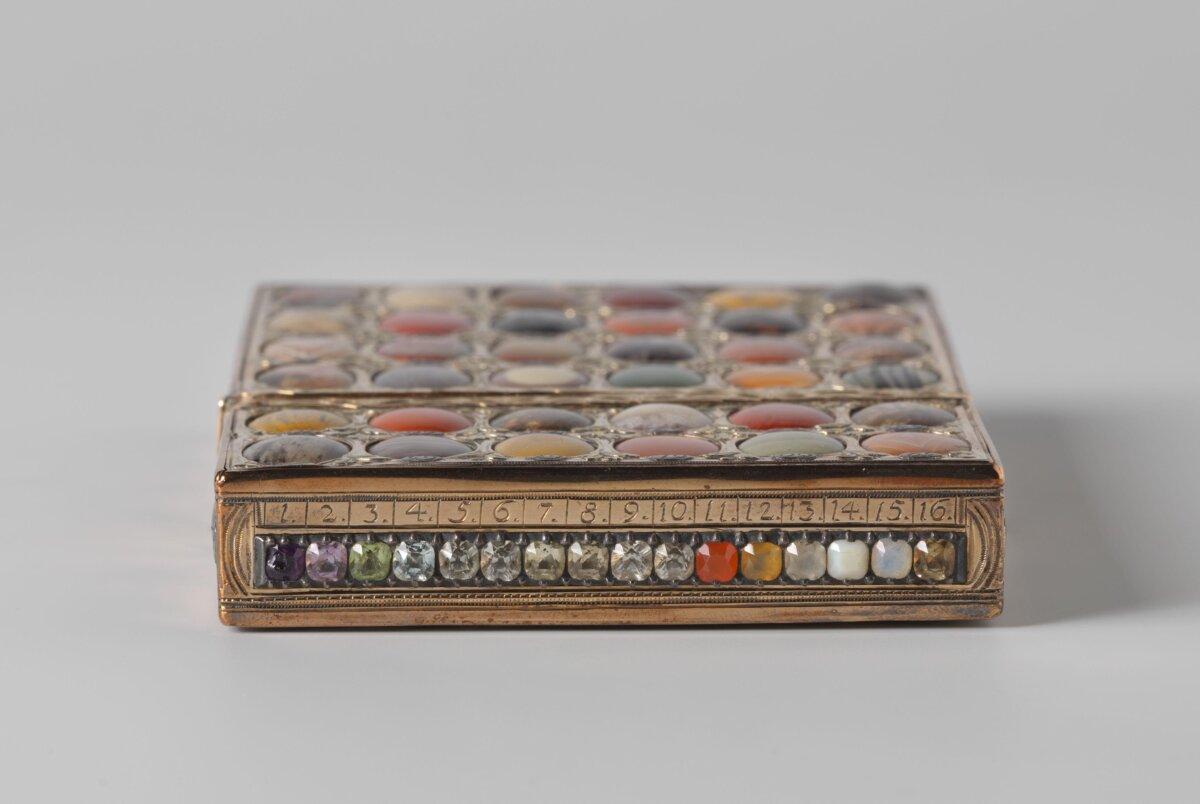
A closeup detail of a case, circa 1770, by Johann Christian Neuber. Gold inlaid with Saxon hardstones; 3 1/2 inches by 2 3/8 inches by 3/8 inch. Rijksmuseum, Amsterdam. Public Domain
Around the same time, he inlaid a rectangular gold case with hundreds of oval-shaped Saxon hardstones on each face. He engraved a number above each hardstone and cataloged it in a now-lost booklet.
Centuries on, Neuber’s hardstone treasures remain admired and highly collectible.
What arts and culture topics would you like us to cover? Please email ideas or feedback to [email protected].