Since the dawn of time, man has sought to better his situation with newer and better technologies. He persists in finding the next discovery which will make life easier than it was before.
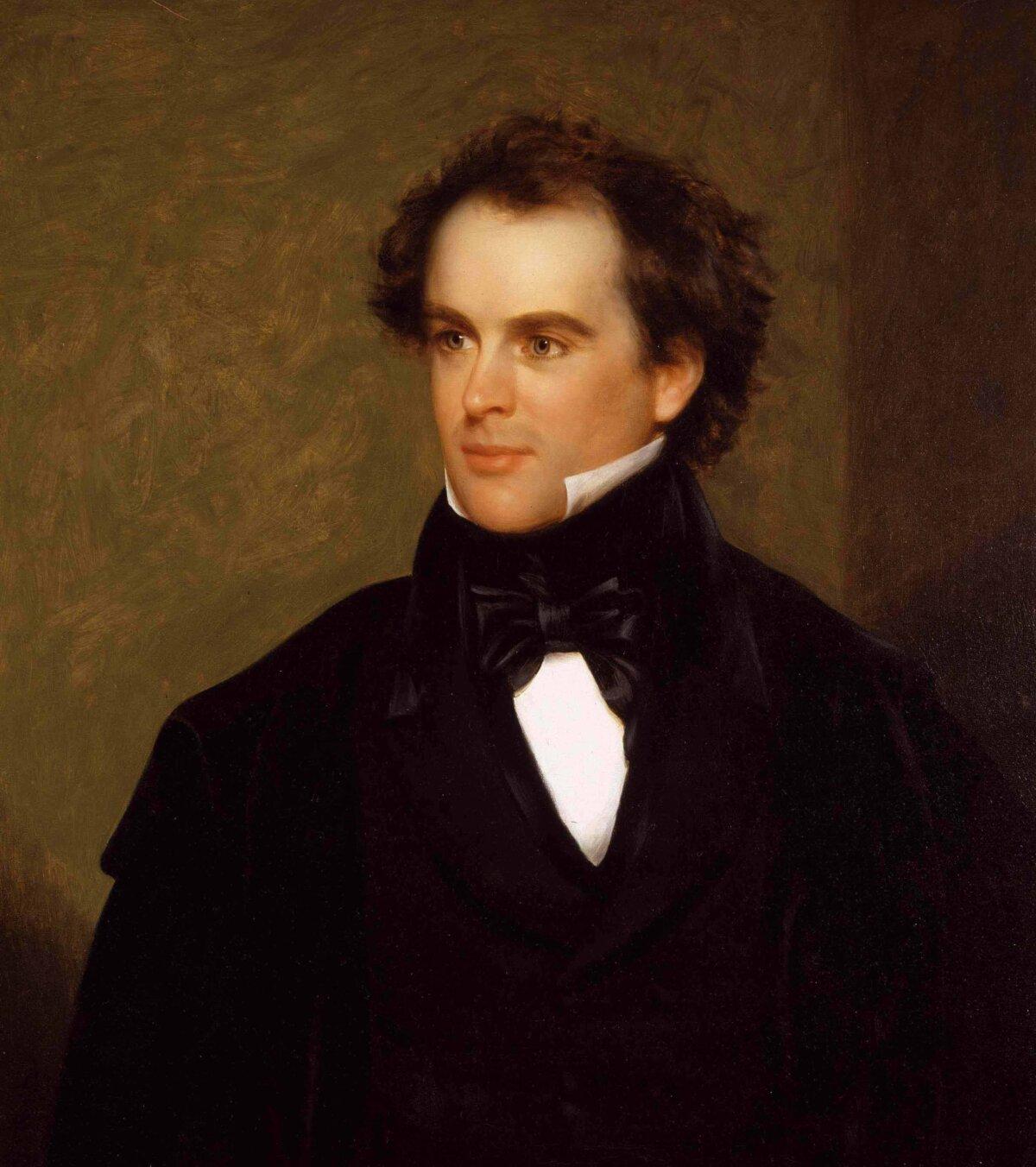
The Birthmark
Aylmer, a most renowned scientist, decides to marry and is lucky enough to win the admiration of Georgiana. Georgiana is remarkably beautiful and, on her left cheek, she is gifted with a small birthmark, which resembles a tiny red hand. Many suitors have looked upon it as a fairy’s handprint and would have gladly kissed it. But, of all the suitors, Aylmer proves the lucky man to win her love.However, this beautiful little red birthmark quickly proves vexatious to Aylmer’s scientific mind. He looks upon it as the one mark which ruins Georgiana’s otherwise perfect beauty. Her birthmark symbolizes, or embodies, “the ineludible gripe in which mortality clutches the highest and purest of earthly mould, degrading them into kindred with the lowest. ... In this manner, selecting it as the symbol of his wife’s liability to sin, sorrow, decay, and death.”
Aylmer asks Georgiana if she has ever thought it possible to remove the birthmark from her cheek. She laughs this off, but then realizes with shame that her husband is in earnest.
Altering Nature
Hearing his wife’s willingness to remove this imperfection, Aylmer says: “Noblest, dearest, tenderest wife ... I feel myself fully competent to render this dear cheek as faultless as its fellow; and then, most beloved, what will be my triumph when I shall have corrected what Nature left imperfect in her fairest work!”

He then sets in motion a variety of experiments. He places Georgiana in a special room, while he and his assistant, Aminadab, conduct experiments from another room. Georgiana feels the effects of some of the experiments, but the mark still remains.
While waiting for her husband’s success, Georgiana discovers more of her husband’s work. He deals with elixirs that have power over the length of one’s life, as well as many other grand feats.
However, though he has contemplated and touched great things, “she [cannot] but observe that his most splendid successes were almost invariably failures, if compared with the ideal at which he aimed.”
Still, she remains undaunted by his failures and accepts the elixir he brings her. She detests the birthmark and only desires its removal.
Through this story, Hawthorne shows how Aylmer longs to change his wife because of something that he views as less than worthy. Rather than rejoicing in the individuality and character which this mark gives his wife, he seeks to alter it and, subsequently, alter her.
Ovid’s words in “Metamorphoses” perfectly describe Aylmer’s character as Hawthorne presents him: “To arts unknown he bends his wits, and alters nature.” Aylmer doesn’t want to heal his wife from a sickness but desires to alter nature itself.
Hawthorne thus argues for the beauty of life and humanity. For a birthmark is not an imperfection, but a blessing, a garnish which enhances character and beauty. Seeming imperfections make humanity what it is: flawed but wonderfully beautiful.