Thomas Bewick (1753–1828) was an artist, illustrator, and wood engraver who sought to reawaken people’s love of nature.
Born in Northumberland, England, Bewick lived with his family at Cherryburn house. On this small farm, his own appreciation of nature was born, as he scampered about, fishing and observing both plants and animals. He especially wished to encourage a love of nature and natural history in the young, so he and his old master, Ralph Beilby, produced a book together called “A General History of Quadrupeds” to do just that.
Reawakening a Love for the Wild Around Us
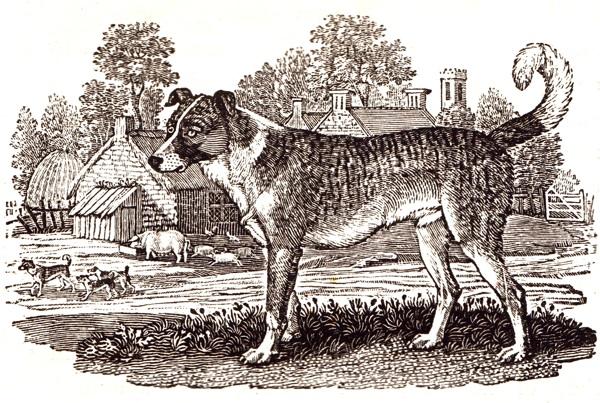
In his quadruped book, Bewick illustrates “The Ban-Dog” (from the 1700s) with a medium-length coat, a pointed face, and a curled tail, placing it in a farm landscape. A succinct description accompanies this picture: “The Ban-Dog is […] lighter, smaller, more active and vigilant, than the Mastiff […] ; its nose is smaller; […] its hair is rougher, and generally of a yellowish-grey, streaked with shades of black or brown colour.”Bewick’s illustration alone is brilliant. He engraved the picture onto a piece of wood using sharp tools to make the minuscule marks and then used that engraving as an ink stamp. He outlined the dog and its surroundings and addws shadows and textures to create depth and perspective. He carefully depicted the dog’s hair lying in different directions, the orientation of its limbs, and even its legs’ tendons. The very vitality of the dog shows through in the carving’s minute strokes.
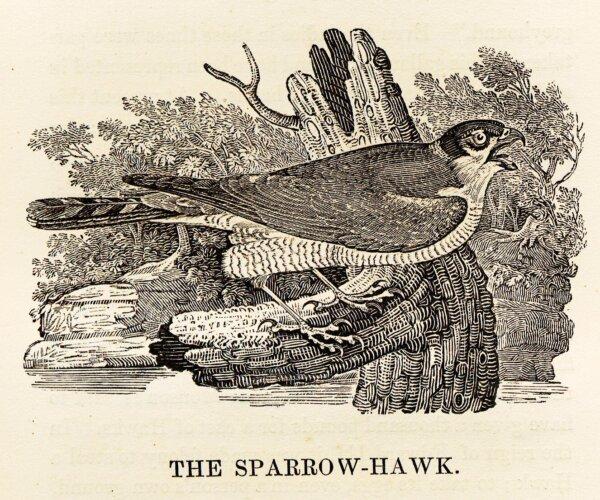
Bewick and Beilby later produced two volumes of “History of British Birds.” In volume one, “Land Birds,” Bewick engraved a wonderful picture, “The Sparrow-Hawk.” The hawk stands perched on a dead tree, surrounded by other trees; its poised to spring off the branch with its mouth open, calling into the air.
Bewick carves lines into the wood at different angles, directions, and depths to portray not only the tree’s bark and shadows, but also the direction of the hawk’s feathers and their minute textures. He truthfully reproduces the falcon’s talons and feet, and even shows light interacting with the hawk’s pupil. Bewick’s illustration brings the sparrow-hawk to life, conveying its wild, hunting spirit.

In volume two, “Water Birds,” Bewick illustrates “The Sclavonian Grebe,” further adding to his skilled reputation. The grebe serenely glides through the water with trees and grass behind it.
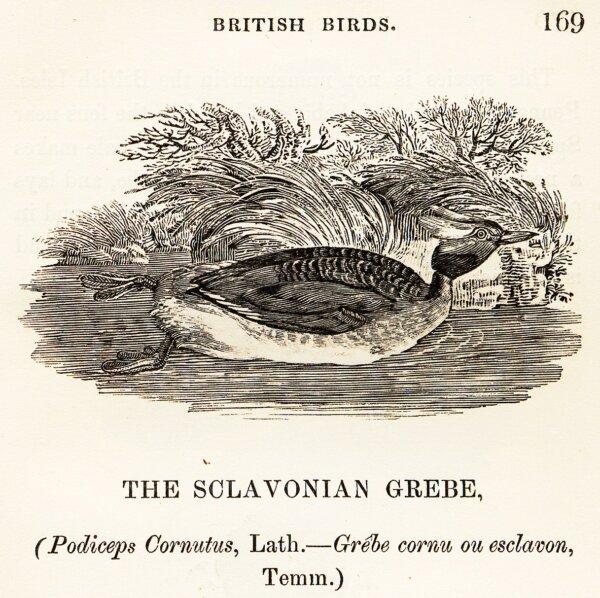
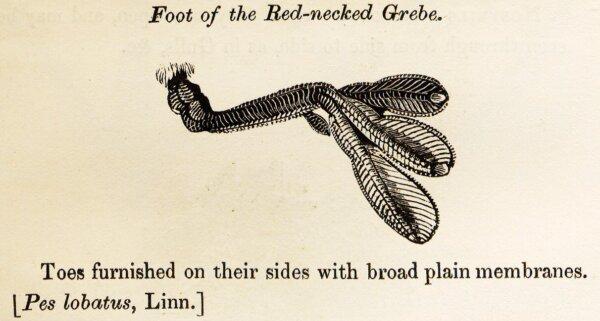
Again, Bewick frames the bird and defines the direction, color, and texture of its feathers with precision. But what stands out most about this illustration is the grebe’s specific foot structure, which Bewick masterfully engraves. The grebe’s foot has four digits which, unlike a duck’s webbed foot, remain individual, while still possessing their own individual “broad plain membranes.” Bewick illustrates this foot and, even in such a small picture, accurately produces the various membranes and their webbed directions.
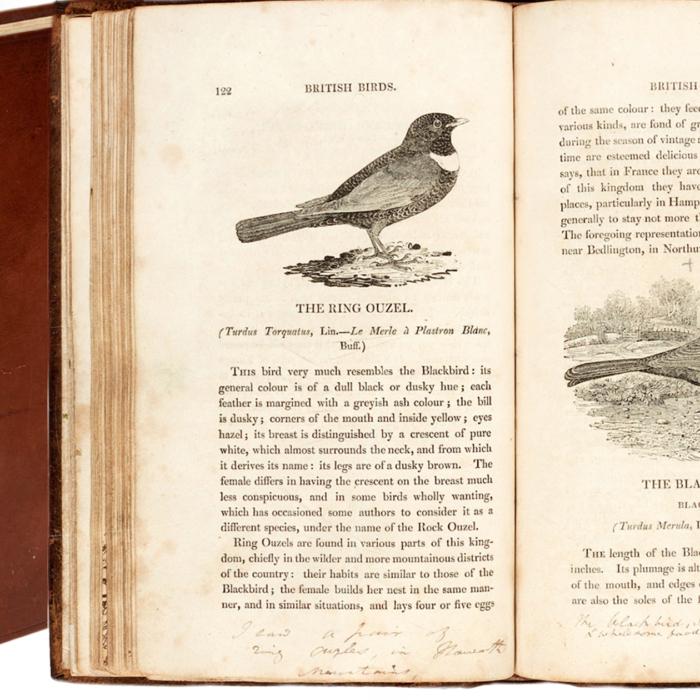
Through his illustrations (specifically those on natural history), Bewick aimed to renew in others, specifically youth, a love for the marvelous world around them. He sought to gift them with the sight to see what Jack London describes in “The Call of the Wild”:
“He was mastered by the sheer surging of life, the tidal wave of being, the perfect joy of each separate muscle, joint, and sinew in that it was everything that was not death, that it was aglow and rampant, expressing itself in movement, flying exultantly under the stars.”