Edmund Dulac (1882–1953) was a French-born artist who moved to London and became one of the most famous artists of the Golden Age of Illustration. He illustrated books and “also produced newspaper caricatures, portraits, theater costume and set designs, bookplates, chocolate box graphics, medals, and postage stamps,” as described by the Norman Rockwell Museum site.
Fairy Tales
One such well-known illustration is “The Princess and the Pea,” an illustration from Andersen’s fairy tale “The Real Princess.” In it, a young lady experiences a restless night as she endures the queen’s tests to prove she is a real princess. She can’t sleep because she feels a pea through the 20 mattresses, proving that she possesses the delicacy of true royalty.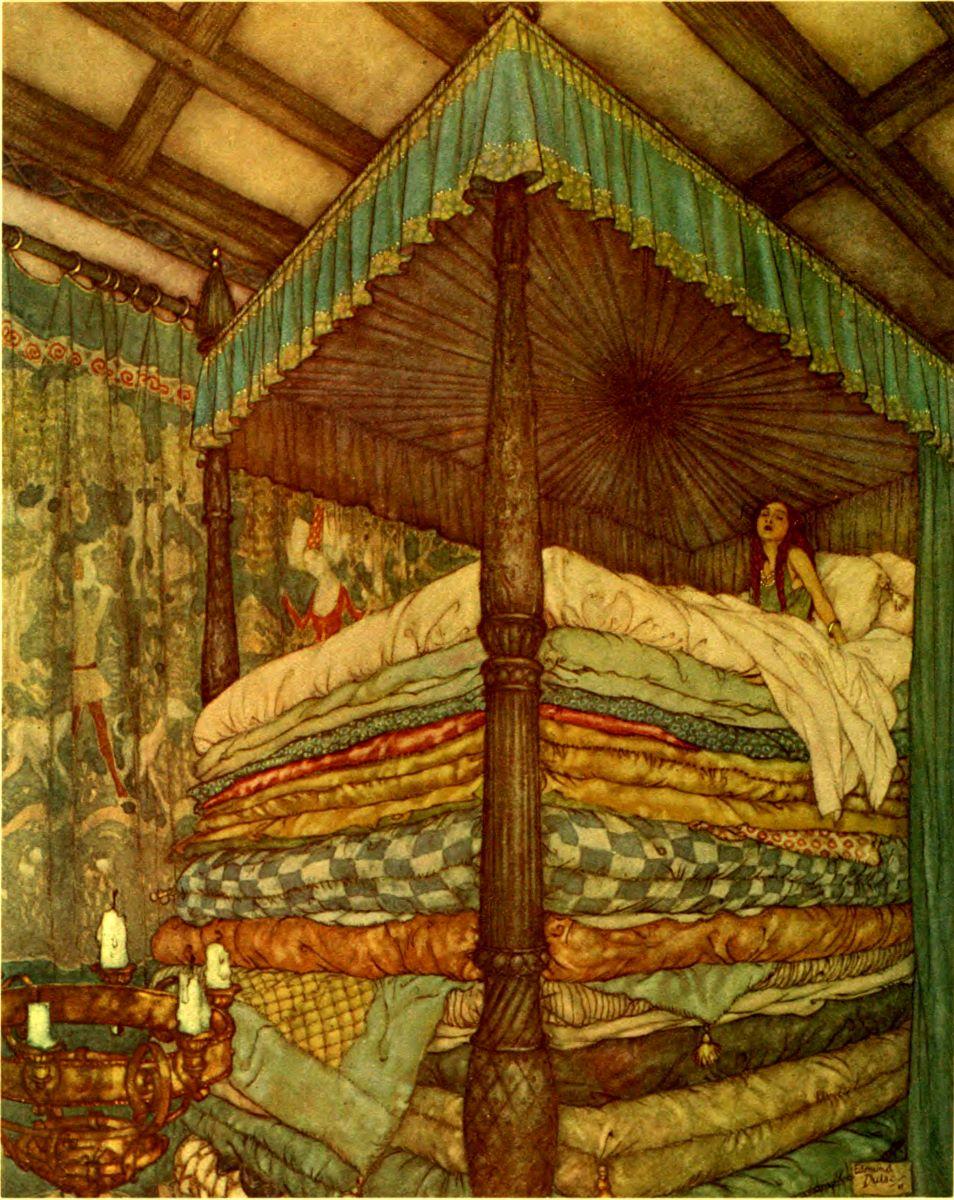
Dulac’s Gift for Color
Another special illustration is “The Snow Queen.” In this picture, Dulac shows the Snow Queen flying through the town at night and spreading frost and snow wherever she goes.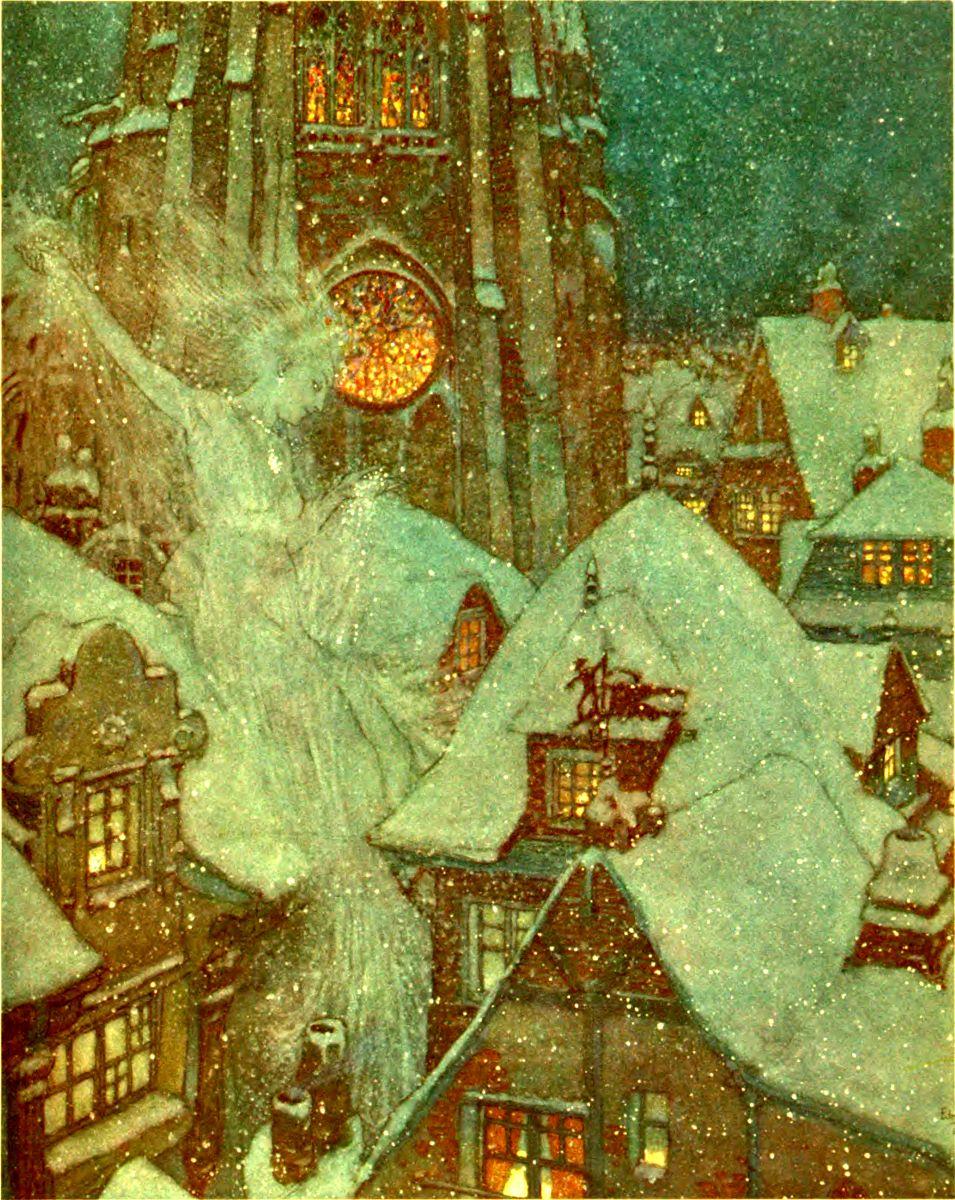
Dulac perfectly portrays the nighttime, snow-covered town, with its houses disappearing in the distance and the Gothic cathedral thrusting upwards.
Once again, the colors make this picture hauntingly beautiful. Dulac employs blues and grays to depict the night scene, but sprinkles the picture with yellows and oranges, as light shines from the cathedral’s and houses’ windows. These golden gleams shine magically in the dark night.
Yet nothing is more magical than the Snow Queen herself. In light blues, grays, and whites, Dulac delicately illustrated the Snow Queen with wispy, flying hair, fairy-like robes, and elegant features. She has a necklace and earrings of pure white, her eyes possess a white, silvery shine, and she pours from her hands a cluster of snowflakes, which fall below her. Much like the yellows and oranges, these small specks of white stand out against the dark night, granting the readers a glimpse of the ethereal Snow Queen scattering her magic abroad.
Dulac’s illustrations are characterized by his wonderful use of colors. These shine from the page and transform on the page into glowing, fantastical masterpieces.
L.M. Montgomery’s words from “Anne of Green Gables” captures the power of Dulac’s colors in his pictures: “I love bright red drinks, don’t you? They taste twice as good as any other color.” Just as Anne Shirley more thoroughly enjoys a drink that’s “bright red,” Dulac’s illustrations glow with twice the magic because of his colors. In using bright, glowing hues, Dulac encouraged the readers to turn to the world with eyes wondering at the beauty and magic around them.