American illustrator, muralist, and painter N.C. Wyeth (1882–1945) produced art for advertisements and calendars, for various companies, as well as illustrated several books, such as “Treasure Island,” “Robin Hood,” “The Last of the Mohicans,” and many more.
He grew up immersed in nature, on a farm near the famous Walden Pond, where he enjoyed hunting, fishing, and other outdoor activities. Showing an aptitude for art, he attended school at Massachusetts Normal Art School and then studied under the famous illustrator Howard Pyle.
The Landscape
In 1940, Wyeth illustrated “Heidi” by Johanna Spyri, which follows the young girl as she moves to the Swiss Alps to live with her grandfather. Far above civilization, among the unforgiving mountains, she makes friends, finds a home, and thrives.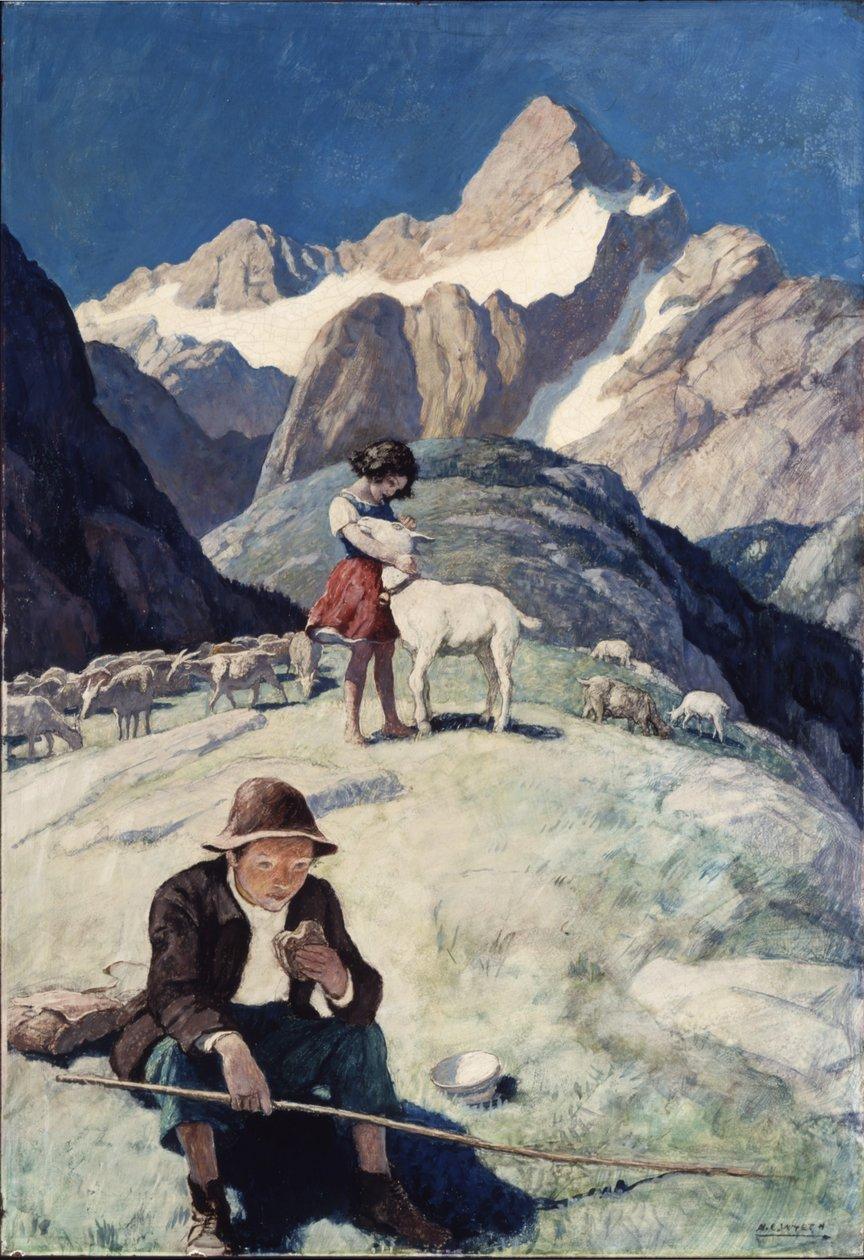
In one particular illustration for “Heidi,” Wyeth illustrates Heidi and the shepherd boy, Peter, high on a mountainside with a herd of goats. Peter sits eating his meal, while Heidi stands in the middle ground, petting a goat.
Wyeth uses rough shapes and dull colors in this picture to demonstrate the harsh Alpine landscape: windswept grass that isn’t very green, gray slopes covered in snow, and dark shadows framing this harsh world. Even Peter’s clothing is dark and dull, demonstrating his connection to the environment in which he grew up.
Enveloped by Nature
In 1911, Wyeth illustrated his first book, Robert Louis Stevenson’s “Treasure Island.” In this story, young Jim Hawkins must deal with Long John Silver and his pirate gang as he embarks on a quest for buried treasure.
In his illustration, “The Hostage,” Wyeth shows Long John Silver pulling Jim along by a rope tied around his waist. Jim is Silver’s hostage as they trek across the island to find the buried treasure.
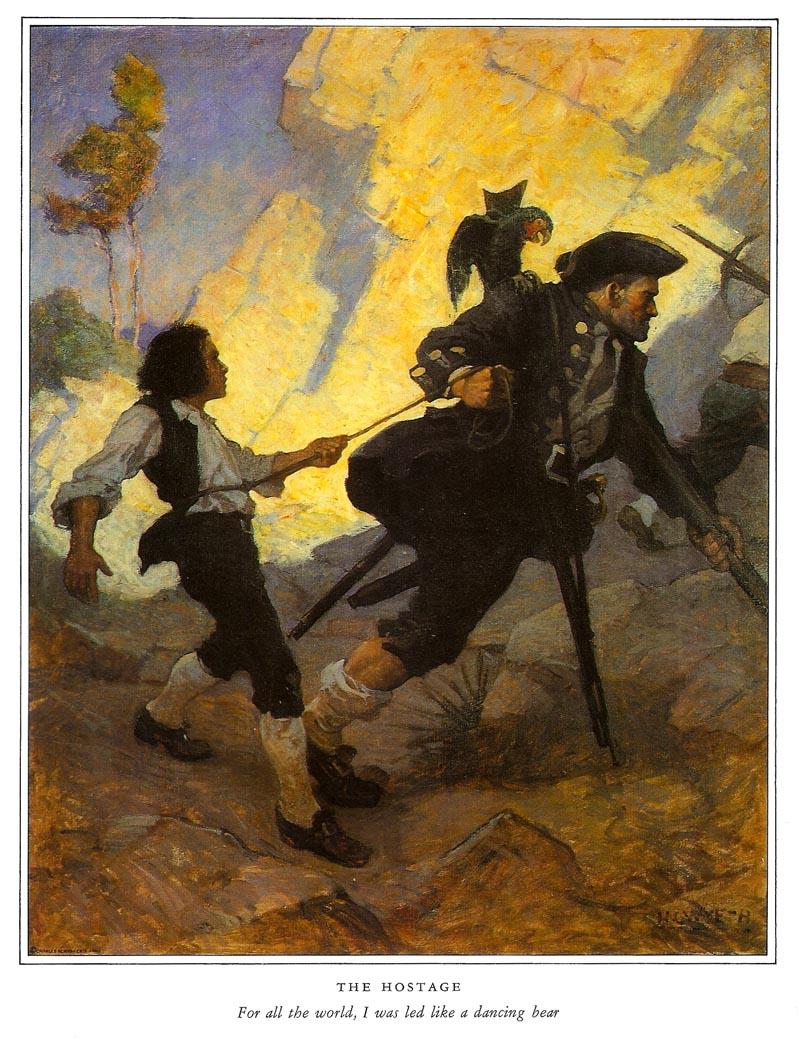
Wyeth conveys the rough, foreign island with yellows, oranges, browns, and tans, while one tree and bush on the left represent the only green in the picture. The landscape is difficult and tall rocks jut up angularly in the background, adding to the barrenness of the island.
Wyeth’s genius shines forth in the characters. For, as Silver strides forward, his body parallels the angle of the harsh, yellow rocks in the background. Silver’s savage desire for the treasure mirrors the island’s merciless environment. Jim, on the other hand, aligns with and mirrors the green tree behind him. His figure stands in contrast to the island and Silver, representing his youthful hope and goodness struggling against the pirate’s cruelty.
Through his illustrations, Wyeth brings the readers into the heart of not only the story but also nature itself. Having developed this love for the natural world from a young age, Wyeth understood nature—what it looked and felt like.
Wyeth’s illustrations create an active mirror in which the characters’ natures are magnified by the landscape around them. The characters and the landscape become one, presenting a living, breathing picture in which the emotion is driven forward through cohesive, emotional expression.