PHOENIX—What does a rock formation in New Mexico have to do with an old abbey in France? It’s not the premise of a paperback novel, but a photography exhibit at Phoenix Art Museum.
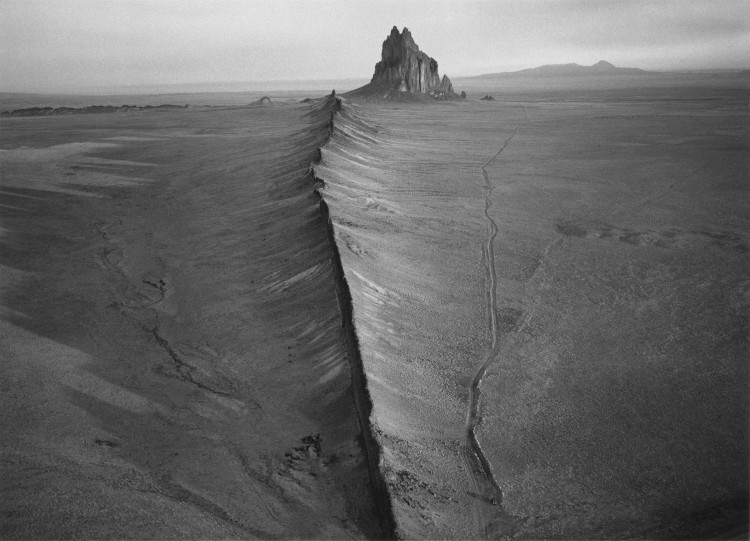
The rock formation, known as Shiprock, sharply juts out of the flat desert sands high as if touching the sky. Mont St. Michel, which dates back to the 8th century, sharply juts out of the flat sands and tidal waters that periodically make it an island. It similarly reaches high as if touching the sky. That is only where the similarities begin. The similarities between the two locations are explored through 80 black and white photographs skillfully executed by William Clift and on exhibit now through April 7.
Imagery takes center stage in the exhibit. The photographs are unadorned by descriptions and are only accompanied by two explanatory panels.
Following along the wall of the exhibit, we see photographs of the sublime scene of Shiprock standing nobly after withstanding tens of millions of years of pressure and changes from nature’s forces. We see the rock close up, far away, and in between. Then, only a mere shadow of the monolith remains. Next, another shadow. Soon we find that between the monolithic shadows we have transitioned around the world to Mont St. Michel and we are greeted with the beauty of the abbey’s Romanesque architecture and soaring spires.
While not easily laid out for viewers with side-by-side comparisons, it becomes clear that the similarities run deep in these locations.