Before the communists, the study of Chinese history was traditionally quite profound. It mapped out a detailed life cycle of an empire, or dynasty, like the life of an organism.
It begins when a great hero emerges, gains military victory, and begins the new era—like a baby being painfully then joyously born. The population increases, culture flourishes, prosperity abounds, and the empire reaches its most healthy period of development—like a person in his late teens to 30s. But, as they say, all good things must come to an end. Next, corruption among officials emerges and spreads—wrinkles and gray hair. Then, punishment from heaven comes in the form of droughts, earthquakes, or floods—health problems and diseases. Then rebellions and civil war—the death throes. Finally, a new hero emerges and begins a new era—the offspring replaces the deceased parent.
A healthy empire cycle lasts an average of 250 years. That’s the figure I noticed in my study of history and that is also what Sir John Bagot Glubb stated in his work “The Fate of Empires & Search for Survival,” published in 1978. This, of course, is interesting because this July 4 we will find ourselves celebrating America’s 250th birthday.
Are we at the end of the cycle? There are indeed signs: endlessly skyrocketing national debt, the COVID-19 pandemic that devastated the economy, the legalization of abortion and marijuana, the increase in suicides, the open rioting and disregard for the law by authorities in various areas, the stagnant birth rate, etc.
However, in all of these cases one might draw some examples from American history to counter them—one might ask, “Aren’t we better off now in 2026 than in 1926 or 1826?” The changes from modern technology and nuclear weapons also complicate simplistic comparisons.
Nonetheless, if we turn our gaze to arts and culture, the cycle comes into focus with frightening clarity. Look at the painting “Washington Crossing the Delaware” (1851) by Emanuel Leutze. This extraordinary work captured the spirit of the early, healthy period of America. Now look at the top-selling American painting in the past 10 years, Jean-Michel Basquiat’s untitled face-shaped scribbles, known as his skull painting (1982).
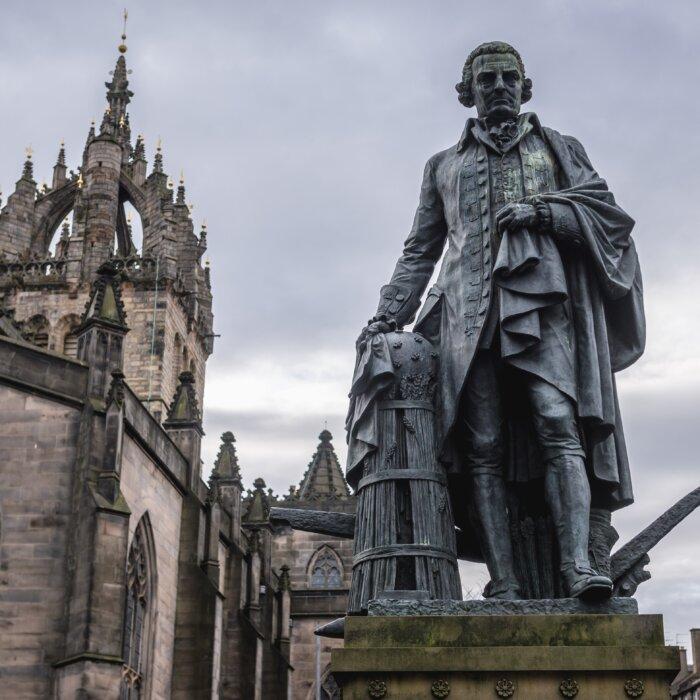
Compare the solemn and majestic Lincoln Memorial statue (1922) in white marble by Daniel Chester French with the top-selling sculpture of our day: the balloon-ish “Rabbit” (1986) of sculptor Jeff Koons.
In Washington, compare the grand classical architecture of the U.S. Capitol (1826) with the Robert C. Weaver Federal Building’s (1968) brutalist architecture—called brutalist for its exposed concrete and stark geometric shapes.
Tell me not, in mournful numbers, Life is but an empty dream! For the soul is dead that slumbers, And things are not what they seem.
Life is real! Life is earnest! And the grave is not its goal; Dust thou art, to dust returnest Was not spoken of the soul.
Compare it with the poetry of one of the recent U.S. poet laureates, Louise Glück. Her poem “Aboriginal Landscape” (2013) begins:You’re stepping on your father, my mother said, and indeed I was standing exactly in the center of a bed of grass, mown so neatly it could have been my father’s grave, although there was no stone saying so.
You’re stepping on your father, she repeated, louder this time, which began to be strange to me, since she was dead herself; even the doctor had admitted it.
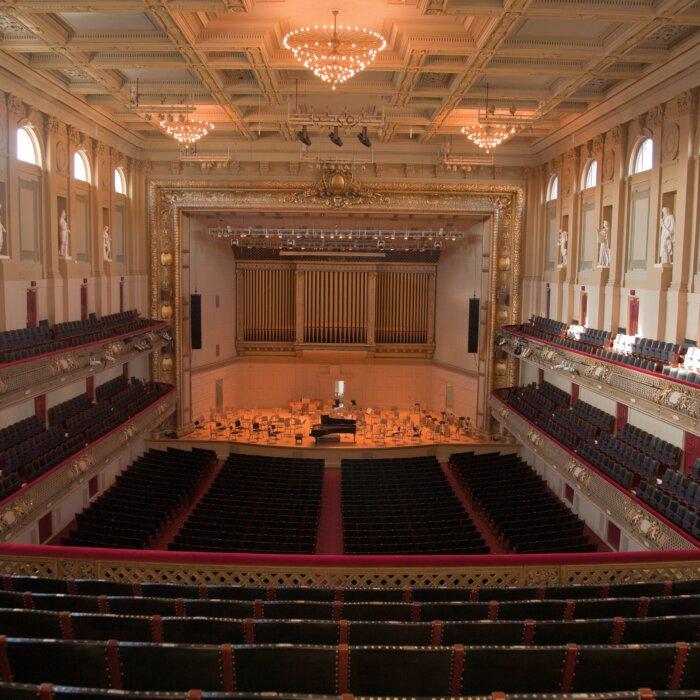
In all these we see decline and decay staring America in the face. After 250 years, inspiring beauty, exquisite skill, and vibrant humanity have been replaced with depressing disorder, lack of skill, and an incoherent muddle. We have lost our way without a doubt and are certainly at the end of something.The new White House ballroom under construction now is a living example of this. It uses neoclassical architecture not only on the outside, but also inside—instead of opting for something more modern and trendy.
The next step in this American Renaissance is participation and engagement. This is not as bad as a civil war at the end of an empire, but it is difficult and requires sacrifice in going out of our way to support good arts and culture. It is not enough to simply recognize that much of the most highly praised American art and culture from the past 60 years or so is poor in quality. We must seek out a new brand of American high art that the next generation may look up to and aspire to. In a word, it is time to make American art great again!