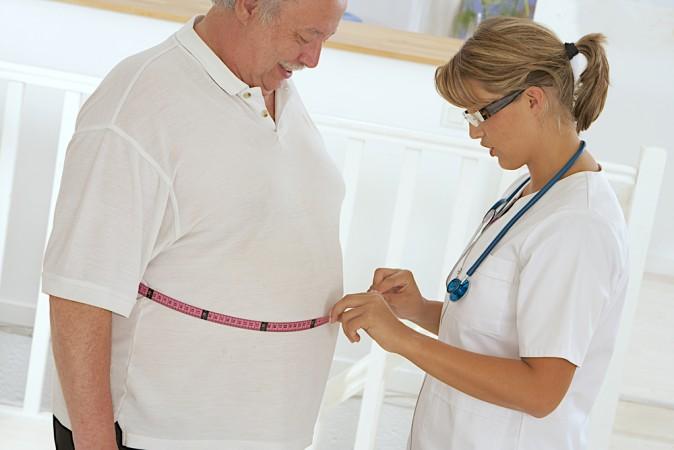
If you – or someone you care about – are embarking on post-holiday weight loss, understanding the body’s physiological responses to excess kilojoule intake could give you the edge for a successful New Year’s resolution.
Weight loss is never easy, but the first days to weeks are easier than what’s to come. That’s because whenever you consume more kilojoules than your body burns – think big, festive feasts and then sitting around for hours with your friends or relatives – your body activates a series of physiological processes that actually help you to reverse excess. I call these physiological processes the “fat brake”, because they put the brakes on fat gain.
The most obvious sign of your fat brake is a reduction in your drive to eat. So in the aftermath of holiday overeating, if you’re attentive to your body’s hunger and satiety signals, you may not feel as drawn to as abundant or as rich foods. To make the most of this effect, it’s important to not eat when you’re not hungry – even if that means eating less than a weight-loss diet’s allowance.
Get Jiggy With It
In addition to reducing your drive to eat, the fat brake can also increase your propensity to be physically active, the amount of energy you use when you are active, or both. These also help to allay fat accumulation.
This effect of the fat brake means the start of a new year is an excellent opportunity to get into physical activity (but be gentle with your body if you’re just starting out). By the time the fat brake wears off, you could be on your way to active new habits.

As well as decreasing the drive to eat and stimulating the amount of energy expended on physical activity, some but not all studies show that excess energy intake – such as over the holiday period – leads to an increase in the amount of energy the body burns while at rest. This is known as your “resting energy expenditure” or “resting metabolic rate”, and the change in it also helps to reverse holiday excesses.
To get a sense of whether your fat brake has activated your resting energy expenditure, consider how much you’re wearing now compared to before the holidays. If you wear lighter clothing or use fewer bed coverings than before festive feasting began, then your resting energy expenditure has likely increased. That’s because body temperature is directly related to resting energy expenditure.
Look for the Waterfall
If you follow your fat brake’s lead by eating less and being active this New Year, then your body will burn off your holiday excesses very efficiently. This will contribute to rapid weight loss, not only due to the loss of fat, but also due to the loss of glycogen.
Whenever you eat more than your immediate needs, such as during the festive season, your body converts some of that food into glucose (a simple sugar) and then into glycogen. This is stored in your muscles and liver to tide you over in times when you’re eating less. Your body can store about half a kilo of glycogen in total. Remaining excesses are stored as fat.
The interesting thing about glycogen is that it holds roughly three times its weight in water. So when you embark on a weight-loss plan, your body uses up its stored glycogen in the first few days, and the water that was packaged with it (easily a litre) is released. Much of it ends up as urine.

So if you notice that you need to relieve yourself more often than usual in the post-holiday period, it’s a sign that you could be on the right track because your body is using up glycogen.
Fast and Furious
With the fat brake reducing your appetite and increasing energy expenditure, and your body using up glycogen, weight loss in the immediate post-holiday period can be the fastest it will ever be – up to several kilos per week. And this can be extremely motivating.
A common misconception is that fast weight loss is bad. Indeed, it is not uncommon to hear recommendations to limit weight loss to half to one kilo per week or less.
But, new research shows that fast weight loss does not result in faster weight regain than gradual weight loss. This is all the more reason to try your hardest with post-holiday weight-loss efforts – to make the most of your body’s natural physiology (the fat brake), which is actually helping you to rapidly reverse holiday weight gain.
Beware the Speed Hump
Once you’ve been losing weight for a while, your body will recognise you are no longer in energy excess, and your fat brake will deactivate. This – and the fact that you will have depleted your body’s glycogen stores by then – will contribute to an increase in your drive to eat and a reduction in your rate of weight loss.
When the fat brake switches off is different for different people; it’s dependent on many factors including how much excess weight you’re carrying, how long you’ve been carrying it for, how much weight you’ve lost, and your genes. For most people, it will likely occur within a couple of weeks (around mid-January), when many people abandon their New Year’s resolution to lose weight.
Be alert but not alarmed about the imminent increase in the amount of effort you'll need to exert to keep losing weight. Accepting this, and the falling rate of weight loss, could mean the difference between giving up your New Year’s resolution, and powering over the mid-January speed hump towards a noticeable outcome.
But be warned – research suggests the fat brake doesn’t stay activated forever, even if you don’t lose any weight. If you don’t act on your body’s signals by eating less and moving more now, it may come to accept the holiday excess as part of the status quo, and you could be stuck with those holiday kilos for the whole year and beyond.
The best weight-loss tip is to act now to reverse energy excess, while your fat brake is activated and the window of opportunity is still open.
One way to help maintain motivation for weight loss is to participate in a clinical weight loss trial. You can locate such trials around the world by clicking here. My team is currently seeking people living in the Sydney metropolitan area for clinical weight loss trials. For more information, please register your interest here, or e-mail us.
Amanda Salis, NHMRC Senior Research Fellow in the Boden Institute of Obesity, Nutrition, Exercise & Eating Disorders, University of Sydney This article was originally published on The Conversation. Read the original article.