Every summer, a parasite called Cyclospora cayetanensis is imported into the United States on fresh produce such as raspberries, leafy greens, and herbs.
What Is Cyclosporiasis?
Cyclosporiasis is an intestinal illness caused by ingesting a microscopic, single-celled parasite, known as Cyclospora cayetanensis. It is a seasonal foodborne infection most commonly contracted by eating fresh, raw produce, such as leafy greens, berries, or herbs, that has been contaminated with trace amounts of infected human feces.Symptoms are not immediate because the parasite needs time to develop and multiply in the intestines before causing illness.
Once inside your body, the parasite burrows into your intestinal lining to reproduce, damaging your gut and causing symptoms such as diarrhea, bloating, nausea, weight loss, and fatigue from nutrient loss.
How People Get Infected
Person-to-person transmission of cyclosporiasis is unlikely. Most infections occur through contaminated food or water.“After being shed in stool by an infected person, the parasite takes several days to weeks before it becomes infectious to others,” Dr. Luis Marcos, an infectious disease specialist at Stony Brook Medicine in New York, told The Epoch Times.
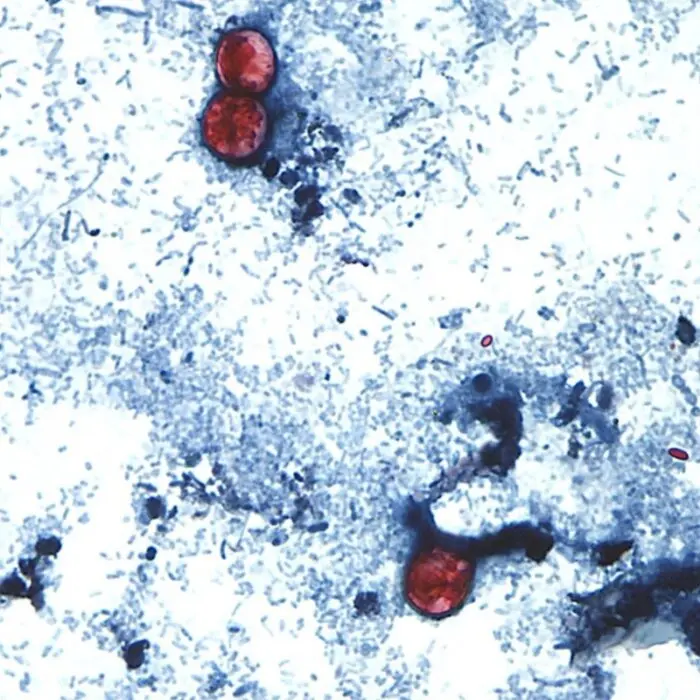

Not everyone infected with Cyclospora will experience symptoms.
Norovirus vs. Cyclosporiasis
The two illnesses are easy to confuse but behave differently. Both norovirus and cyclosporiasis cause infections through the fecal-to-oral route and can cause gastrointestinal symptoms including diarrhea, nausea, and vomiting.Diagnosis and Treatment
Diagnosis of cyclosporiasis is typically made through a stool test, but testing is usually only done if specifically requested by a healthcare provider. So if you suspect Cyclospora, ask directly.Early evaluation is especially important if symptoms are severe or persistent, or if they occur in older adults, young children, pregnant women, or people with weakened immune systems, Marcos said.
“Prompt diagnosis and treatment can shorten the illness and help prevent complications,” he said.
Treatment mostly involves staying well hydrated to prevent dehydration caused by diarrhea.
Most people recover without medication—but if testing confirms Cyclospora infection, doctors may prescribe the antibiotic trimethoprim-sulfamethoxazole (TMP-SMX), also known as Bactrim and Septra. “It is highly effective, and most people improve within a few days of starting therapy,” Marcos said. “The medication is generally well tolerated, although some people may experience nausea, vomiting, or mild skin rash.”
How to Protect Yourself
Good hand hygiene is key to preventing food-related illnesses.Wash your hands thoroughly with warm water and soap for at least 20 seconds, especially when preparing food or before eating. However, the best way to reduce your risk of cyclosporiasis is to wash fruits and vegetables thoroughly under running water before eating them, Marcos said.
- Rinse all fruits and vegetables under clean, running water before eating, cutting, or cooking. Avoid soaking produce in a basin of water.
- Remove any damaged or bruised parts of fruits and vegetables before eating.
- Use a scrub to brush on firm foods such as melons and cucumbers.
- Discard outer leaves of lettuce and wash leaves individually. For basil and cilantro, separate leaves and wash them thoroughly.
- For onions, trim the root end, remove the outer layer, and wash thoroughly.
- For hard-to-clean items such as raspberries, swish them in a mixture of three parts water to one part white vinegar for a minute, then drain and rinse well. Alternatively, consider using frozen berries.