A widely available vitamin may help slow one of the slowest killers in cardiology: calcium buildup in the arteries.
Vitamin K Modestly Curbs Coronary Atherosclerosis
The findings of the randomized controlled trial, recently published in JAMA Cardiology, suggest that taking vitamin K2 in the form of menaquinone-7 (MK-7) for two years may slow the progression of calcium buildup in the arteries of patients with existing heart disease.The trial was conducted across two hospitals in the Netherlands from 2012 to 2022 and involved 180 patients showing signs of artery calcium deposits, a relatively small sample that researchers say will need to be replicated in larger studies before any broad conclusions can be drawn. Patients were randomly assigned to receive either a daily dose of 360 micrograms of MK-7 or a placebo.
Those taking MK-7 experienced less increase in arterial calcium. Calcium buildup in the arteries makes them stiff and hard. A lower increase means the treatment helped slow down this process compared to the placebo group.
The rate at which calcium scores increased was about 19 units less per year in the MK-7 group compared with the placebo group. This means that the calcium buildup was slowed by roughly 9 percent over the two-year period. The amount of calcium in the arteries increased by about 2 milligrams less in the treatment group.

“The present data support our hypothesis that supplementation with MK-7 during a period of two years attenuates coronary artery calcification in individuals with symptomatic CAD [coronary artery disease],” the study authors wrote.
However, the effects of MK-7 appeared to be limited to slowing down overall progression rather than preventing calcification entirely, since the proportion of patients who experienced rapid calcification of the arteries was similar across both groups.
Why It May Help
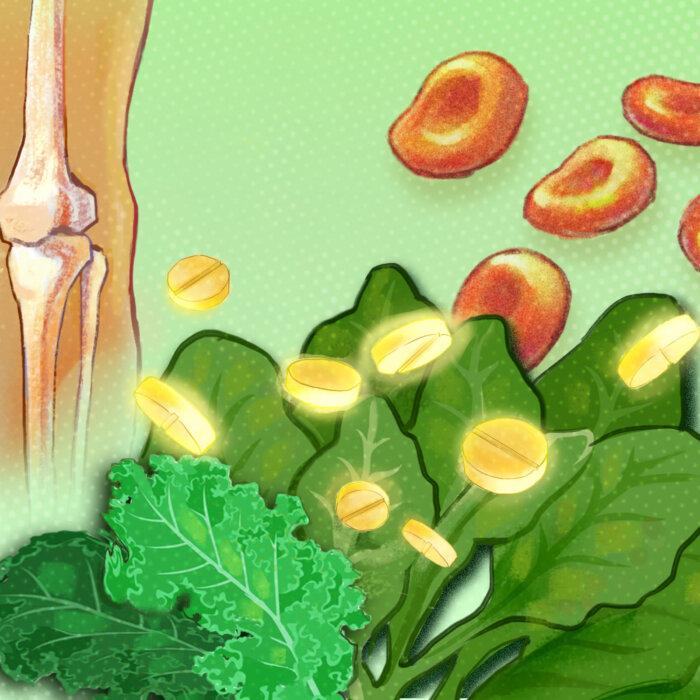
MK-7 is a highly bioavailable form of vitamin K2, a nutrient that directs calcium to the bones rather than the blood vessels.Despite these promising findings, the clinical significance remains uncertain. The modest reduction in calcium buildup did not lead to observable differences in the severity of artery narrowing or the number of affected segments over the study period.
Critically, the trial did not measure actual heart attack or stroke rates, so it remains unclear whether slowing calcium accumulation will translate into fewer cardiovascular events. Calcium deposits in the arteries are a well-established predictor of future heart attacks and other cardiovascular problems, which is why researchers consider the imaging findings worth following up on—even though, on their own, they don’t prove a reduction in actual cardiac events.
The findings are “promising,” said Dr. Sirisha Vadali, a board-certified noninvasive cardiologist and advanced lipidologist at HonorHealth, who was not involved in the trial, in an interview with The Epoch Times.
Her hesitation comes down to what the trial actually measured. Researchers tracked imaging findings—calcium scores on CT scans—rather than hard outcomes such as heart attacks, strokes, or cardiovascular death.
“Although coronary artery calcium is an important marker of cardiovascular risk, we still need larger studies to determine whether slowing calcification actually translates into better long-term outcomes for patients,” Vadali said.
“While supplements may play a role, cardiovascular prevention requires a holistic approach, and lifestyle modification should remain the foundation,” she added.
A Key Risk: The Warfarin Interaction
Before patients consider this supplement, cardiologists say one safety issue deserves attention up front: the interaction between vitamin K2 (menaquinone) and the blood thinner warfarin (Coumadin).Warfarin works by blocking the effect of vitamin K, and vitamin K2 supplementation can partially reverse warfarin’s blood-thinning effect, potentially increasing the risk of blood clots, Dr. Meera D. Kondapaneni, associate professor of medicine and an interventional cardiologist at MetroHealth in Cleveland, who was not involved in the trial, told The Epoch Times.
“Patients taking warfarin should therefore avoid starting vitamin K2 supplements without discussing it with their physician,” Kondapaneni advised.
“In contrast, vitamin K2 does not appear to interfere with the blood-thinning or anticoagulant effects of the direct oral anticoagulants, including apixaban (Eliquis), rivaroxaban (Xarelto), and dabigatran (Pradaxa),” Kondapaneni added.
For otherwise healthy people, she noted, vitamin K2 has generally been shown to be safe, even at relatively high doses, and no clearly defined upper safety limit has been established.
“However, as with any supplement, long-term safety data remain more limited than for commonly prescribed medications.”