




The connection between cancer and emotional states was observed nearly 2000 years ago by the physician Galen who noted that “cheerful women were less prone to cancer than were women of a depressed nature,” according to Dr. O. Carl Simonton in his book “Getting Well Again.” By the late 1960s, Dr. Herbert Benson, a cardiologist at Harvard, and Jon Kabat-Zinn, a molecular biologist, each separately noted numerous health benefits among patients who practiced meditation.
But in the 1970s, Simonton took the mind-body connection a step further. As a radiation oncologist, he noticed that some of his patients with serious diagnoses would live and thrive, while others with more manageable cancers declined rapidly. He surmised, like Galen before him, that psychological and emotional factors were at work, with the most pervasive and dangerous among them being a sense of hopelessness.
After researching the results of tests conducted in the late 1960s by Robert Rosenthal and his colleagues on “expectancy effects” (think self-fulfilling prophecies), Simonton developed specific protocols to give patients a sense of control and optimism. He guided patients through visualization sessions to mobilize T-cells (a type of white blood cell) and taught them relaxation techniques and simple meditation.
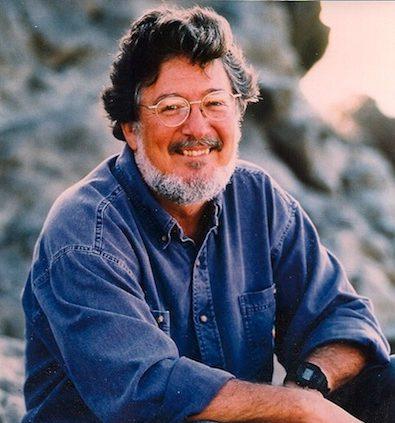
Many responded very well to the approach. Soon, patients from all over sought Simonton’s help. He developed a stand-alone retreat week where patients could learn the tools and techniques and then return home to continue with their medical treatments.
Much of the medical community remained doubtful about Simonton’s results. Since a full 30 percent of all test subjects exhibit the placebo effect automatically, many chalked Simonton’s results up to nothing more than that.
“Some of it may be tied into the placebo effect, yes. But it’s more than just the placebo effect; it’s a focused, directed approach,” said Dr. Renato Monaco, a practicing psychiatrist in Newport Beach, California. Monaco met Simonton many years ago along with one of Simonton’s patients who'd recently been diagnosed with a terminal, stage-4 brain tumor.
“The patient was a singer. Every other doctor had given up on him,” says Monaco, “But I ran into the patient again 10 years later. I was amazed. He sang for us.”
While the medical community agrees that there is power in thought and emotions, most doctors still don’t understand how the biochemistry of human emotions and thoughts work.
How does a self-fulfilling prophecy work on the bio-energetic level? No one can pinpoint the precise mechanisms or pathways that allow focused visualization of an army of T-cells gobbling up cancer cells—in whatever way one imagines that for him or herself—to actually affect that very process. But we do know our thoughts and emotions can enhance or hinder the immune system and other healing systems in the body.
“Focused intention takes place in the frontal lobe, the executive center of the brain,” said Monaco. “As long as the other centers in the brain, like the cingulate cortex or the basil ganglia and the deep limbic system don’t interfere, it’s possible to harness the healing power of thought."
Continuous angry, fearful, or self-penalizing thoughts and feelings—what some refer to as “ruminations”—are known to be harmful. Most patients can point to a traumatic event in their life that occurred approximately 18 months before developing cancer, or any other serious disease. “Rumination leads to ruination,” according to Monaco. Among other things, the Simonton method works to alleviate the negative emotions while bolstering the positive ones.
It should be noted, however, that the Simonton method also relies heavily on the support of another caring person—a spouse, partner, or friend—to lend encouragement. The idea is that harmony of mind and body extend beyond the individual to our relationships. The ideal path to healing fosters a harmonious environment both within and without.
Today, Simonton is recognized as a pioneer in mind-body medicine. The Simonton Center’s approach to fighting cancer combines an emotional intervention with medical methods and psychological treatment to create an environment and mentality that support healing.
Karen Simonton, who was married to the doctor for 27 years and worked with him for 22 years before he died in 2009, said the science supporting a mind-body connection has accumulated over the years.“Now, of course, we have much more information about how the brain and our physiology interact,” she said.
“In our household, all health problems were examined,“ she said. ”Everything from the common cold, to skin rash, and cancer has an emotional component to it, and this was always addressed with our children as well.”
Proponents of the method have claimed that patients have a survival rate twice the national norm with many experiencing dramatic remissions or total cures. Skeptics, however, say it’s difficult to draw concrete conclusions concerning efficacy because of the lack of high-quality clinical trials.
The Simonton method aims to prolong survival time and improve quality of life. No data on the safety of this method as a combination of mind-body modalities can be found. But the different modalities have good safety records when used separately, so it stands to reason that when combined they would remain innocuous at the very least and life-saving at the very best.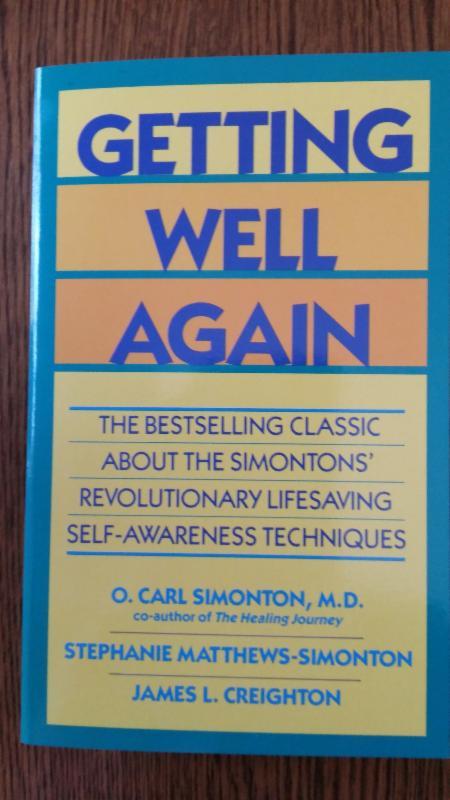
Today, the Simonton method has programs to address other terminal illnesses in addition to cancer. Though the center has been rebuilding since the California wildfires burned their offices to the ground, retreats are still being taught in an area outside of Los Angeles.
“The take away for cancer patients and really anyone facing a serious illness—is that there are many ways we can help ourselves in this journey, many ways we can improve our physical and mental well-being,” said Mrs. Simonton.
“Our body and mind are not just interconnected, they’re literally entangled.”
Joni Ravenna Sussman is a freelance writer specializing in health and wellness. Her articles have appeared in dozens of national and regional publications over the years. She is also a playwright and TV writer. Contact her at [email protected]


