



Breast milk of women in the United States contains fewer health-promoting compounds called carotenoids than that of women in China or Mexico. The reason? Women in the U.S. don’t make fruits and vegetables a big part of their diet.
A new study shows the mean amount of health-promoting compounds known as carotenoids in American women’s breast milk two weeks after giving birth is about 40 percent lower than levels in Chinese women’s milk and about 25 percent lower than levels in Mexican women’s milk.
Carotenoids are plant pigments that potentially play functional roles in human development and are key sources of vitamin A, an essential component of eye health and the immune system.
The carotenoid content of a woman’s breast milk depends on how much fruits and vegetables such as squash, citrus, sweet potatoes, and dark leafy greens she includes in her diet.
More Than Culture
“Evidence is increasing that carotenoids are important for both mothers and infants,” says Mario Ferruzzi, professor of food science and nutrition at Purdue University. “Nursing women should eat fruits and vegetables as recommended in dietary guidelines. As long as your baby is happy with it, don’t exclude bright orange or yellow produce and leafy vegetables from your diet.”

The gap between carotenoid levels in the breast milk of American women compared with those in other countries could be indicative of the lower amount of fruits and vegetables eaten in the US compared with China or Mexico, Ferruzzi says.
“Fruit and vegetable consumption appears to be pretty low across the nation. In general, we are just not consuming the recommended amounts.”
But culture is not alone in influencing eating habits. Socioeconomic factors also play a role.
“If you really want to look at who eats fruits and vegetables, it’s the people who have access to them and can afford them,” Ferruzzi says.
Optimal Nutrition
Breast milk is the preferred food source for babies up to 6 months old because it is a complete source of nutrients as well as antibodies, growth factors, and bioactive components such as carotenoids.
Understanding breast milk’s composition and how it delivers nutrients and other compounds to infants could help guide dietary recommendations for nursing mothers and improve formula and breast milk fortifiers, Ferruzzi says.
“Studying the composition of human milk is one of the best guides we have for determining optimal nutrition intake for infants. This can also help us design formula that functions like human milk and doesn’t just ‘look’ like human milk in terms of content.”
Breast Milk From 3 Cities
For the study in PLOS ONE researchers analyzed the carotenoid and fatty acid composition of breast milk donated by three groups of 20 women—one group in Shanghai, one in Mexico City, and one in Cincinnati—at 2, 4, 13, and 26 weeks after giving birth.
Breast milk from China had the highest levels of lutein—a carotenoid that is key to eye health—at each lactation stage and the highest amount of fatty acids at each stage except 13 weeks.
Possible links between lutein and infants’ visual development and brain health is an area of growing research interest, Ferruzzi says.
Levels of beta-carotene—a carotenoid that can be converted into vitamin A by the body—varied greatly by country and lactation stage but were about 25 percent higher in milk from China and Mexico than the US at two weeks.
More Tomatoes
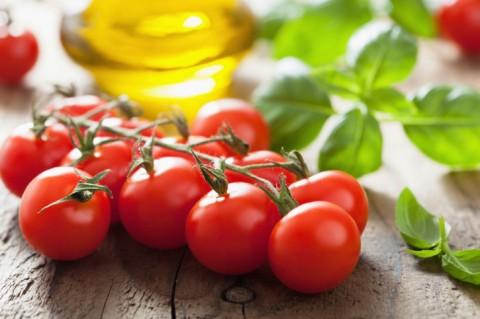
Breast milk from the US consistently contained the highest levels of lycopene, a carotenoid commonly found in tomatoes that may play a role in immunity and protection against inflammatory diseases. Milk from China had the lowest lycopene levels at each lactation stage.
The researchers also analyzed carotenoid levels in the plasma of women and infants in the group from the US. They found that concentrations of carotenoids in milk were strongly correlated to levels in maternal and infant plasma, except for lycopene.
While the participants in the study were from specific cities, the findings are similar to those reported in previous studies of breast milk from other parts of these countries.
Mead Johnson Pediatric Nutrition Institute and the US Department of Agriculture’s National Needs Fellowship funded the work.
This article was previously published by Purdue University. Republished via Futurity.org under Creative Commons License 4.0.


