When most people think of blood, the heart is usually the first thing that comes to mind. Perhaps the liver, if you’ve brushed up on your biology. However, in traditional Chinese medicine (TCM), the stomach has a surprising influence over blood quality and circulation. At first, this might seem counterintuitive—until you realize how closely blood chemistry is tied to what we eat.
Conditions such as anemia, high cholesterol, and general digestive distress often reflect imbalances in diet. The acupoint, Great Upper Hollow (Shang Ju Xu, ST37), is a compelling reminder of the gut-blood connection. Located on the lower leg, it is easily accessible and well-regarded for its ability to address a wide range of health issues.
An Acupoint Anchored in Tradition
Shang Ju Xu was first documented in the “Ling Shu,” one of the earliest classics of acupuncture. It’s a point on the Stomach meridian and plays a key role in regulating qi, the body’s vital energy. That in itself grants it a therapeutic range, especially in addressing gastrointestinal distress.However, what makes Shang Ju Xu particularly significant is its status as one of the Four Sea Points, or special acupoints, that influence systemic functions such as blood, qi, marrow, and nutrition. Shang Ju Xu governs the blood, making it especially helpful for modulating blood circulation throughout the body, with a particular emphasis on the lower limbs.
From a functional standpoint, Shang Ju Xu is often included in protocols to treat acute intestinal issues such as vomiting, diarrhea, and sharp abdominal pain. In colder months, when diarrhea linked to internal cold becomes more common, this point is often recommended for relief. It also holds value in rehabilitation settings, especially for patients experiencing paralysis in the legs following a stroke, due to its ability to invigorate blood and qi in the affected regions.
Clinical Evidence
Modern research supports the therapeutic potential of Shang Ju Xu. In one animal study, rats with ulcerative colitis were treated with electroacupuncture at Shang Ju Xu. The treatment significantly reduced inflammation by lowering IL-1β (a pro-inflammatory marker) and raising IL-4 (an anti-inflammatory marker). These changes were much more pronounced than in rats who received no treatment or stimulation at non-acupoints, suggesting that Shang Ju Xu is effective in shifting the immune response towards healing.In another study involving human patients with severe acute pancreatitis, Shang Ju Xu was paired with Dachangshu (BL25) and combined with standard pharmaceutical treatment. Patients who received electroacupuncture recovered faster, with shorter times to bowel movement, pain relief, and hospital discharge. Blood tests showed improved inflammation markers and lower disease severity scores. Even more striking, fewer patients in the acupuncture group required surgery or emergency room transfers, showing that Shang Ju Xu can be a valuable complement to conventional care.
How to Locate and Stimulate Shang Ju Xu
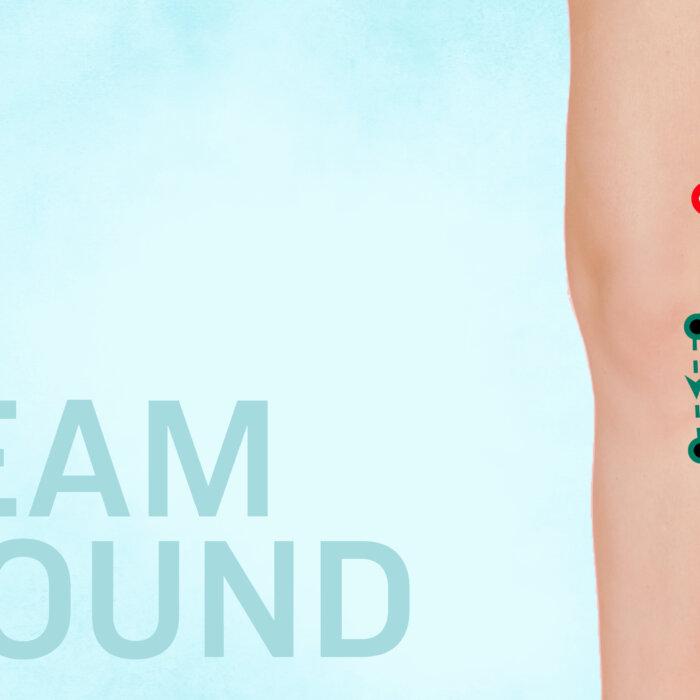
Start by locating a point just below the kneecap on the outer edge of the knee. From there, measure about eight finger widths downward along the shin. Then move one finger width outward from the front edge of the shinbone (tibia). Press around that area gently—if you find a spot that feels tender or sore, you’ve likely found Shang Ju Xu. More pronounced sensitivity is often a sign that the body hasn’t fully recovered from an injury or the relevant meridian is blocked.How to Stimulate Shang Ju Xu
- Firm Pressure: Press and hold the point for 3–5 seconds, relax for 3 seconds, and repeat for 1–3 minutes per side.
- Circular Massage: Use your thumb or index finger to rub the point in small circles for 1–3 minutes on each leg.
- Herbal Patch: Apply a patch overnight for convenient passive stimulation.
- Advanced Methods: For deeper activation, consult a trained TCM professional for acupuncture, cupping, or moxibustion.
Precautions
Avoid stimulating this area if you have open wounds, bruising, or injuries on the leg. If you’re using herbal patches, opt for formulations that’re free from harsh synthetic chemicals, especially if you have sensitive skin.Self-Care Habit
Shang Ju Xu is more than just a spot on your leg—it’s an easy access point to improve digestion, blood flow, and even lower limb function. Whether you’re managing chronic digestive issues or simply looking to support better circulation, this point is worth your attention. Taking two minutes a day to work on Shang Ju Xu might not sound like much, but over time, it could become a small habit that delivers noticeable benefits.TCM expert Shihhsiang Hung reviewed this article for accuracy and clarity.
Related Story