Not all headaches are created equal—they can arise from various causes such as nerve damage, tension, or sometimes have no clear explanation at all. One common yet often overlooked type is the cervicogenic headache, which originates in the neck, frequently caused by muscle tension, poor posture, or injuries like whiplash. Those who spend long hours hunched over a computer or phone are especially at risk.
Ancient Insights: A Window of the Sky
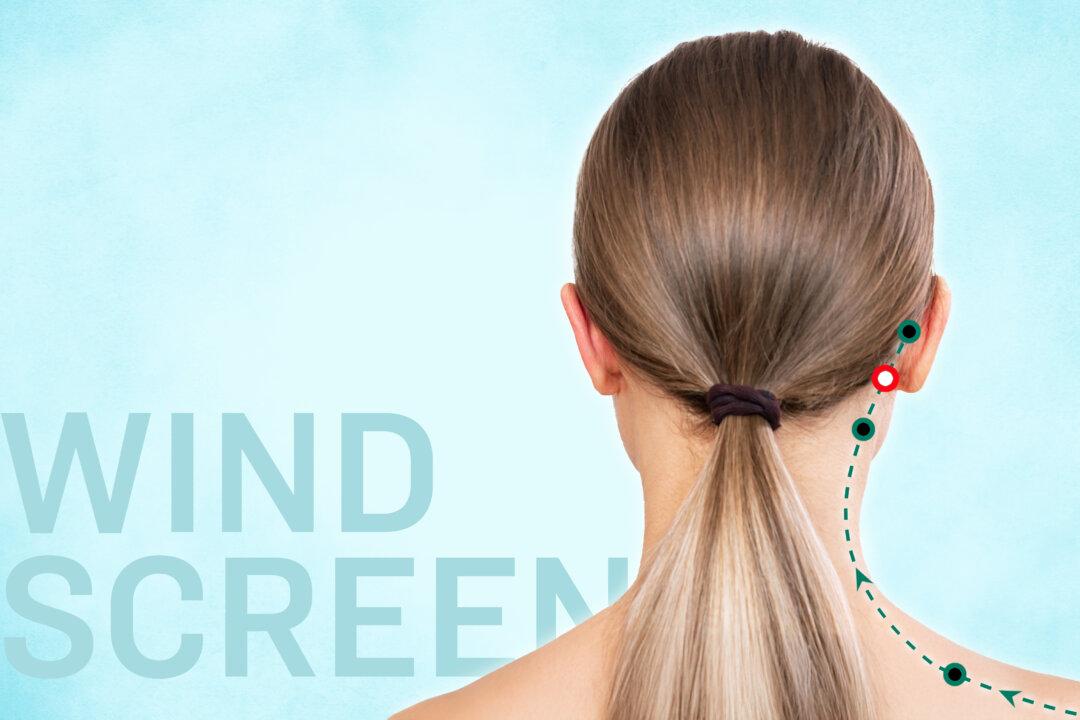
Tian You is first mentioned in the “Ling Shu (Spiritual Pivot),” one of TCM’s foundational texts. It is one of the ten “Window of the Sky” points—acupoints around the neck that regulate the circulation of blood and energy in the region. These special points became more clinically relevant in modern times with the rise of car accidents and sedentary neck strain.Tian You earned its poetic name because ancient physicians saw it as a channel for “opening the window” to release the pathogens like heat, wind, or dampness. This acupoint is also said to support the sensory organs—particularly the eyes—by reducing swelling and improving vision.
What Science Is Finding
Recent research supports the clinical value of the Tian You acupoint, exploring its various applications in treatment. In one study, Tian You was combined with other acupoints to address several hormonal and gland-related disorders. A patient with thyroid nodules experienced reduced swelling after just ten acupuncture sessions. Another patient with breast hyperplasia achieved complete relief after eight sessions that included Tian You.Additionally, a woman with high prolactin levels and absent menstruation restored her hormonal balance after eleven treatments. While these clinical observations necessitate larger studies for broader applicability, they suggest that Tian You has significant healing potential.
How to Locate and Stimulate Tian You
Locating Tian You is straightforward. With just a bit of practice, you can pinpoint this helpful acupoint in seconds:- First, locate the bony bump behind your ear—that’s your mastoid process.
- Next, identify the angle of your jawbone.
- Draw an imaginary vertical line downward from the mastoid process and another horizontal line backward from the angle of your jawbone.
- Tian You is located at the intersection of these two lines on the back of your neck. Apply gentle pressure to find a point that feels sore or tender when stimulated. These sensations indicate that you’ve successfully located Tian You.
How to Stimulate Tian You
There are several safe and simple ways to activate Tian You:- Press: Use firm pressure for 3–5 seconds, relax for 3 seconds, and repeat for 1–3 minutes on each side.
- Massage: Massage the point in gentle circles using your index finger or thumb.
- Herbal Patch: Apply an herbal patch overnight for longer stimulation.