In 2021, one year into the COVID-19 pandemic, two studies, rich in data, showed that the greatest risks for severe COVID-19 outcomes were preexisting health conditions. These conditions are strongly linked to obesity.
The U.S.-based studies, done independently, make clear that preexisting health conditions are most significant in driving severe outcomes from a COVID-19 infection.
Consequences of Comorbidities
A comorbidity is an existing disease or bodily dysfunction that someone has before contracting something else. A chronic condition is a disease or dysfunction that develops slowly and persists for a long time, as opposed to an acute condition, one that develops suddenly and lasts a short time. According to the study, of those hospitalized with COVID-19, 95 percent had at least one underlying chronic comorbidity, such as high blood pressure or obesity.The researchers examined the relationship between severe COVID-19 outcomes and the presence of one or more of the four most common chronic comorbidities in the United States: diabetes, cardiovascular disease, chronic lung disease, and renal (kidney) disease.
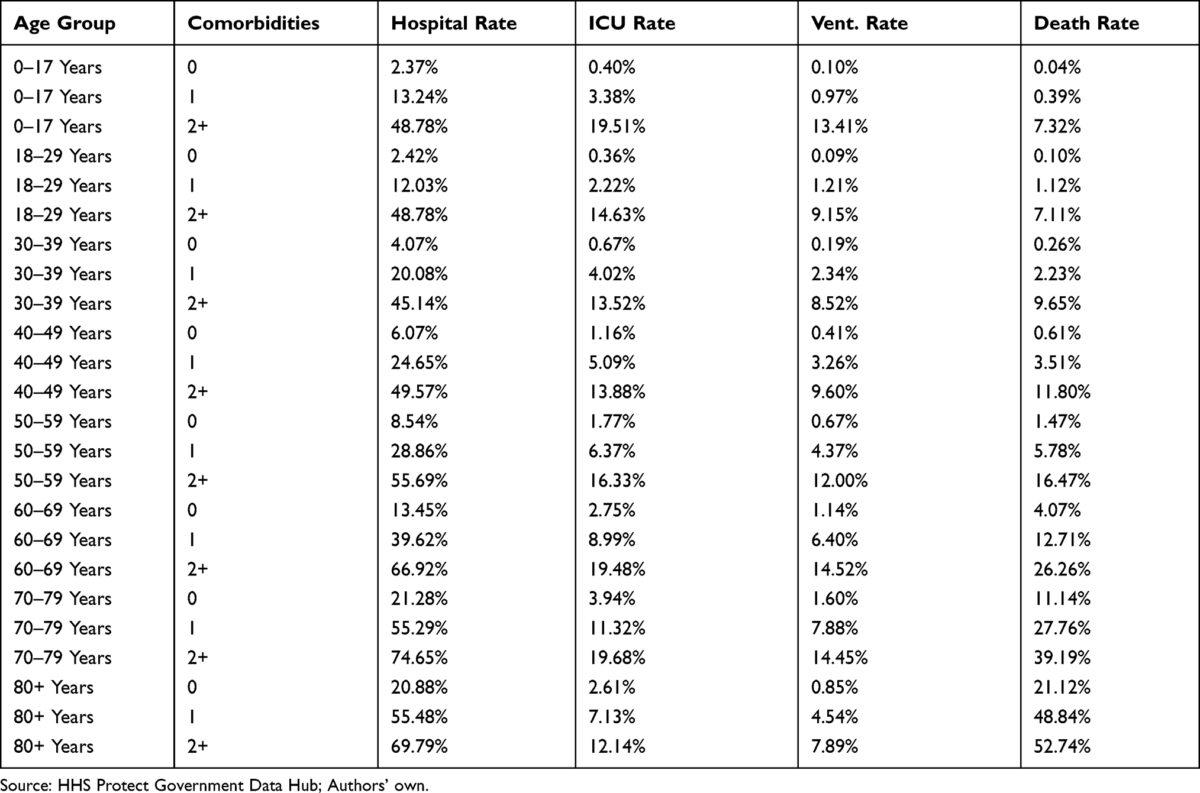
For their study, the authors defined “severe outcome” as either being hospitalized, admitted to the intensive care unit, placed on a ventilator, or dying.
The authors then compiled a table in which various age groups and their respective COVID-19 outcomes were presented three times: First, those with no chronic comorbidities, then those with one chronic comorbidity, and finally, those with two or more chronic comorbidities.
For any of the listed age groups, the difference in outcomes of any severity, depending on the existence of one or more comorbidities, was within a magnitude of 300 percent to 900 percent.
For example, in the 50 to 59 age group, the percentage of those with no comorbidities who were hospitalized because of COVID-19 was 8.54 percent. For those with two or more comorbidities, it was 55.69 percent, an increase of more than 550 percent.
A Missed Opportunity?
In the United States, some physicians have openly expressed their concern that the current approach to public health by organizations such as the Centers for Disease Control and Prevention (CDC) isn’t addressing the known causal relationship between lifestyle, obesity, comorbidities, and severe outcomes from diseases such as COVID-19.“Thirty years ago,” Dr. John Littell told the Epoch Times, “when I first started practicing medicine, the primary approach to disease prevention was a focus on lifestyle, diet, and exercise, with medical interventions secondary or tertiary. Now, that has completely flipped, and vaccinations and medical interventions are pushed as primary interventions.”
In taking a vaccine-first, behaviors-second approach to public health, Littell believes that the CDC has missed an opportunity to warn the public about the dangers of obesity and the connection between comorbidities and severe disease outcomes.
Littell is concerned that the CDC has too completely adopted the agenda of large pharmaceutical companies, including those making biologics such as vaccines.
“Other organizations, like the National Institutes of Health (NIH), as an arm of the federal government, are increasingly focused on population health strategies and are less patient-centered,” he said.
“Most of my patients, after dealing with the many adverse consequences of COVID-19 vaccines, mask, and quarantine mandates, are now skeptical of much of the medical information they are getting from the media.”
There’s an upside, however.
Avoiding Severe COVID-19 Outcomes
Across the United States, nearly 60 percent of the population has contracted COVID-19, and physicians expect that number to continue to rise, even among those who have been vaccinated. While the extent of obesity’s effect on COVID-19 infections isn’t fully understood, many independent studies now clearly indicate that obesity and obesity-related comorbidities are the most significant causal factor in severe COVID-19 outcomes.STOP Obesity Alliance emphasizes that these conversations can’t wait since, as it points out on its website, nearly 75 percent of the American population is overweight.
To determine if someone is overweight or obese, health care providers use a calculated ratio of the percentage of body fat to total mass, the body mass index (BMI).
Live and Lose Weight
Losing weight doesn’t have to require any extreme diets or exercise programs. If someone is overweight, several simple lifestyle steps can be taken to reduce body weight and the health complications associated with excess weight.Taking any of these steps alone, or a combination of several of them is a straightforward way to reduce overall body weight.