
Hay fever, also known as allergic rhinitis, is a common allergic condition, affecting about 20 percent of people at some point during their lives and an estimated 40 to 60 million Americans.
Hay fever develops as the body’s immune system overreacts to elements in one’s environment and affects a person’s respiratory system. Diagnosing hay fever is typically straightforward, as symptoms are experienced consistently when exposed to environmental triggers.
What Are the Types of Hay Fever?
There are two types of hay fever. Individuals are classified as having one type or the other depending on symptom prevalence and cause of sensitivity. The two types are:
- Seasonal: Seasonal hay fever symptoms typically occur in the spring, summer, and early fall rather than year-round. The usual causes of sensitivity include exposure to elements like airborne mold and pollen from trees, grass, and weeds.
- Perennial: Symptoms of perennial hay fever typically occur year-round. These sensitivities are usually due to exposure to dust mites, pet hair or pet dander, mold, cockroaches, or undiagnosed food allergies or sensitivities. While undiagnosed food allergies or sensitivities may evoke similar symptoms seen in those with perennial hay fever allergies, this is less common than the other triggers.
What Are the Symptoms and Early Signs of Hay Fever?
Part of the difficulty in receiving an early diagnosis of hay fever is that many of the symptoms mimic those of the common cold. The difference between hay fever and a cold lies in the duration of symptoms, as an individual with hay fever will continue to experience symptoms for the length of exposure to the allergen. Whereas with the common cold, symptoms usually subside within three to seven days. In addition, the common cold may cause a low-grade fever, whereas hay fever does not cause a fever (counterintuitive to its name).
During the recent COVID-19 pandemic, many wondered whether the symptoms they began experiencing during springtime were due to a COVID-19 infection or to hay fever. While some symptoms of hay fever and COVID-19 overlap, the main symptoms of seasonal hay fever are sneezing, a runny nose, and itchiness in the eyes, whereas the main symptoms of a COVID-19 infection are cough and fever.
If you are wondering whether the symptoms you are experiencing are due to hay fever or another condition, it is always best to consult a qualified health care practitioner.


As an individual continues to be exposed to an allergen, the following symptoms of hay fever are common:
- Runny, itchy nose or congestion.
- Watery, itchy, or red eyes.
- Swelling or bluish, dark appearance under the eyes.
- Sneezing.
- Coughing.
- Postnasal drip mucus in the back of the throat.
- Fatigue due to poor sleep.
What Causes Hay Fever?
Hay fever is caused by an individual being repeatedly exposed to an allergen. When the nasal cavity gets exposed to this allergen, the body evokes an immune response, and symptoms begin to present.
The immune system sees these exposures as harmful and produces a protein known as immunoglobulin E (IgE) to protect itself from the allergen. IgE antibodies travel to mast cells, a type of white blood cell, which release chemicals such as histamine, creating an immune response cascade. Thus, as individual exposure to allergens increases, IgE levels increase, and hay fever symptoms begin.
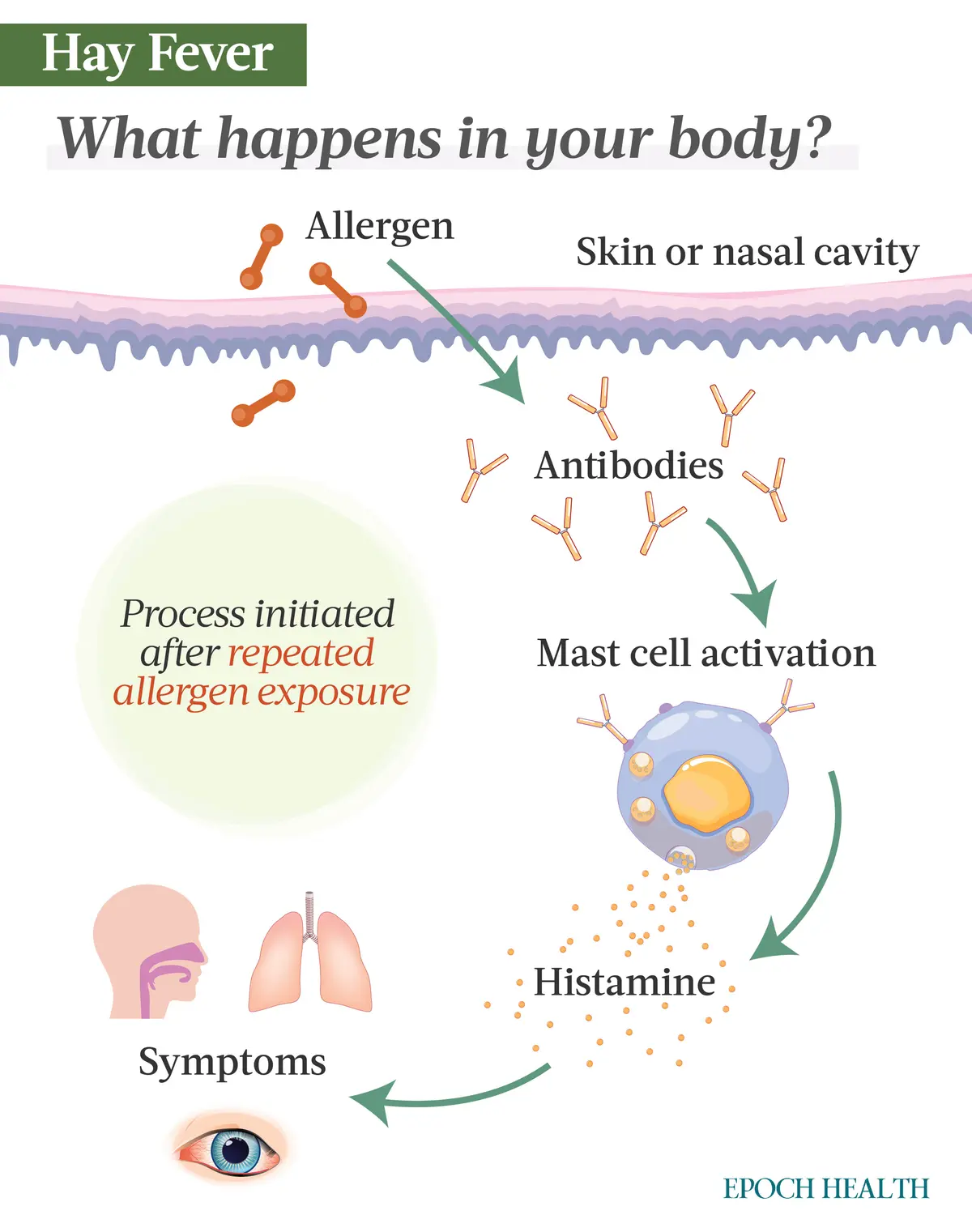
Upon repeated exposure to an allergen, the immune system produces antibodies called immunoglobulin E (IgE), which activate mast cells (white blood cells) that release histamines to ward off the allergen. This process results in hay fever symptoms. Illustrations from Shutterstock/Designed by The Epoch Times
Who Is at Risk of Hay Fever?
Studies have examined the genetic versus environmental stimulus for developing hay fever. While further research is needed, research points to both genetics and environment increasing one’s likelihood of developing the condition.
The following factors are thought to increase one’s risk for developing hay fever:
- Having other allergies, asthma, or eczema.
- Having atopic dermatitis.
- Having a family history of allergies, asthma, or eczema.
- Living or working in an environment with a lot of pollen, dust mites, animal dander, or mold.
- Exposure to smoke and strong odors that irritate the nasal cavity.
- Exposure to secondhand smoke during the first year of life.
- Being a boy child, although women seem slightly more likely to have hay fever than men.
- Being of two or more races, especially black and white.
- Being born during the high pollen season.
- Having a higher education (pdf). Those with higher education levels seem to report hay fever at higher rates than those with lower educational degrees.
How Is Hay Fever Diagnosed?
If someone is experiencing symptoms of hay fever, follow-up tests can confirm or rule out a diagnosis. Your health care provider may perform a skin test, applying the allergy triggers to the skin (typically on the lower arm or the back) and observing any reaction.
Tests for hay fever may include:
- Skin prick test: A doctor will drop a watery solution that contains an allergen onto different points on the skin. Then, he or she will use a lancet to prick the skin so the allergen can enter the skin’s surface more effectively. Red bumps typically appear at the tested sites when exposed to allergens that cause hay fever.
- Skin scratch or scrape test: Similar to the skin prick test, a health care provider will rub an allergen over the skin so the allergen can enter the layers of the skin more effectively. If a skin prick test is inconclusive, a skin scratch or scrape test may be used, allowing the allergen to enter even deeper layers of tissue than the prick test.
- Intradermal test: The health care provider injects an allergenic solution into the skin. This is typically used if someone has a weaker allergic reaction to triggers or other testing methods (like the skin test) do not show clear responses.
- Blood test: A health care provider will take blood to measure for IgE antibodies. If someone has an allergic reaction, IgE antibody levels will be higher. However, because higher levels of IgE circulating antibodies can be caused by several things (like smoking or infection), this test cannot be used as a diagnostic test. Instead, it indicates a greater likelihood a person may have hay fever allergies. A blood test is also typically completed if skin testing is too risky.
- Provocation test: A health care provider applies an allergen to the mucous lining of the nasal cavity. When testing for hay fever, grass pollen may be applied, and then the provider will wait to observe any reaction. Common reactions may include sneezing, congestion, and watering of the eyes. These tests are typically performed if an individual does not have strong enough allergic reactions with skin testing and are often considered a last resort.
What Are the Complications of Hay Fever?
Hay fever can develop several potential complications, with areas most affected being the respiratory and vestibular systems.
Some of the most common acute complications include the following:
Sinusitis
Sinusitis can be a common complication of hay fever and typically involves the lining of the sinuses becoming inflamed. Normally, mucus drains through the nose, and this process becomes impaired when the lining of the sinuses becomes inflamed.Symptoms of sinusitis include:
- Colored discharge exiting the nose.
- Stuffy nose.
- Pain in the cheeks, upper back teeth, eyes, and/or forehead.
- Fever.
- Sinus headache.
- Impaired sense of smell.
- Bad breath.
Otitis Media
Otitis media, a middle ear infection, can occur as a complication of hay fever due to middle ear inflammation accompanied by a buildup of fluid behind the eardrum. This is more common in younger children with hay fever symptom exacerbation. This may result from inflamed and blocked Eustachian tubes, causing fluid to be trapped in the middle ear.Symptoms of a middle ear infection include:
- Earache.
- Fever.
- Fatigue.
- Slight hearing loss.
Nasal Polyps
Nasal polyps may occasionally form as a result of long-term hay fever. These polyps are fleshy, grape-like growths of chronically inflamed tissue. They can appear in the lining of the nose or the sinuses. While they are usually not a problem, large ones can worsen drainage of the sinuses, resulting in problematic infections of the sinuses, bones of the sinuses, eyes, or even the brain (meningitis).Reduction in Quality of Life
A reduction in perceived quality of life due to interference with daily activities and a decrease in productivity can also be a potential complication of hay fever. Hay fever symptoms may also disrupt sleep quality, leading to increased fatigue rates and a reduced quality of life.Worsening of Other Respiratory Conditions
For individuals struggling with other respiratory complications, such as asthma, the additional inflammation of hay fever can severely worsen efforts to breathe. Symptoms of respiratory conditions like chronic obstructive pulmonary disease (COPD) or cystic fibrosis can also be further exacerbated by hay fever.What Are the Treatments for Hay Fever?
The treatments for hay fever vary based on the severity of symptoms and a person’s desired course of treatment. Common treatments involve various medications to aid in symptom management. Some of the most common types of drugs include the following:
1. Antihistamines
Antihistamines help the body lessen the effect of histamines, chemicals that build up in the body during allergic reactions. There are sedative and nonsedative types of antihistamines, with nonsedatives being less likely to cause drowsiness. An antihistamine works best if started preventively, before the onset of symptoms, because it blocks more of the histamine-releasing receptors on mast cells. However, an antihistamine will eventually take effect if taken regularly after symptoms start.Common side effects of taking antihistamines to treat hay fever can include:
- Dry mouth.
- Constipation.
- Drowsiness.
- Restlessness.
- Changes to urination.
2. Decongestants
Decongestants are another type of medication that can help reduce symptoms of hay fever, as they reduce symptoms like congestion of the nasal pathway. These medications work by reducing the width of blood vessels in the nose, helping to reduce the amount of fluid that can exit the nasal pathway.Potential side effects of taking decongestants to treat hay fever can include:
- Restlessness.
- Increased heart rate.
- Rebound rhinitis, when prolonged use of nasal spray decongestants results in a buildup of tolerance, necessitating more frequent usage for the same effect and eventually worsening the nasal congestion.
3. Steroids
Nasal steroids are a common treatment for hay fever, as this type of medication aids in reducing inflammation in the nose. Nasal steroids need to be used consistently to be effective and can be used to help people with both seasonal and year-round hay fever symptoms. Nasal steroids come in both liquid and dry powder versions.Potential side effects of taking nasal steroids to treat hay fever can include:
- Dryness or burning in the nose.
- Nosebleeds.
- Elevation of intraocular pressure in people with glaucoma.
How Does Mindset Affect Hay Fever?
While allergies seem to be brought on by exposure to a specific allergen, making them more of a physiological immune response, psychological factors can sometimes further aggravate symptoms.
Mindset can affect hay fever symptoms, as increased stress levels exacerbate allergy symptoms. Because stress amplifies emotional reactions, research shows that the perceived severity of symptoms worsens under higher stress levels. While the exact mechanism is not yet well understood, it is thought that increased levels of stress hormones cause the immune system to overreact more dramatically than it does in those who may be in a calmer headspace.
Part of this physiological response has to do with the fact that both a stress and an immune response have physical ramifications. When the body senses stress, stress hormones are released, sending the body into a fight-or-flight mode. If this becomes chronic, it can take a toll on the immune system, worsening allergic symptoms associated with hay fever. This suggests that keeping a positive mindset may help reduce symptoms.
Another interesting connection between mindset and hay fever is research surrounding increased rates of mood, anxiety, and eating disorders among those with lifelong allergies. Because allergies can increase worry and psychological distress, this can lead to additional disorders for many allergy sufferers. In addition, hormones released in the brain in response to stress alter and suppress the normal function of the immune system, making allergic symptoms worse.
The connection between disordered eating and allergies warrants more research; however, the link is speculated to exist due to higher levels of inflammatory proteins released into the body due to stress coinciding with a reduction in food intake.
This research suggests that those contending with hay fever and other allergies may benefit from prophylactic psychological care and treatment to help bolster mental health status and reduce symptom recurrence and/or development of other psychiatric disorders.
What Are the Natural Approaches to Hay Fever?
There are some natural remedies to aid in hay fever symptom relief. If an individual knows what allergen is causing their symptoms, eliminating exposure to that allergen, if possible, is a good starting point. If you are unsure of the trigger, experimenting with some natural approaches may be helpful.
1. Diet
Because most of the immune system resides in the gut, optimizing the gut microbiome can help mitigate some symptom relief. If you know that you have any sensitivities to certain foods, eliminating them from your diet to see if your gut and immune health improve could be helpful. In addition, adding probiotic-rich dietary sources to your routine, like yogurt and fermented foods, can help bolster the good gut bacteria already present in the gut.In addition, including antioxidant and anti-inflammatory herbs, foods, and vitamins can help boost the immune system and reduce inflammatory pathways in the body. This reduction in inflammation positively impacts those with hay fever by calming the immune system. The addition of foods rich in omega-3s, such as salmon and anchovies, aids in the reduction of symptoms due to the powerful anti-inflammatory effect these foods possess.
2. Environment
Optimizing the air you breathe by reducing the dust, dander, and pollen in your home can help people struggling with environmental allergies. If you live in a highly pollinated place, keeping doors and windows closed can aid in symptom management. In addition, cleaning yourself (skin and hair), as well as your clothing and linens, regularly can help reduce allergen exposure. Air purifiers are also an effective way to filter pollutants and allergens from the air.3. Acupuncture
Some initial research shows promise for acupuncture treatments and hay fever symptom relief. Because acupuncture has immune-boosting benefits, it has been shown to help in the management of symptoms of hay fever.4. Saline Nasal Rinse
A saline rinse moisturizes nasal passages and relieves congestion. Although a little practice may be needed, many people experience additional relief with this method. You can use either a bulb syringe or neti pot to irrigate your nasal passages. Ready-made kits are available for purchase, or you can make a homemade solution consisting of 1 quart of water (distilled, bottled, or boiled, then cooled to avoid contaminants), 1.5 teaspoons of canning salt, and 1 teaspoon of baking soda.5. Herbs
The following herbs may help with hay fever symptoms.- Butterbur: This shrub has been used since the Middle Ages to treat various ailments, including the plague. It is commonly used to treat asthma and hay fever, and while one 2007 review found it had the potential for treating seasonal allergic rhinitis, the study authors suggested more research was needed due to a possible conflict of interest in the funding of three of the studies.
- Spirulina: This blue-green type of algae has shown much promise in one randomized controlled trial in 2008. Of the 129 study participants who properly documented their treatment diaries, 85 took spirulina tablets, and 44 took placebos. Spirulina was determined to have clinically significant benefits versus the placebo, with an improvement in symptoms such as congestion, itching, nasal discharge, and sneezing.
- Tinospora Cordifolia: Originating in India, this Ayurvedic herb has been shown to be highly effective in one clinical trial. Seventy-five participants were given placebos or Tinospora codifolia for two months, and 83 percent reported a 100 percent improvement in sneezing. Symptoms of nasal obstruction and itching were also significantly improved.
How Can I Prevent Hay Fever?
While there is no guaranteed way to completely eradicate the probability of developing hay fever, there are several steps you can take to reduce your chances.
Some of the top ways to reduce your risk of hay fever development have to do with environment and lifestyle and include:
- Trapping pollen: Preventing pollen from entering the nasal cavity and/or eyes by administering petroleum jelly under the nose and/or wearing protective eyewear can help.
- Managing your environment: Keeping windows and doors closed, a clean household, and having an efficient air filter can all help to manage allergen exposure.
- Managing stress: Aiming to reduce exposure to highly stressful situations can help you manage symptoms by optimizing stress hormone levels.
- Reducing inflammation: Reducing inflammation by limiting inflammatory foods, adopting advantageous lifestyle habits, and preventing the onset of illnesses aids in symptom relief.