When researchers set out to study why glioblastoma strikes men more often than women, and kills them faster, they expected to find testosterone making things worse. However, they found the opposite.
Testosterone Affects Immune Function
Scientists have long suspected that male hormones such as testosterone could promote tumor growth by weakening the immune system’s response to certain cancers. However, the new study paints a different picture: Testosterone actually slowed glioblastoma growth in men. Crucially, blocking testosterone led to faster tumor growth, supporting the idea that the hormone plays a protective role.Researchers found that men with glioblastoma who were receiving supplemental testosterone for reasons unrelated to cancer demonstrated a 38 percent lower risk of death compared with patients not taking the same supplements.
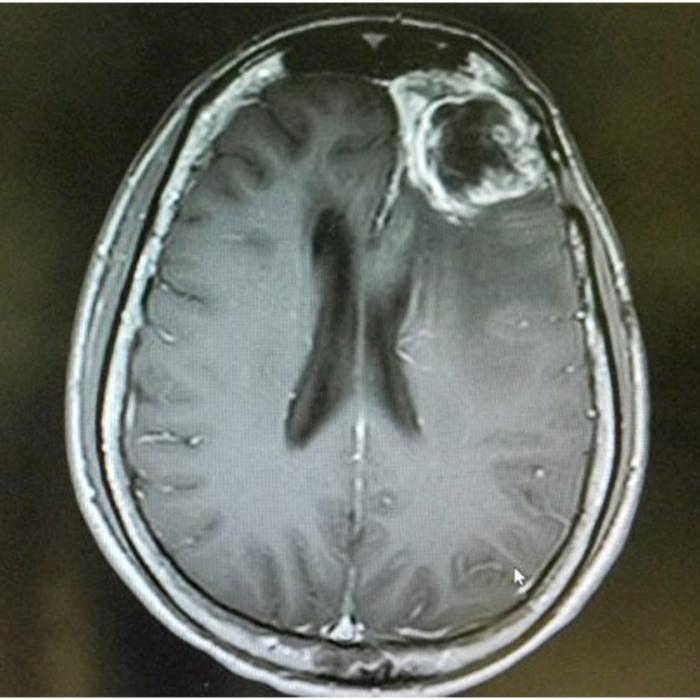

The team focused on how testosterone interacts with the brain’s immune cells, called microglia.
Normally, testosterone keeps microglia in check. Without it, these cells activate inflammation that affects the body’s stress response and weakens immune defenses, ultimately promoting tumor growth.
Researchers examined the effects of reducing testosterone levels using preclinical models involving mice alongside data from more than 1,300 men with glioblastoma.
In mouse models of glioblastoma, researchers removed testosterone by castrating the mice. Castration accelerated tumor growth inside the brain, but it slowed down tumor growth outside the brain.
The loss of testosterone caused an increase in stress hormones, which suppressed immune cells and triggered brain inflammation, creating an environment that allowed tumors to grow more quickly.
The spike in stress hormones triggered reactions that insulated the brain from the rest of the body. This tightened security created an environment that suppressed immunity in the brain, meaning that fewer immune cells could reach the growing threat, and tumors grew mostly unchecked. However, the study authors found that testosterone did not produce the same effect in female mice.
“The brain has evolved to keep stuff out, and that includes immune cells from elsewhere in the body,” corresponding author Justin Lathia, a professor of cancer sciences and scientific director of the Rose Ella Burkhardt Brain Tumor & Neuro-Oncology Center at the Cleveland Clinic, explained in the statement.
Testosterone Therapy Also Carries Risks
Experts not involved in the study urged caution about reading too much into the findings.However, he acknowledged that this study does “open the door” to future research exploring whether hormone modulation could play a role as an additional treatment strategy, particularly for glioblastoma patients with diagnosed hormone deficiency.
More Research Needed
The findings aligned with observations drawn from human data.The researchers noted that levels of T-cells, which are immune cells critical for fighting cancer, decline with age in males. After analyzing cancer registry data, they discovered that male glioblastoma patients who received testosterone therapy along with standard treatment, which includes surgery, chemotherapy, and radiation, tended to live nearly 40 percent longer on average.
Lathia said the study offers new insights into how hormones and the nervous system interact with cancer and suggested that testosterone might be considered for future treatment options, marking a potential shift in approaches to glioblastoma therapy.
The findings “possibly, but not yet” suggest that testosterone could play a future role in standard treatment for glioblastoma, Dr. Aaron Cohen-Gadol, a neurosurgeon, founder and president of the ATLAS Institute of Brain and Spine in Los Angeles, and not involved in the study, told The Epoch Times.
“This is an early, hypothesis-generating finding based on preclinical work plus observational human data,“ he said. ”So it does not support using testosterone as standard glioblastoma treatment at this stage.”
Cohen-Gadol emphasized that although the research points to a meaningful role for male hormones in glioblastoma among men, current hormone measurements are not ready to be used as reliable “indicators of prognosis or for guiding treatment decisions,” and that further, rigorous studies are needed to confirm their potential use.