Our middle-aged bodies can speak multitudes through indicators such as aches and pains. Stiffness, pain, and difficulty walking or standing for long periods may be a harbinger of osteoarthritis that can lead to knee joint degeneration. For relief, some choose artificial joint replacement, however, they may still experience joint pain after a few years.
Causes of Knee Joint Degeneration
Osteoarthritis occurs when the protective cartilage at the ends of bones gradually wears down, resulting in bone-on-bone friction and pain.According to Dr. Cheng, besides cartilage degeneration, many clinical cases involve ligament laxity before bone wear occurs. Muscles may become excessively tense to stabilize the joint, narrowing the space between bones and increasing the likelihood of bone-on-bone friction.
Dr. Cheng shared her clinical findings that merely replacing the joint cannot ensure long-term joint health. Some individuals may experience joint pain 5 or 10 years after artificial joint replacement. Even though the bones do not wear out, the tendons and ligaments can still be weak and inflamed.
5 Minutes Daily—Massage 3 Acupoints to Strengthen Tendons and Ligaments
Dr. Cheng recommended massaging three acupoints, the Liangqiu (ST 34), the Xuehai (SP 10), and the Futu (ST 32), for 5 minutes each (or longer if possible). This can help strengthen tendons and ligaments, thus maintaining knee joint health.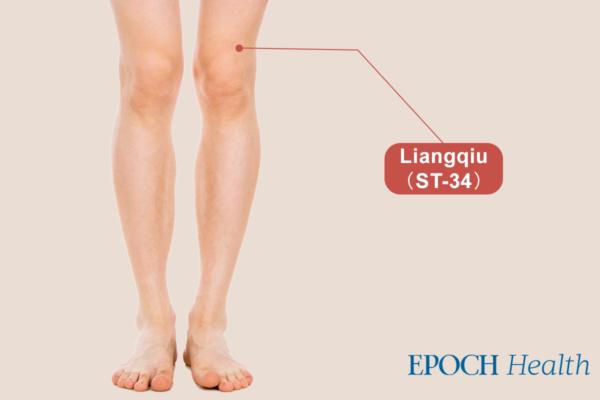
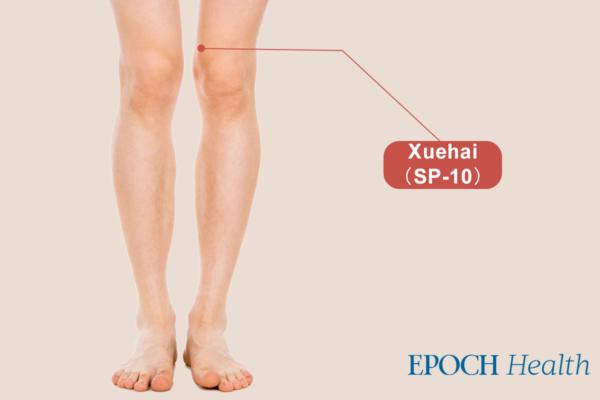
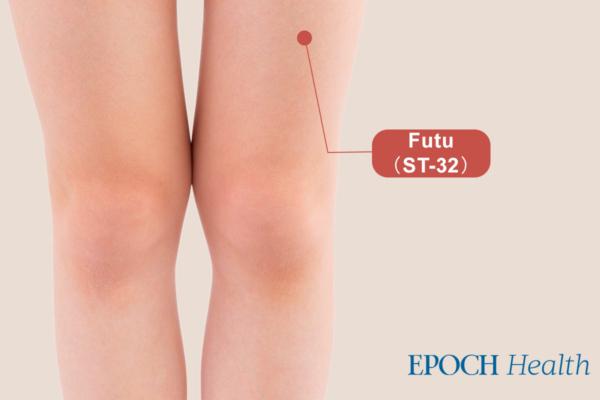
Dr. Cheng said that the Liangqiu and Xuehai acupoints are approximately three finger-widths above the knee from the outer and inner sides of the thighs. They will feel tender if gently massaged. The Futu acupoint is about eight finger-widths above the knee, on the front of the thigh. It can be gently pressed with the knuckles. If a tender spot is detected, it indicates the presence of energy stagnation.
10 Minutes Daily—Two Sets of Non-Weight-Bearing Exercises
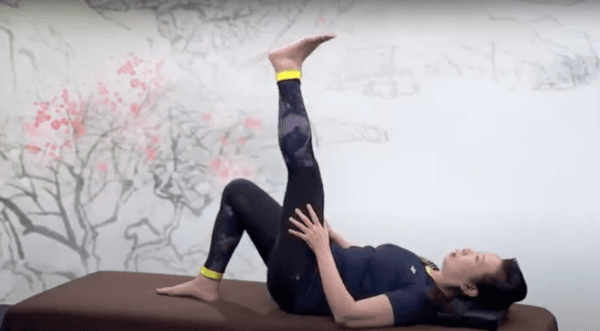
Dr. Cheng also recommended two of her original exercises to strengthen muscles and tendons, both performed lying on a flat surface. These are non-weight-bearing exercises that help avoid knee joint pressure.Knee Hugging Exercise
Method:- Lie flat on your back with your knees bent and your feet on the ground.
- Lift one thigh perpendicular to the ground, stabilize the thigh with your hand, then lift the calf upward as much as possible, straightening the knee.
- Lower the leg back down.
Benefits: Strengthen the quadriceps muscles and enhance knee support.
Stretching Exercise
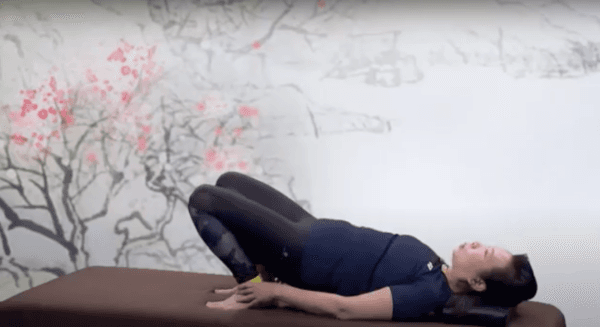
Method:- Lie flat with knees bent
- Bring your lower legs as close as possible to the buttocks
- Hold your ankles with your hands and raise your hips. Perform this exercise for about 10 minutes daily.
Tips for People With Osteoarthritis
Dr. Cheng, 62, shared her own experience recovering from osteoarthritis through acupuncture, massage, and regular exercise.She said that she started experiencing knee pain before she turned 50, so she gave herself acupuncture every day for over 5 years. Now, her knee joints are very healthy. Over the years, she has continued to exercise and regularly participates in activities such as hiking, badminton, and swimming.
- Maintain an ideal body weight to reduce joint burden.
- Keep warm and ensure good blood circulation.
- Avoid prolonged sitting, standing, or walking.
- Engage in appropriate exercises. Don’t be afraid to move your joints when feeling pain. Pain means your joints are weak and need to be strengthened.
- Perform non-weight-bearing exercises and avoid half-squatting, full-squatting, or kneeling positions, as well as excessive jumping exercises.
- Avoid lifting heavy objects and overworking the lower limbs as much as possible. Use supportive equipment or postures to protect your knees, minimize going up and down stairs, and avoid wearing high-heeled shoes.
Maintaining Knee Health With Calcium-Rich Diet Therapy
As bones degenerate, calcium loss occurs. Dr. Cheng emphasizes the importance of replenishing calcium for alleviating and reversing joint degeneration. Foods rich in calcium include milk, cheese, tofu, dried beans, spinach, and kelp.Anchovies are an effective calcium source but contain high cholesterol. Dr. Cheng suggests limiting daily intake to a maximum of two tablespoons. Pork ribs and eggs also provide plenty of calcium, but they come with higher cholesterol content, so individuals with high cholesterol or blood lipid levels should consume them in moderation.
Dr. Cheng said TCM believes that eating more acidic food will promote osteoporosis, so especially for people with degenerative joints, it is necessary to minimize the intake of cheese, lactic acid drinks, and other acidic foods. In addition, coffee affects the absorption of calcium and iron, which may increase the risk of osteoporosis. It is fine to drink alcohol occasionally, but do not over-drink to avoid damage to the joints.
Nourish and Protect Joints With Pork Rib Soup With Drynaria Rhizome
Dr. Cheng also recommended a dietary therapy of pork rib soup with Drynaria rhizome to nourish and protect the joints and prevent osteoporosis.- 300 grams ( 10.58 ounces) of blanched pork ribs
- 20 grams (0.70 ounces) of Drynaria rhizome
- Approximately 1,200ml (40.57 fl ounces) water
- Add pork ribs and herbs to water.
- Bring to boil, then simmer over low heat until the ribs are tender.
- Consume one to two bowls of this soup daily.