Scientists can now predict when someone is about to urinate just by watching their spinal cord activity—a first-of-its-kind discovery that could lead to targeted treatments for millions of Americans who have lost bladder control.
Spinal Cord Activity Linked With Urination
Recently published in Nature Communications, researchers used a type of imaging technology called functional ultrasound imaging, which tracks blood flow changes in the nervous system, to observe how different regions of the spinal cord respond as the bladder fills and empties.They found that specific regions within the spinal cord show observable nerve activity linked with bladder pressure. Some regions in the spinal cord become more active as the bladder fills, while others quiet down—indicating the presence of signals that prompt urination and those that inhibit it.
“This is the first study where we’ve shown that there are areas in the spinal cord where activity is correlated with the pressure inside the bladder,” Christopoulos said.

What this means, he said, is that one can look at the activity in those spinal cord regions and determine how full the bladder is—and whether someone is about to urinate.
The researchers say that their finding offers the possibility of treating urinary incontinence by directly stimulating the nerves that control their activity, a method known as neuromodulation.
Results Lay Groundwork for New Treatments
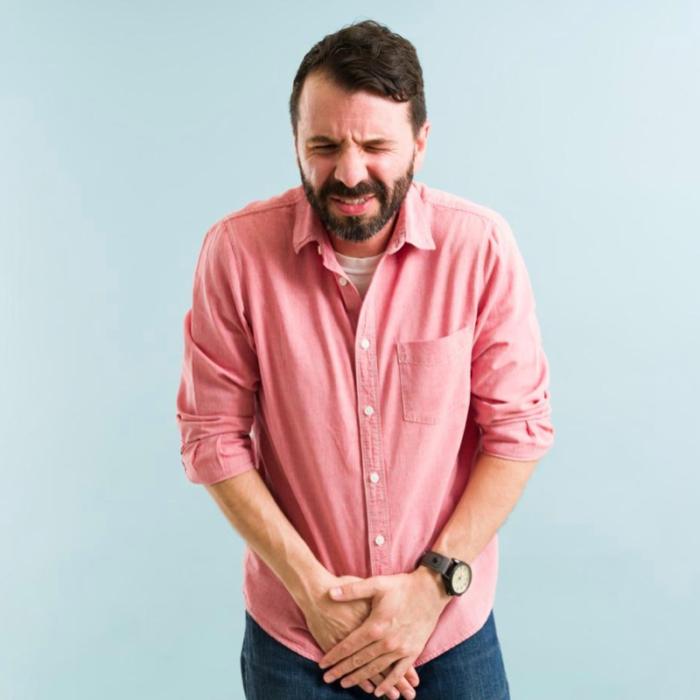
Urinary incontinence affects more than 33 million Americans. Dr. Aram Benjamin Loeb, assistant clinical professor of Urology at Case Western Reserve University, described the condition as a “rather isolating symptom” that he sees in his clinic.“It can be stigmatizing for patients, causing extreme embarrassment and can cause them to avoid going out to socialize, enjoy activities, or be intimate with their partners,” Loeb told The Epoch Times.
Incontinence takes several forms. Stress urinary incontinence causes leakage during physical activity such as laughing and coughing. Urge incontinence involves sudden, overwhelming urges that don’t allow enough time to reach a bathroom.
Urinary incontinence is addressed with a range of treatments, including behavioral modifications such as reducing liquid intake, physical therapy to strengthen the pelvic floor, and medications—specifically anticholinergics, which help retain urine in the bladder, according to Dr. Steven Weissbart, a urologist at Stony Brook Medicine who was not involved in the study.
In some cases, surgical intervention is warranted. However, many procedures are minimally invasive and performed in an office or outpatient setting, he noted.
Loeb said that being able to identify spinal cord activity in real time as the bladder fills and empties is important for understanding the causes of urinary incontinence and that identifying spinal cord regions responsible for bladder control would “lay down the groundwork” for therapies targeting the spinal cord and central nervous system.
Christopoulos stated in the statement: “If you ask these patients, the most important function they wanted to restore was not their motor or sensory function. It was things like sexual function and bowel and bladder control.”
The Long Road Ahead
Loeb said the study is promising, but a cure for all types of urinary incontinence is still a long way off.“I do think that neuromodulation is an extremely exciting area, and we are just understanding the tip of the iceberg,” he said.
Dr. Charles Liu, director of the USC Neurorestoration Center and coauthor of the study, noted that the current strategies for treating bladder focus mainly on the lower urinary tract, but the neural basis of the condition remains unclear.
Current therapies focus on symptom control, and many patients experience incomplete relief or side effects, according to Dr. Justin Houman, assistant professor of urology at Cedars-Sinai Medical Center, who was not involved in the study.
He said that if future research can repair nerves, strengthen pelvic muscles, or rebuild the urethral sphincter, urinary incontinence could one day be curable—not just treatable.
“That would be a game-changer, especially for aging populations and post-surgical patients,” Houman said. “My bet would be on regenerative technique or neuromodulation breakthrough, especially if it addresses the root cause of incontinence rather than just managing symptoms.”