This copy is for your personal, non-commercial use only. Distribution and use of this material are governed by our Subscriber Agreement and by copyright law. For non-personal use or to order multiple copies, please contact The Epoch Times Reprints.
Every year in the United States, almost 20 percent of the population gets infected by the seasonal influenza virus. The Centers for Disease Control and Prevention (CDC) recommends people over the age of 6 months to receive the seasonal flu vaccine.
However, the flu vaccination coverages vary greatly by age group. For instance, during the 2020–2021 flu season, it was estimated that approximately 75 percent of people aged 65 and older received at least one dose of the flu vaccine, whereas less than 40 percent of people between the ages of 18 and 49 received theirs.
Regardless of the different vaccination rates among different age groups in the United States, a large portion of the population gets vaccinated against the seasonal influenza every year. However, most people don’t know how these vaccines are made, what are the vaccine’s true protection rates for each year, as well as the potential adverse events they may experience due to flu vaccines and/or their manufacturing processes.
The Major Influenza Global Pandemics in History
There are four types of influenza viruses, including A, B, C, and D.
Influenza A strains are the only ones known to cause pandemics. These strains are named by the properties of their hemagglutinin (H or HA) and neuraminidase (N or NA) surface proteins, which are the surface glycoproteins on the virions of influence viruses. These HA and NA proteins define the host tropism and the fusogenicity of the influenza viruses via binding to the receptors on the host cell surface and triggering the virus fusion. These proteins determine how the viruses bind to cells.
There are 18 different HA subtypes and 11 different NA subtypes. Among them, H1, H2, H3, N1, and N2 generally cause annual flu epidemics. As shown below, different subtypes are named by combining the Hs and Ns.
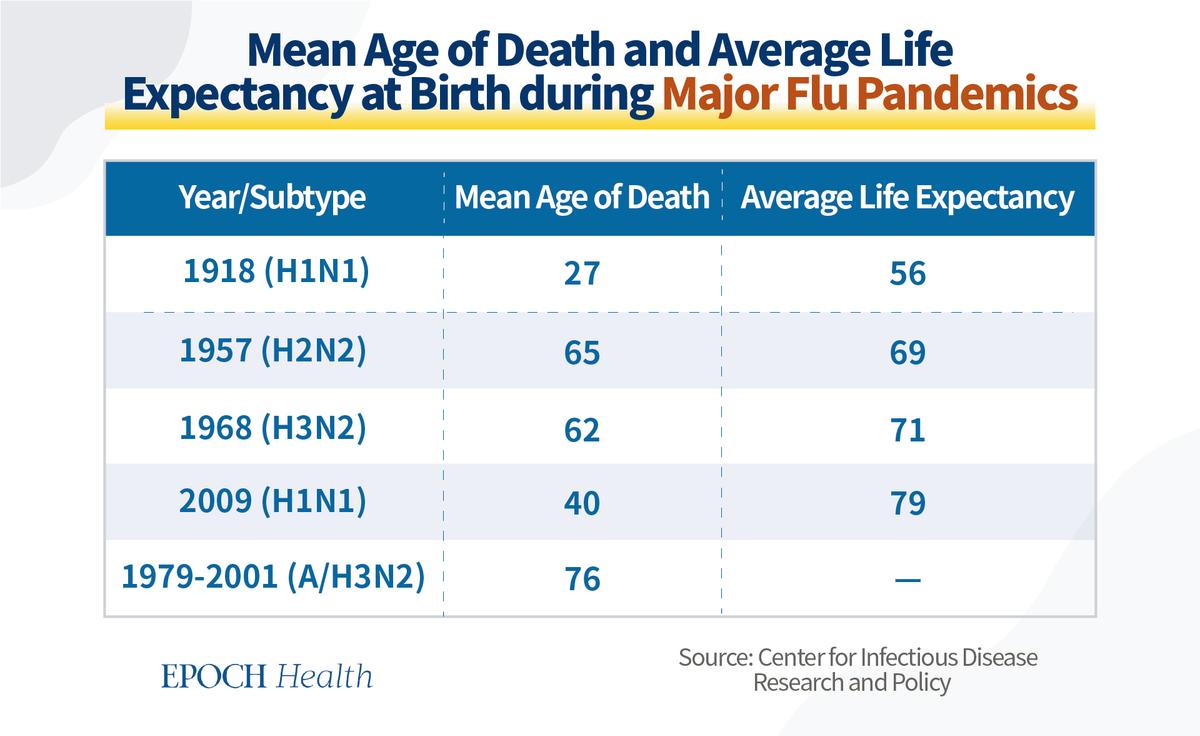
Global flu pandemics, which could last for more than a year, have caused devastation in many countries in the history. For instance, the 1918 influenza pandemic, commonly known as the “Spanish flu,” killed an estimated 50 million people worldwide, including approximately 675,000 Americans.
Different from the conventional flu, which usually causes a high mortality rate mainly among the elderly, this pandemic’s virus strain, H1N1, caused an unusually high mortality rate among young adults. And as the pandemic took place near the end of the WWI, many young soldiers contracted this virus in their barracks. As a result, the mean age of death during this pandemic was 27 years old.
Several decades later, the 1958influenzapandemic, also known as the “Asian flu”, took place. Its death toll is smaller than that of the previous pandemic, with an estimated 1 to 2 million deaths. The subtype that caused this pandemic was H2N2.
A decade later, in July 1968, the “Hong Kong flu” breakout started. Despite their experiences with the previous flu pandemic in Asia, the local authorities were still ill-prepared to handle this one. And when this flu season finished, an estimated 1 million people worldwide had perished. Since then, the flu has become seasonal, so the subtype that caused this pandemic, H3N2, has always been included in the annual flu vaccines.
The 2009 influenza pandemic, formerly known as the “swine flu”, started in the United States. Although the virus subtype is H1N1, this new virus contained a unique combination of flu genes, which were not seen in animals or people in the past. According to the CDC, from April 2009 to April 2010, an estimated 12,469 people perished due to the pandemic in the United States.
Development of Flu Vaccines in the United States
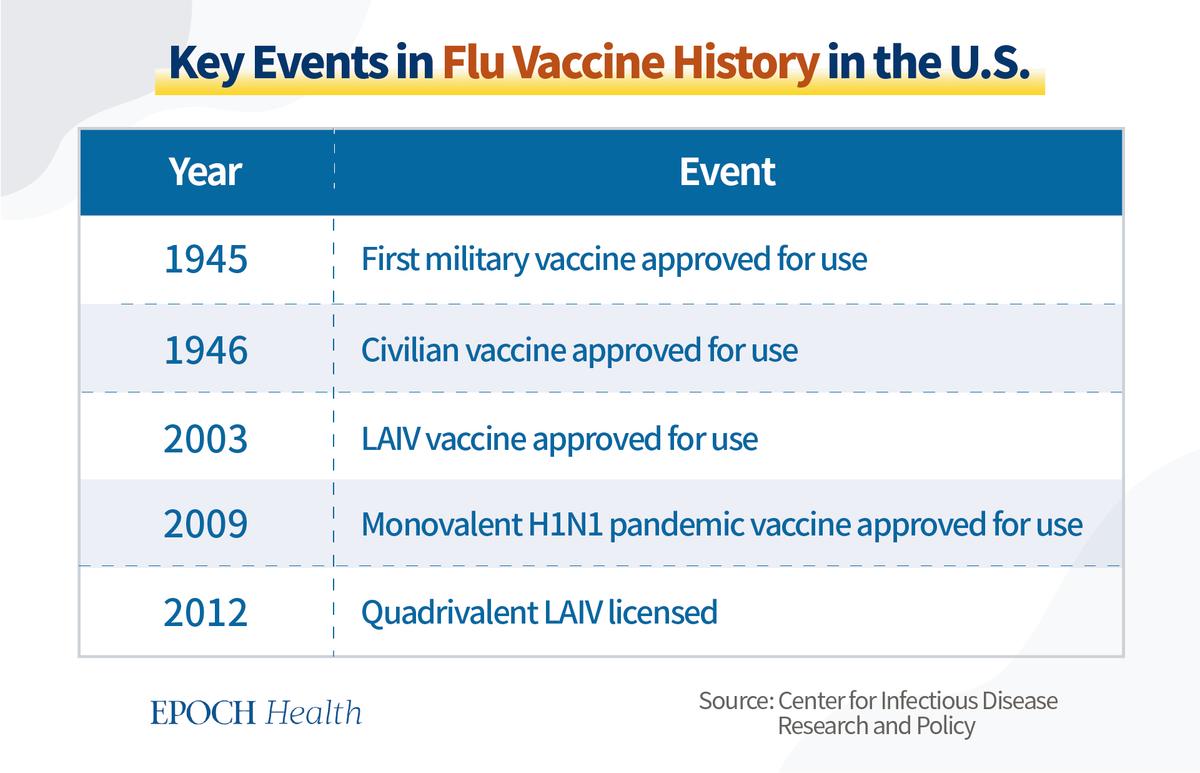
In 1945, the flu vaccine was approved for the first time to be used in the U.S. military. In the following year, American civilians were approved to receive the vaccine.
In 2003, live attenuated influenza vaccine (LAIV), which is a nasal spray fluvaccine made from weakened viruses, was approved for use in the United States. In response to the 2009 flu pandemic, the monovalent H1N1 flu vaccine was approved for use. The first of quadrivalent LAIV vaccines, which we currently receive in most cases for nasal sprays, was licensed in 2012. Quadrivalent vaccines offer protection against flu viruses by stimulating an immune response against four different antigens.
The people recommended to receive the annual flu vaccination have changed over the years as well.
Currently, the CDC recommends people aged 6 months and older to receive the flu vaccine. However, back in the 1960s, only the elderly people over the age of 65, people with chronic diseases, and pregnant mothers in their second and third trimesters were recommended to take the flu jab. Throughout the years, the CDC has been adding more and more age groups into their list of recommended populations.
Presently in the United States, some kindergartens have a flu vaccine mandate for their attendance. The children who are not vaccinated against the flu are required to stay at home during the flu season, which is typically November to February.
Seasonal Flu Vaccine Effectiveness Is Unsatisfactory Most of the Time in Past 10 Years
Given the fact that the flu vaccines have been developing for almost 80 years, one would expect that their effectiveness should have greatly improved. However, the opposite is true.
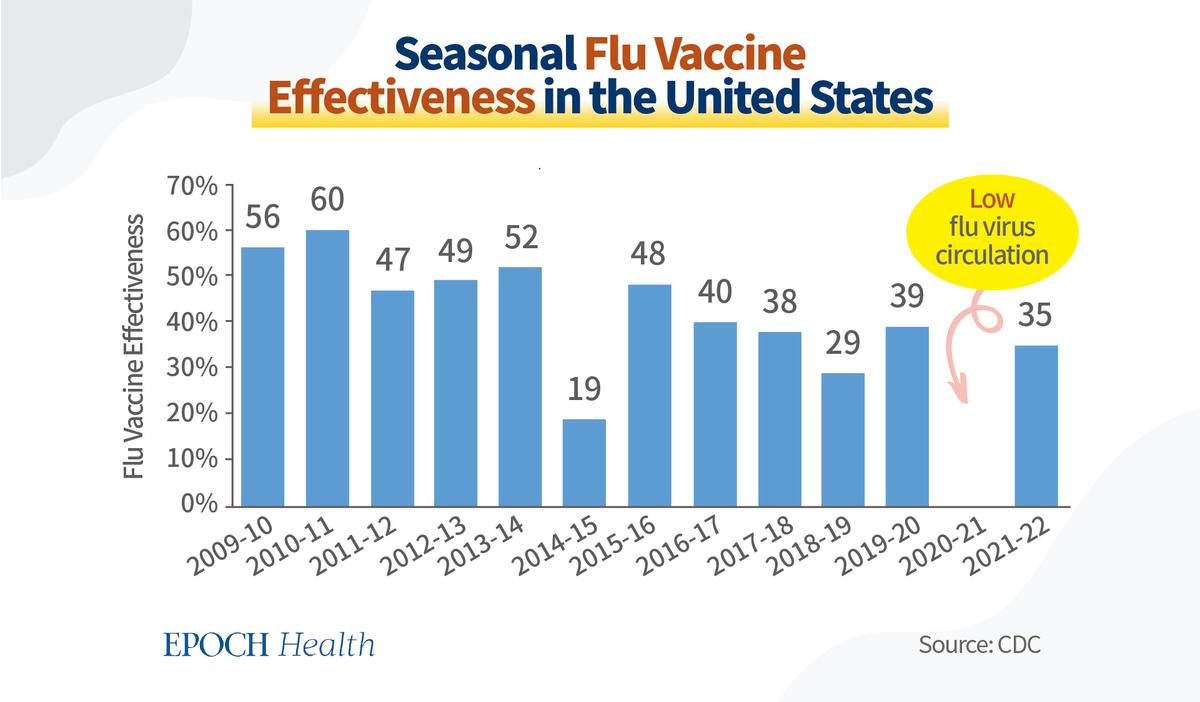
According to the CDC, since the 2009–2010 flu season, the effectiveness of the flu vaccines has been below 50 percent in most years. The worst protection rate occurred during the 2014–2015 flu season when the vaccine that year only offered a mere 19 percent protection. The estimated flu vaccine effectiveness in the 2020-2021 flu season is missing from the CDC database, due to low flu virus circulation. That time period happened to be when the COVID-19 pandemic was raging.
The data reveals serious issues related to the surveillance and forecast model for the established mechanism for selecting seed vaccine strains and producing existing influenza vaccines. In addition, they don’t provide a long-lasting protective immunity, and they don’t produce a cross-reactive immune response, which is the immune response against pathogen subtype variants not specifically targeted by the vaccine antigen composition.
Every year, the World Health Organization (WHO) reviews and selects four specific virus strains with the greatest probability of circulating in the upcoming flu season to be put into the quadrivalent flu vaccines. As aforementioned, there are many combinations of HAs and NAs, thus many subtypes, so without cross-reactivity, the flu strain selection can lead to potential mismatches, which will cause the vaccines to offer weak protection.
Currently Licensed Influenza Vaccines in the United States
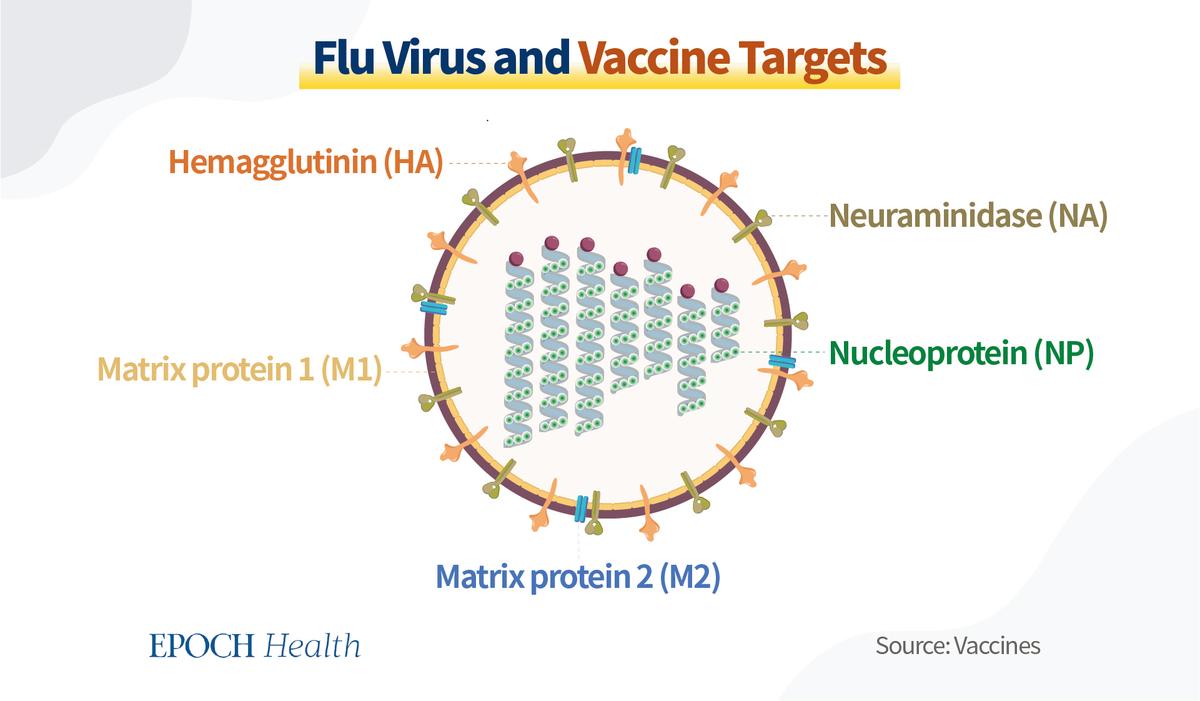
The current vaccine targets of the flu virus include the hemagglutinin (HA) and neuraminidase (NA), which are both membrane proteins found on the surface of the virus, as well as the internal proteins matrix protein 1 (M1), matrix protein 2 (M2), and nucleoprotein (NP)(pdf).
Among them, the most important vaccine targets are hemagglutinin (HA) and neuraminidase (NA) proteins.
This is because being on the surface of the flu virus, they are the first proteins that humans get into contact with, when they first encounter the virus.
So, as long as the flu vaccines can target these proteins, they may be able to obstruct the viral infection, thus offering sterile immunity against the virus. And fortunately, unlike the spike protein used in the COVID-19 vaccines, these membrane proteins haven’t been found to cause serious side effects.
The currently licensed flu vaccines are the aforementioned live-attenuated influenza vaccines (LAIV), recombinant hemagglutinin (HA) vaccines, whole inactivated vaccines, split vaccines, and subunit vaccines (pdf).
The recombinant HA vaccines use the recombinant technology. Different from the production of other types of flu vaccines, which requires candidate vaccine virus samples, recombinant vaccines are created synthetically.
The whole inactivated vaccines use the killed viruses in their entirety. Split virus vaccines are produced by using a detergent to disrupt the viral envelope. And subunit vaccines contain purified HA and NA proteins of the viruses.
The problems with inactivated flu vaccines include their strain-dependency and limited ability to provoke an immune response, especially for T-cell immunities.
The Most Commonly Used Production Methods Are Prone to Mutations
The inactivated flu vaccines are the most commonly used.
They are usually produced in chicken eggs with embryos, especially the whole inactivated vaccines. The benefits of this egg-based production approach include stable and well-developed technology and low cost, as eggs are widely available. However, it also has several shortcomings. For instance, the production time is long, so vaccine manufacturers have to start producing these vaccines months before the flu season starts. Therefore, the potential for mismatched flu virus strains is increased, and the vaccine production cannot keep up with the rapid spread of a possible influenza pandemic, thus risking the lives of millions.
Another important issue with the egg-based vaccine production is the mutations taking place during the process, which can lower the vaccines’ effectiveness and cause potential problems.
When using the egg-based vaccine production method, once viruses are injected into an egg, they will start replicating themselves. Then these viruses are isolated, purified, and inactivated, before being added to the formulation to produce vaccines.
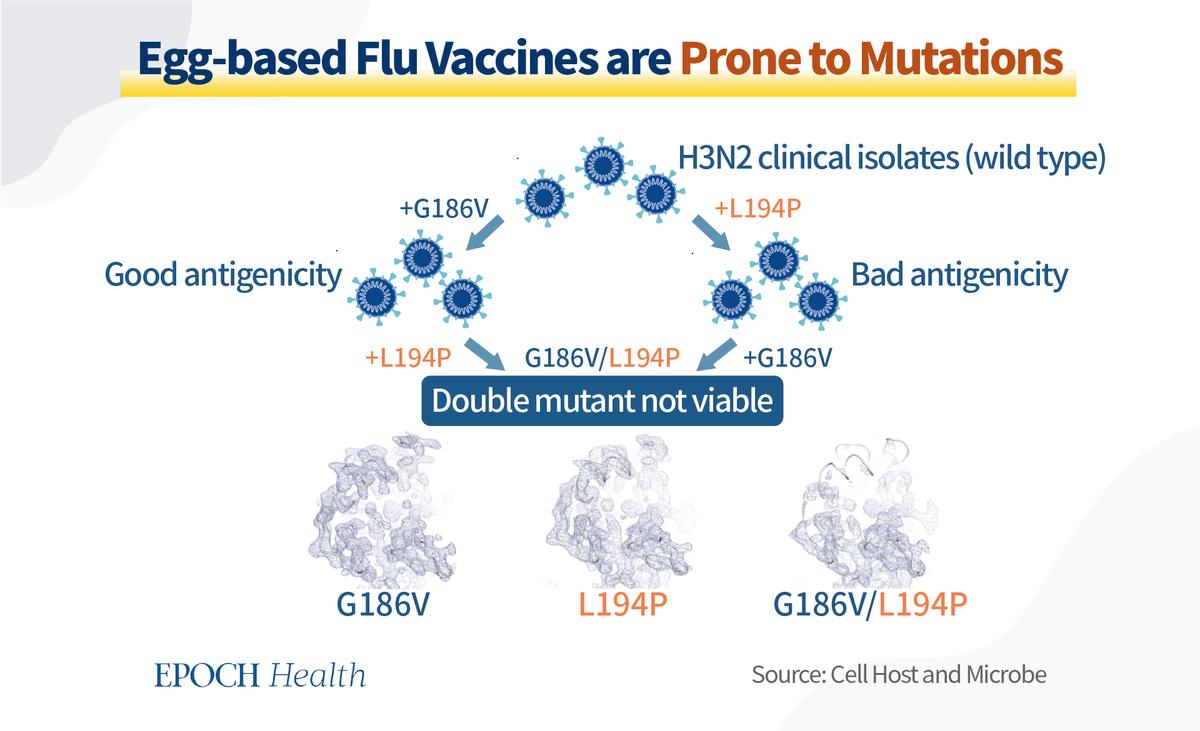
This production method involves a serial passage, during which the viruses go through some mutations suitable for their replication in eggs. For instance, during the egg propagation of H3N2 seed strains, there is a very important mutation called L194P, which is from a leucine to a proline and takes place at the HA-receptor binding sites. This mutation would significantly affect the antigenicity of HA. Therefore, if these viruses with greatly changed antigenicity are used to make vaccines, then these vaccines offer a weak protection.
In order to prevent L194P from taking place, some researchers would introduce a pre-existing G186V mutation, which can impede the retention of L194P during egg passaging.
Scientists have known for a long time that L194P and G186V mutations are very common in the egg-based virus production method. However, these mutations never show up in the same virus.
As individual G186V and L194P mutations have opposing effects on the HA receptor-binding site, when both are present, the mutated viruses have less chance to multiply successfully in infected eggs. Therefore a mutant with these double mutations would have weak growth advantage. Therefore, it has been suggested that the G186V mutation should be pre-engineered into the egg-propagated viruses before passage, so as to avoid obtaining a vaccine strain with L194P mutations. The G186V mutation doesn’t affect the HA’s antigenicity or the vaccine’s effectiveness. However, this approach would complicate the egg-based vaccine production, making it most costly.
Scientists have also discovered that the variations in the egg protein content are significant among different brands and lots of flu vaccines, with some vaccines’ protein content being 100 times more than that of other vaccines.
When being immunized with such vaccines, the body of someone with egg allergy sees the egg protein as an invader and sends immune cells and chemicals to destroy it, causing an allergic reaction. Therefore, it is necessary for egg-based vaccine manufacturers to select viruses with minimal egg protein content to prevent allergic reactions in vaccine recipients.
Alternatives to Egg-Based Inactivated Flu Vaccines
An alternative to egg-based flu vaccines are cell-based ones, which have been licensed in the United States and Europe (pdf). Instead of eggs, the viruses are grown in Madin-Darby canine kidney cells (MDCK cells), which are then put into a bioreactor. The viruses are then isolated, purified, and inactivated. Their HAs and NAs are then isolated and added to the vaccine formulation.
A second currently available alternative is the recombinant HA vaccines, which have been licensed in the United States.
These vaccines are produced by first isolating the flu virus’s HA and transcribing the HA antigen into a DNA sequence. Then the DNA sequence is inserted into a plasmid to modify it. The plasmid is in turn inserted into a carrier virus, which then infects some host cells. The host cells then produce antigens with recombinant virus DNA, and the antigens will then be isolated and purified to be added to the vaccine formulation. Similar to that of inactivated flu vaccines, the protection offered by the recombinant HA vaccines is also clade dependent and with limited immunogenicity. Furthermore, their production is much more costly. However, this production process would produce less mutations.
There are several next-generation vaccines, including virus-like particle-based (VLP) vaccines, peptide-based vaccines, nucleic-acid-based vaccines, and viral vector vaccines (pdf). VLPs, as a vaccine component, can help provoke an immune response, since they have similar morphological and structural features to viruses. Nevertheless, as they don’t have the viral genome, they will not cause virus replication in the human body. Peptide-based vaccines are subunit vaccines made from peptides, which mimic the epitopes of the influenza virus. Both VLP-based and peptide-based vaccines typically require adjuvants and/or particulate carriers.
Nucleic-acid-based vaccines can be rapidly developed, as demonstrated by China’s 8-day production of vaccines against an H7N9 outbreak in 2013. The use of RNA- or DNA-sequences for the vaccines’ antigens enable such speedy production.
Viral vector vaccines use a modified version of a virus different from the flu virus as a vector to deliver protection. This technology is also being used to produce COVID-19 vaccines.
Considering that influenza virus strains change every year, researchers have been hoping to design a universal flu vaccine. Currently, there are two approaches to design this universal flu vaccine.
A ‘Universal Flu Vaccine’?
The first approach is to design a vaccine with sterile immunity. A leading strategy is to remove the virus HA’s head domain, while keeping the immunogenic conformation of the HA stalk domain, which has a relatively low mutation frequency. Therefore, the cross-reactivity protection will be relatively good. The stalk antibodies, acting as broadly neutralizing antibodies, will prevent viral attachment to sialic acid receptors and neutralize many different flu virus strains.
The second approach is to design a vaccine with infection-permissive immunity. These vaccines are similar to drugs in that they activate immune cells, such as T cells and natural killer cells, to destroy the infected cells after the virus enters the body.
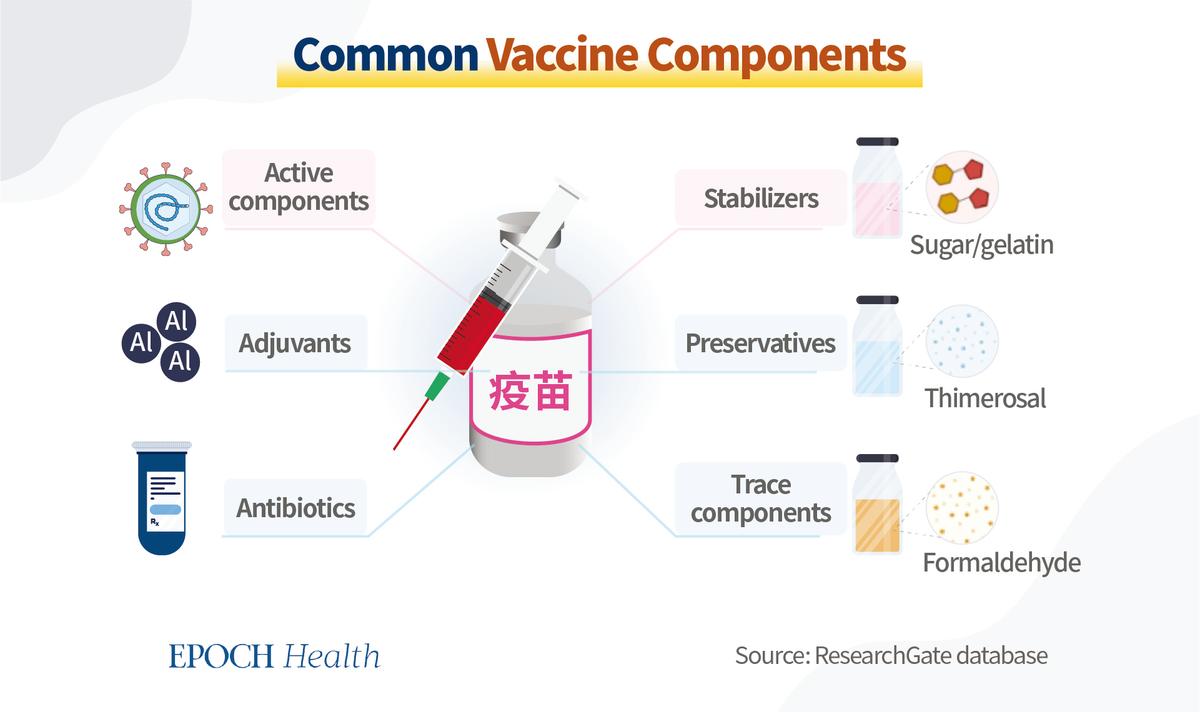
Besides the inactivated viruses or antigens, vaccines also contain other components, including active ingredients, adjuvants, antibiotics, trace components (e.g. formaldehyde), preservatives (e.g. thimerosal), and stabilizers (e.g. gelatin). People are rightfully concerned with potential side effects and adverse events caused by the use of these components.
For instance, when breathing formaldehyde fumes, people would suffer from formaldehyde poisoning; some people are allergic to thimerosal, which is almost half mercury and also believed by some to be a neurotoxin; and a study showed that giving gelatin to unhealthy dogs for more than week can cause severe disturbances, including death. Of course, the doses of these vaccine components are minimal. Nevertheless, their use and dosage should still be carefully evaluated and monitored.
Xiaoxu Sean Lin
Ph.D.
Xiaoxu Sean Lin is an assistant professor in the Biomedical Science Department at Feitian College in Middletown, New York. He is also a frequent analyst and commentator for Epoch Media Group, VOA, and RFA. He is a veteran who served as a U.S. Army microbiologist and also a member of Committee on the Present Danger: China.