



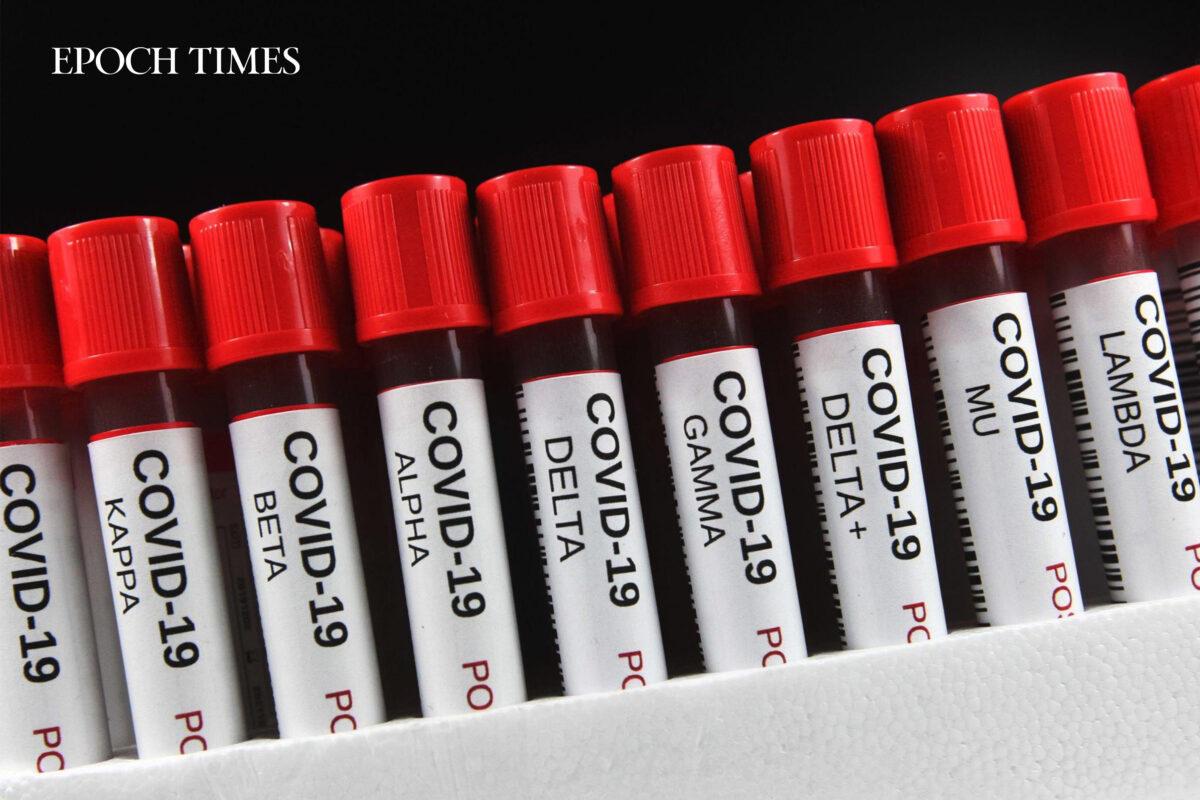
The constantly mutating SARS-CoV-2 virus has many variants, which differ from one another in terms of transmission, disease severity, and pathogenicity. And some are more of a concern to the general public than others.
READ MORE : COVID-19 Pandemic Timeline
What Are the CDC’s 4 Categories of SARS-CoV-2 Virus Variants?
The SARS-CoV-2 virus, like all viruses, is constantly changing through genetic mutations that lead to the emergence of new SARS-CoV-2 variants. A variant is a viral genome (genetic code) that may contain one or more mutations. The U.S. Department of Health and Human Services (HHS) established a SARS-CoV-2 Interagency Group (SIG) that meets regularly to assess the risks posed by SARS-CoV-2 variants circulating in the U.S. They divided SARS-CoV-2 variants into four categories, shown as follows:1.) Variant being monitored (VBM)
A variant being monitored is a variant that may have a potential impact on authorized medical countermeasures or a variant associated with more severe disease or increased transmission.2.) Variant of interest (VOI)
A variant of interest may have specific genetic markers or mutations associated with changes in how the virus behaves, or laboratory studies may suggest that the variant has some potentially relevant features that have not been studied or documented in humans.3.) Variant of concern (VOC)
A variant of concern is a variant that is evidenced to be able to increase transmissibility, cause more severe disease (increased hospitalization or death), reduce the effectiveness of treatments or vaccines, reduce protection from previous SARS-CoV-2 infection, or result in reduced sensitivity of diagnostic tests mutations.4.) Variant of high consequence (VOHC)
High-consequence variants have clear evidence that the effectiveness of preventive measures or medical countermeasures (MCMs) is significantly reduced compared to previously prevalent variants.Since the effects of variants can vary by location, the U.S. classification may differ from the World Health Organization (WHO) classification. In order to facilitate public discussion and understanding of these variants, the WHO recommends the use of Greek letters (e.g. Alpha) to name important variants. These variants are classified into “variants of concern” (VOCs) and “variants of interest” (VOIs) according to their respective transmission and pathogenicity.
VOI variants must meet one of the following two conditions:
1.) compared with a reference variant, the mutation of the variant’s genome causes a change in the phenotype of the virus, or 2.) the variant causes community transmission or spreads in multiple countries and regions. Epsilon and Zeta are examples of previous VOIs, and there’s no circulating VOI at present.Compared with VOI variants, VOC variants pose higher public health risks and raise more concerns among scientists and the general public. To be classified as a VOC, a variant must be associated with at least one of the following three changes: 1.) increased transmissibility or a change in epidemiological characteristics in an adverse direction; 2.) increased virulence or increased clinical pathogenicity; 3.) reduced effectiveness of public health, social interventions, existing diagnostics, vaccines, and treatments. Alpha, Beta, Delta, and Gamma are all previous circulating VOCs, with Omicron being the current one.
READ MORE : 8 Main Types of COVID Vaccines
SARS-CoV-2-Virus-(COVID-19)-Variants gettyimage
Why Are There Variants of the SARS-CoV-2 Virus?
Over time, all viruses change and become more diverse through mutations, and the SARS-CoV-2 virus is no exception. Every time a new coronavirus infects the human body, it is the result of the SARS-CoV-2 virus constantly replicating itself. Every time it replicates, it must replicate its own genome. There may be small errors in the replication process, so the new genome may be slightly different from the previous one. In short, these small mistakes are mutations, creating COVID-19 mutants. And the more the virus spreads, the more likely it is to change.These changes can sometimes make a virus variant better suited to its environment than the original strain. This process of changing and selecting for successful mutations is called “virus evolution.” Mutations will continue to occur, and there will be more and more mutated viruses, but most of the mutations have no effect on the behavior of the virus. Some mutations cause changes in the characteristics of the virus, such as altering its transmissibility (e.g. it may spread more easily) or severity (e.g. it may cause more severe disease).
Some viruses change quickly, while others change more slowly. In comparison with many other viruses (e.g. the HIV and flu viruses), the SARS-CoV-2 virus changes more slowly. It’s partially because of the virus’s own “proofreading mechanism,” which can correct the errors made during the virus replication process.
Which Type of Variants Does the SARS-CoV-2 Virus Have?
Virus mutation is a natural random process. The level of concern about a virus variant depends on its contagiousness, morbidity, mortality, and ability to evade detection, immunization, and treatment. On May 31, 2021, the WHO released the Greek alphabet naming rules for new coronavirus variants.The table below lists all detected mutated viruses, named in order of the Greek alphabet according to their time of discovery and confirmation, and it also exhibits their lineages, their places of origin, the time when they were first detected, their spike mutations of interest, the influence of these mutated viruses on the virus’s transmissibility, immunity, and severity. Among them, Alpha, Beta, Gamma, Delta, and Omicron are identified by the WHO as worthy of attention.
Alpha was first discovered in the U.K. in September 2020. A mutation in the spike protein was found in the Alpha variant, which made it easier for the virus to attach to host cells, so it would spread more rapidly. As a result, the Alpha variant was particularly infectious with increased hospitalization rates and fatality rates.
Beta was first discovered in South Africa in May 2020, and it then quickly became the most widely spread variant in South Africa. The mutation of its spike protein enabled the variant to bind more closely to human cells. Therefore, it spreads fast, is highly contagious, is good at evading the tracking of the human immune system, and has a very strong immune evasion ability.
Gamma was first discovered in Brazil in November 2020. It posed the greatest threat to the South American population. Mutations in this variant helped the virus attach tightly to host cells and evade some antibodies. So it was highly contagious and resulted in reinfections.
Delta was first discovered in India in October 2020. It was more infectious than any previous variant. The spike protein of this variant had an “eek” mutation (i.e. E484K mutation), which helped the virus evade certain antibodies. So its propagation speed increased significantly. Symptoms developed faster and more severely, increasing the rate of severe illness.

SARS-CoV-2-Virus-(COVID-19)-Variants gettyimage
Omicron was first discovered in South Africa in November 2021. It was more transmissible than Delta, and thus had a high transmission rate. Its symptoms were not as severe as those of the previous variants, and it was milder with lower toxicity, so its symptoms were milder and the fatality rate was lower.
A mutation called N501Y was found in the Alpha, Beta, and Gamma variants, which appeared to enhance the virus’s ability to infect cells and also made it easier for the virus to spread. The beta and gamma variants also had a key mutation called E484K, which allowed the virus to evade the immune system. The Delta variant was more easily transmitted with a short incubation period of infection, strong pathogenicity, and rapid disease progression. The Omicron variant was more contagious but less virulent, in comparison with the other variants.
Source: European Centre for Disease Prevention and Control
List of SARS-CoV-2 Variants of Concern
| Name | Lineage | Country first detected | Time first detected (year/month) | Spike mutations of interest | Impact on transmissibility | Impact on Immunity | Impact on severity |
| Wuhan strain | SARS-CoV-2 | China | December 2019 | D614G | Increased | Increased | Increased |
| Alpha | B.1.1.7 | United Kingdom | September 2020 | N501Y, D614G, P681H | Increased (v) (12) | Similar | Increased (v) (13, 14) |
| Beta | B.1.351 | South Africa | May 2020 | K417N, E484K, N501Y, D614G, A701V | Increased (v) (27) | Increased (v) (28, 29) | Increased (v) (14, 30) |
| Gamma | P.1 | Brazil | November 2020 | K417T, E484K, N501Y, D614G, H655Y | Increased (v) (38) | Increased (v) (39) | Increased (v) (14) |
| Delta | B.1.617.2 | India | October 2020 | L452R, T478K, D614G, P681R | Increased (v) (40) | Increased (v) (41-43) | Increased (v) (42, 44) |
| Omicron | BA.1 | South Africa and Botswana | November 2021 | (x) | Increased (v) (1, 45) | Increased (v) (3,46,47) | Reduced (v) (48-50) |
| BA.2 | South Africa | November 2021 | (y) | Increased (v) (1, 2) | Increased (v) (3) | Reduced (v) (4, 5) | |
| BA.4 | South Africa | January 2022 | L452R, F486V, R493Q | No evidence | Increased (6, 7) | No evidence | |
| BA.5 | South Africa | February 2022 | L452R, F486V, R493Q | No evidence | Increased (6, 7) | Unclear (8) |
Is SARS Caused by a DNA or RNA Virus?
Severe acute respiratory syndrome (SARS) is caused by a ribonucleic acid (RNA) virus.SARS is a highly transmissible and fatal infectious disease caused by a coronavirus (SARS-CoV), and SARS-CoV has a large positive-sense, single-stranded RNA with around 30,000 nucleotides and 14 functional open reading frames (ORFs). Two of these large ORFs constitute the replicase gene.
