This copy is for your personal, non-commercial use only. Distribution and use of this material are governed by our Subscriber Agreement and by copyright law. For non-personal use or to order multiple copies, please contact The Epoch Times Reprints.
Salmonella is perhaps the most common cause of food poisoning. It has the advantage of being able to infect a wide range of hosts and survive in habitats ranging from animal fur to lettuce leaves. However, a rising trend of drug-resistant Salmonella cases (pdf), as indicated in a review published in the journal Foods, points to the need for improved detection and prevention methods.
Salmonella Essentials
As a key cause of diarrheal diseases and the cause of typhoid fever, Salmonella strains are responsible for causing 1.2 million illnesses annually. First and foremost, the gram-negative bacteria are known for causing stomach pains and diarrhea when a person eats something that has “gone bad.” Salmonella has about 2,500 variants and is responsible for the hospitalization of more than 25,000 people, as well as the deaths of over 400 each year in the United States alone.
Salmonella is the most common cause of foodborne illness. The Epoch Times
Aside from stomach cramps and diarrhea, Salmonella infection can cause fever, nausea, vomiting, and a rather formidable headache. In addition, an infection caused by Salmonella Typhi could lead to typhoid fever. Along with the other aforementioned symptoms, typhoid fever leads to a skin rash and muscle weakness, and a fever as high as 103 to 104 F (39 to 40 C).
Salmonella bacteria are especially difficult to address due to the wide range of hosts and environments in which they can survive. They are nearly ubiquitous as they can live within birds, reptiles, amphibians, and most household pets. Aside from that, they can survive in frozen, fresh, and even processed goods, which is why you hear about Salmonella outbreaks popping up here and there in everything from salami sticks to “raw frozen breaded stuffed chicken products.”
Symptoms of Salmonella infection are rather mild but often agonizing to endure. The Epoch Times
The U.S. Centers for Disease Control and Prevention (CDC) has recorded a long list of Salmonella outbreaks starting from 2006. Usually, symptoms begin to appear six hours to six days after infection and last anywhere from four days to a week. However, people may also experience a lengthy period of symptoms that extends across many weeks, or no symptoms at all.
Salmonella can infect many different things. The Epoch Times
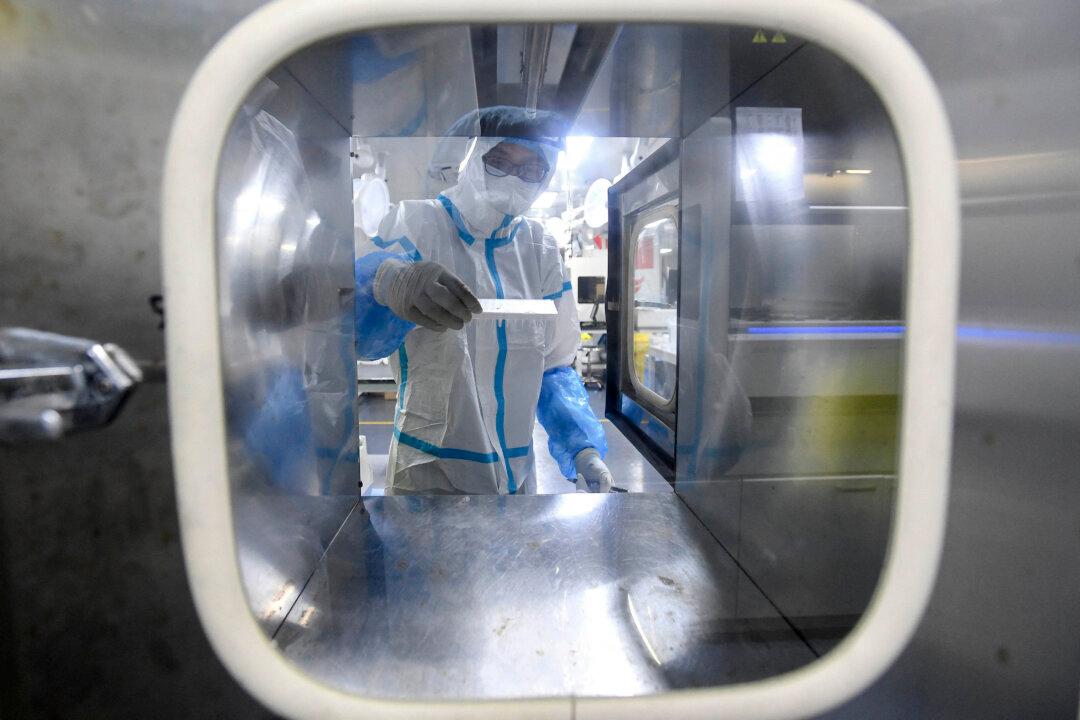
Salmonella diagnosis is usually performed in a laboratory and requires individual samples of blood, body tissue, or fluids. The diagnosis might take anywhere between one and five days, depending on the samples.
Salmonella treatment is usually supportive rather than targeted because, most of the time, drugs actually don’t help much. Fluid restoration is crucial as diarrhea caused by the disease tends to dehydrate the body. Plenty of rest is also highly recommended.
Antibiotics such as ciprofloxacin, azithromycin, and ceftriaxone are sometimes needed to treat patients with severe Salmonella infections. However, Salmonella infections with drug-resistant strains can be more severe and have higher hospitalization rates.
Multidrug-Resistant Salmonella: What Do We Do?
The rise of drug-resistant strains of Salmonella is also part of the reason why Salmonella treatment is usually only supportive. The doctor can prescribe you anti-diarrhea medicine or antibiotics, but you’ll run some risks while taking those drugs. For one, diarrhea medication might prolong the duration of symptoms while the infection runs its course. Antibiotics aren’t usually recommended either, as they may be unnecessary and cause more harm than positive results.
Salmonella usually infect the intestines and usually won’t land in the bloodstream. Antibiotics, on the other hand, are usually for treating diseases that infect the bloodstream, which means that there essentially is no point in taking them in the first place. Additionally, excessive use of antibiotics has led to an increase in drug-resistant Salmonella.
XDR in Salmonella is a growing and unfortunate trend. The Epoch Times
At least 100,000 infections in the United States alone are due to antibiotic-resistant Salmonella, including strains that are resistant to ceftriaxone and ciprofloxacin, according to the Foods review. There have also been Salmonella outbreaks that involved strains resistant to multiple antibiotics, including ampicillin, streptomycin, sulfisoxazole, and tetracycline.
Resistance continuously emerges. In 2014, the U.S. Food and Drug Administration (FDA) segment of the National Antimicrobial Resistance Monitoring System (NARMS) collected a chicken breast sample during routine monitoring. The sample was tested using whole genome sequencing—a lab technique that “photocopies” the entire DNA sequence—and identified a multidrug-resistant strain of nontyphoidal Salmonella (serotype Infantis). This strain included an additional gene that was not common among Salmonella from chicken in the United States.
In 2016, a typhoid fever outbreak caused by extensively drug-resistant (XDR) Salmonella enterica serotype Typhi, resistant to myriad antibiotics (chloramphenicol, ampicillin, fluoroquinolones, and third-generation cephalosporins), was reported in Pakistan. Cephalosporin-resistant S. Typhi strains have also been reported in India, Bangladesh, and many other countries, so it is not an isolated cluster of cases in a single country.
From 2018 to 2019, there was an outbreak of Salmonella Infantis in the United States. The U.S. Department of Agriculture (USDA) identified this strain at an increasing frequency in chicken samples. This strain, along with other types of resistant Salmonella linked to sources such as pork, turkey, and beef, is drastically reducing the options health care workers have for treating patients with severe infections.
Patients infected with strains resistant to ampicillin, chloramphenicol, streptomycin, sulfonamide, and tetracycline have a nearly five times higher mortality risk than patients with infections from regular strains. Subjectively speaking, it is safe to say that not contracting Salmonella in the first place will save you a lot of trouble.
Prevention and Detection: The Best Way to Stay Healthy
Prevention is relatively simple and you’ve probably heard of it before. One method is to always fully cook raw goods before you eat them. You should also thoroughly wash vegetables and fruits if you’re eating them raw, be careful around animals and pets, and pay close attention to local announcements for outbreaks.
The best way to treat Salmonella is to not get it in the first place. The Epoch Times
At the same time, personal hygiene should be observed, especially during mealtimes, after contact with animals, or when someone near you is infected with Salmonella. Also, remember to maintain a regular cleaning schedule as well as not share a common space with animals when you’re eating.
Due to the nature of Salmonella and the wide range of environments in which they can survive, eliminating the bacteria is nearly impossible, which is why there is an unmet need for a Salmonella rapid diagnostic testing, much like the COVID rapid tests used throughout the pandemic.
At the same time, we should steer ourselves away from overly relying on antibiotics when we are infected with bacterial pathogens. On the one hand, overusing them shows that we don’t fully trust or appreciate the complex mechanism that is our God-given immune system. On the other hand, it will inevitably lead to more drug resistance among bacteria and other pathogens, which is a vicious cycle that will most likely end in disaster. We should focus more on our holistic health and enhance what we already have.
Views expressed in this article are the opinions of the author and do not necessarily reflect the views of The Epoch Times. Epoch Health welcomes professional discussion and friendly debate. To submit an opinion piece, please follow these guidelines and submit through our form here.
Xiaoxu Sean Lin is an assistant professor in the Biomedical Science Department at Feitian College in Middletown, New York. He is also a frequent analyst and commentator for Epoch Media Group, VOA, and RFA. He is a veteran who served as a U.S. Army microbiologist and also a member of Committee on the Present Danger: China.