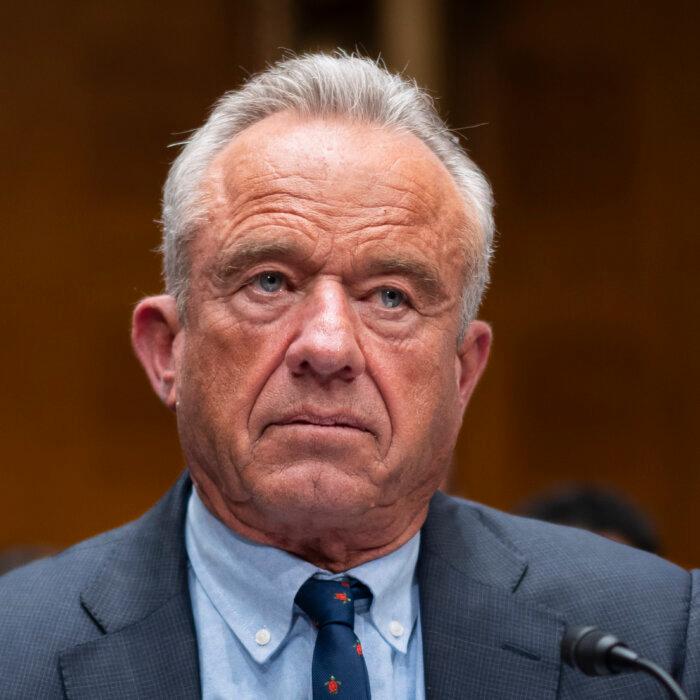
Health Secretary Robert F. Kennedy Jr. has announced more than $281 million in federal grants aimed at expanding addiction treatment, overdose prevention, mental health services, and recovery programs.
The funding, announced on July 6, will be distributed through 15 grant programs run by the Substance Abuse and Mental Health Services Administration (SAMHSA), an agency within the Department of Health and Human Services (HHS).
Kennedy said in a statement that the money is being invested to “equip communities with the tools they need to save lives, restore families, and Make America Healthy Again.”
SAMHSA stated that the investments will advance President Donald Trumpʼs Great American Recovery Initiative by expanding access to a wide range of behavioral health services, including substance use disorder treatment, overdose prevention and response, mental health and suicide prevention, trauma-informed care, integrated care, recovery supports, first responder training, privacy education, and workforce development.
“President Trumpʼs Great American Recovery Initiative is putting recovery into action,” Kennedy said.
SAMHSA’s largest funding opportunity, worth $68.2 million, will expand access to medication-assisted treatment for opioid use disorder.

Fatal overdoses attributed to synthetic opioids had risen 25-fold in the United States over a 15-year period, peaking at 76,000 in 2023, according to a study published in the journal Science in January.
SAMHSA’s announcement also includes $55.7 million for Project AWARE, which supports school-based mental health programs and services, and $40.6 million for the National Child Traumatic Stress Initiative, which funds community treatment and service centers for children and young adults affected by traumatic events.
A further $34.7 million will go to First Responders-Comprehensive Addiction and Recovery Act grants, which train first responders and communities to administer and distribute Food and Drug Administration-approved opioid overdose reversal medications.
SAMHSA will also provide $22 million for Mental Health Awareness Training grants, designed to improve mental health literacy and help communities identify and respond to mental health needs.
Another $13.7 million will support the integration of physical and behavioral healthcare in clinical settings, while $11 million will go toward community prevention and response programs aimed at reducing overdose deaths by expanding access to opioid overdose reversal medications.
Other funding includes $10.5 million for treatment, recovery, and workforce support programs, $8.8 million for campus suicide prevention grants, and $6 million for emergency department programs that promote alternatives to opioid-based pain treatment.
The package also includes smaller grants for assertive community treatment, family mental health networks, recovery community services, statewide recovery networks, and behavioral health privacy education.
“These funding opportunities reflect SAMHSA’s commitment to addressing the full continuum of behavioral health needs — from preventing substance use and suicide to expanding mental health services, trauma-informed care, addiction treatment, reversing overdoses, and recovery support,” said SAMHSA Principal Deputy Assistant Secretary Christopher D. Carroll.
“By investing in evidence-based programs and community partnerships, we can help save lives, improve outcomes, and strengthen the health and well-being of people across the country.”
“DEA believes these substances pose an imminent threat to public safety given their effects are highly unpredictable,” the agency said in a statement. “Today’s action is part of a broader effort to combat the opioid epidemic and protect American families from dangerous synthetic drugs.”
DEA Administrator Terrance Cole said in a statement: “Today’s action targets highly concentrated, synthetic 7-OH products, which pose a growing threat to public safety and health. Temporarily scheduling these substances underscores the emphasis this Administration has put on the safety, health, and well-being of the American people.”
Cole said the action gives law enforcement and public health partners additional tools to address what he called an emerging threat and thanked the Food and Drug Administration and HHS for their partnership.