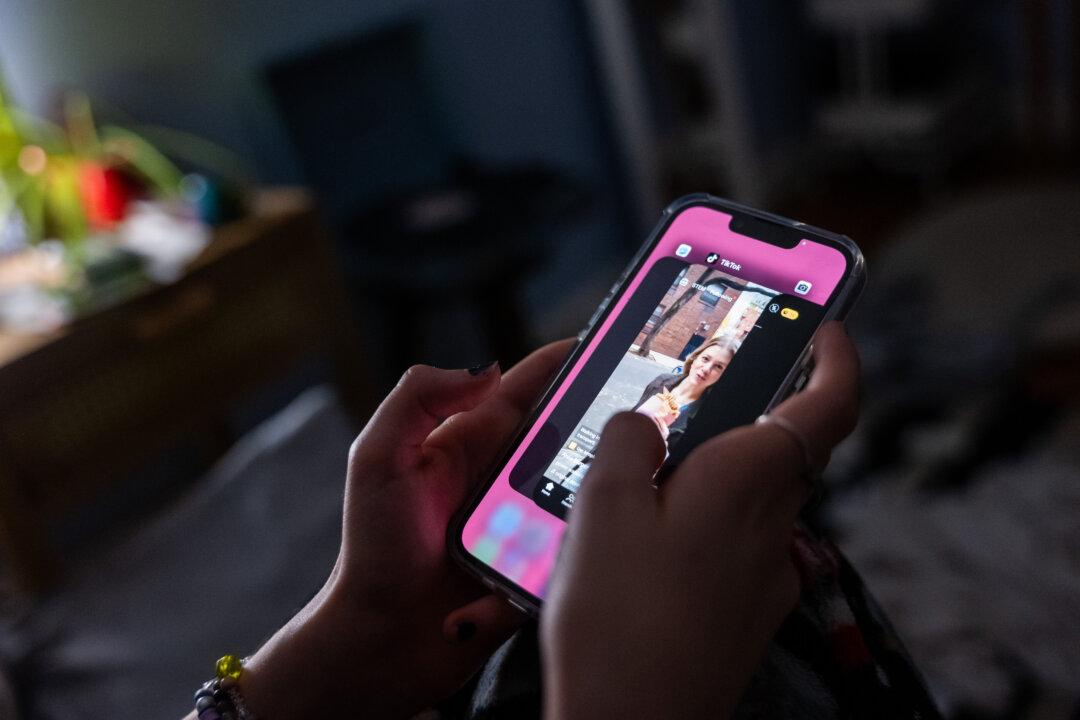
Phone use may reduce mothers’ interactions with their infants, new research suggests.
“Parental phone use is not uniformly ‘negative’ from the perspective of child speech inputs but rather may have different effects depending on how and when phones are used, with potentially distinct effects on children’s language development,” the study authors wrote.
Researchers at the University of Texas in Austin found that phone use lasting only one to two minutes was more strongly linked to less mother-to-infant speech. Mothers also tended to speak to their babies less when phone use coincided with mealtimes or family members returning home, such as between noon and 1 p.m. and between 3 and 4 p.m.
“A growing number of studies are finding associations between parental phone use and children’s language development. We wanted to look at the way phone use may impact the quantity of speech infants hear as a potential mechanism for this connection,” study authors Miriam Mikhelson and Kaya de Barbaro said in a press release.
Brief Phone Use Reduced Speech More
The researchers evaluated 16 mother–infant pairs with infants averaging 4.1 months old. Data were collected over a week, totaling 16,673 minutes of synchronized, real-world phone use and audio.
“Technoference, which refers to an interruption in a social interaction caused by device use ... has attracted attention within the field of developmental psychology, particularly in the context of parental phone use disrupting parent–child interactions,” the authors wrote.
Brief phone use lasting one or two minutes reduced the mother’s speech output the most, with mothers’ per-minute word count reduced by 26 percent. More extended phone use of at least seven minutes showed a word-count reduction of 12 percent.
The authors speculated that their findings concerning the amount of time spent on the phone might be linked to the types of phone applications being used. Shorter durations of phone use might correspond with checking an email or responding to a text message, which requires more of a parent’s attention. “However, we did not have data on the specific applications in use. Future work should further distinguish phone use types from phone or audio records, for example, use of phone or video calls versus social media, texting, or email,” the authors wrote.
Ms. de Barbaro, an assistant professor in the University of Texas Department of Psychology, encourages parents to do their best to care for their children.
“It is possible for parents to use their phones in ways that do not interrupt their interactions with their infants—for example, when they wouldn’t otherwise be engaging or talking with them,” she told The Epoch Times.