





For many Americans, when the word parasite is mentioned, they associate it with traveling overseas and consuming contaminated food or water. However, parasitic infections are much more common than you likely realize.
Major Types of Parasites
There are a wide variety of parasites that can infect humans, but they break down into three distinguishable categories:Ectoparasites
Ectoparasites are bugs that attach to skin to feed on skin tissue or blood. Examples of these parasites include ticks, mosquitoes, lice, flies, fleas, mites, and bed bugs. Some ectoparasites carry other pathogens, such as Lyme disease from ticks or West Nile virus from mosquitoes, that are transmitted to the host human.Protozoa
Protozoa parasites are microscopic in size, and they can easily multiply and spread in humans to cause intense health problems. A few common protozoan parasites include:Blastocystis Hominis: These can be a cause of food sensitivities as a result of a leaky gut.
Plasmodium Falciparum: These cause malaria and are characterized by the host dealing with intense flu-like symptoms.
Babesia Microti: This is a Lyme coinfection that can result in anemia and flu-like symptoms.
Helminths
Helminths are parasitic worms, and what most people likely picture when they think of parasites. These parasites are visible to humans without the use of a microscope and vary in size from small to as large as 12 inches long.


Roundworms are a helminth that infects specific areas of the body such as the liver, lungs, intestines, skin, and muscle tissue. Pinworms are a common type of roundworm, roughly the size of a staple and characterized by the female pinworm’s pin-like tail.
Symptoms
When dealing with troubling symptoms of any kind, it’s important to seek to find the root cause. In many cases, parasites can be the root cause of a wide variety of health complaints. Concerns such as autoimmune conditions, food sensitivities, and gut problems may all be caused by parasites. Symptoms of potential parasite infection are wide ranging, including:- Digestive problems, including unexplained constipation, diarrhea, or persistent gas
- Skin issues, including unexplained rashes, eczema, hives, and itching
- Muscle and joint pain
- Fatigue, even when you get enough sleep
- Never feeling full, even after eating a big meal
- Constant hunger, even when you’re eating enough
- Iron deficiency anemia (lab tests show an abnormally low iron level)
- Trouble falling asleep or waking multiple times a night
- Grinding your teeth during sleep
- Unexplained feelings of anxiety
- Air hunger
- Past food poisoning after which you haven’t felt right since
- Recurrent yeast infections
- Itching of the anus or vagina
Common Sources and Causes of Parasites
As mentioned earlier, contrary to what many believe, you don’t have to travel to a third-world country to pick up a parasite. When traveling internationally, it’s most common to contract a parasite from contaminated water. However, there’s a high chance of contracting parasites right here in the United States.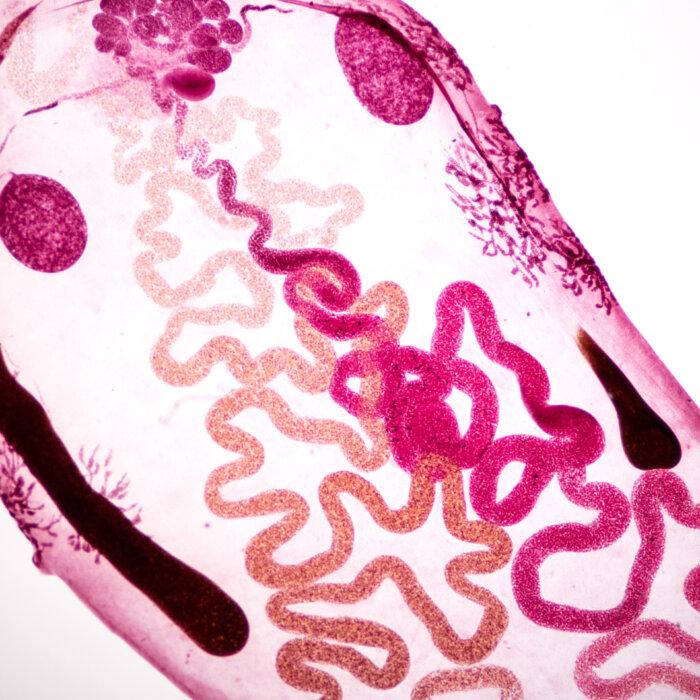



Testing
In the conventional and functional medicine world, stool testing is often the first test that providers choose to assess for parasites. Unfortunately, stool testing can be incredibly unreliable when it comes to the hundreds of species that could be inhabiting a human. It’s extremely easy for labs to overlook parasites that may be in the stool, but it’s also possible that not all parasites are living in the colon. In some cases, this is because of parasites attaching themselves to the intestinal lining.Blood tests are another testing option but still are unable to test for every single type of parasite. Typically, blood tests test for visible parasites, antibodies, and eosinophils and monocytes.
Testing for visible parasites often involves a blood smear examined under a microscope, with the lab technician looking for parasites that reside in the blood. This can be a successful method of identifying Babesia (Lyme coinfection) or the parasite that causes malaria, Plasmodium.
The immune system develops antibodies to fight off a parasitic infection, so a blood test can be useful in checking for elevated antibodies indicating potential parasites.
Elevated eosinophils or monocytes (white blood cell types) markers in a blood test could indicate that the body is struggling with parasites. Keep in mind that elevated eosinophils could also indicate allergies, malignancy, viral infections, etc.
If eosinophils come back normal and you’re experiencing symptoms, it’s worth discussing options with a clinician. Some will argue that it isn’t necessary to kill parasites when eosinophils aren’t showing activity, yet every human has some level of parasitic activity. For this reason, many clinicians will go by symptoms when assessing whether or not parasites are a concern for an individual.
If you suspect a parasite infection or have been diagnosed with one, it can be discouraging and overwhelming to know where to start with healing. While parasites can cause a wide variety of long-term, chronic health problems, they’re often treatable and preventable. With an effective healing protocol, many health concerns and symptoms can be alleviated.