Despite numerous studies conducted over the years demonstrating the diverse potential of ozone in treating various illnesses, the use of ozone therapy as a therapeutic agent remains controversial.
That’s partly because ozone has an inherently unstable molecular structure, due to the nature of its mesomeric states.
Some scientists believe that these states might be risky, while others believe this volatile nature is what gives ozone the therapeutic effects revealed in various studies.
The results of those studies aren’t entirely reassuring the U.S. Food and Drug Administration (FDA), however.In 2019, the FDA went as far as to say, “Ozone is a toxic gas with no known useful medical application in specific, adjunctive, or preventive therapy.”
And yet, there is a significant body of research finding that ozone has several therapeutic applications. A detailed review published in Medical Gas Research in 2017 acknowledges the unstable nature of the gas but notes that “copious volumes of research have provided evidence that [ozone’s] dynamic resonance structures facilitate physiological interactions useful in treating a myriad of pathologies.”This is why, despite concerns, suspicions, and differing opinions, a multitude of ozone therapies have been explored with substantial benefits found in a wide range of short- and long-term health issues.
Despite the FDA’s blanket rejection of ozone treatments, the current regulations tolerate the use of ozone in situations in which it has proven its safety and effectiveness.
Therapeutic Uses
Some types of cancer and COVID-19 have been found to improve with ozone therapy, suggesting that ozone may be beneficial in reducing the risk or severity of these illnesses. Research has found that the therapy decreased inflammatory markers linked to COVID-19 severity and that it was associated with a significantly shorter time to clinical improvement.
Also, a May 2022 study published in the Journal of International Medicine looked at the apoptotic effect (the process of cell death) of ozone therapy on mitochondrial activity of highly metastatic breast cancer cell line MDA-MB-231 using in vitro approaches.
The study concluded that “ozone has been shown to suppress the growth of human cancer cells in culture, implying that cancer cells have a compromised defense system against ozone damage.”
The authors state, “In the current study, we demonstrated that ozone treatment could induce an anti-cancer effect on breast cancer cell lines.”
Ozone Therapy and Cancer
Ozone therapy has been explored in many studies for cancer treatment. It has been shown to increase the activation of the immune system, support the production of cancer-fighting cells, and contribute to the general resilience of the body. It has also been shown to play an important role in reducing the negative effects of chemotherapy.
In 1931, Dr. Otto Warburg was awarded the Nobel Prize for his research on respiratory enzymes. Warburg discovered that cancer cells have a lower respiratory rate than other cells and in turn deduced that cancer cells grow and multiply in low-oxygen environments. He theorized that increasing the oxygen level can damage or even kill them.
In 1980, a study published in Science found that depending on the concentration, ozone could significantly suppress the growth of distinct human cancer cells (breast, lung, and uterus) while having no effect on non-tumor cell lines.
The study found that the presence of ozone at 0.3 to 0.5 part per million inhibited cancer cell growth by 40 and 60 percent, respectively, and exposure to ozone at 0.8 part per million inhibited cancer cell growth by more than 90 percent.
Ozone therapy has also been found to be a complementary treatment for cancer patients undergoing conventional treatments.
Researchers in a study published in Chemotherapy in 1990 tested their hypothesis that, because certain chemotherapy drugs can have a harmful or toxic effect, combining ozone with chemotherapy drugs may improve the effectiveness of the drugs against cancer cells.
In the study, they tested their hypothesis by treating human cancer cells with ozone and a chemotherapy drug called 5-fluorouracil (5-FU). They found that ozone helped to overcome resistance to 5-FU in cancer cells that had previously been resistant to the drug. Additionally, they found that ozone had a synergistic or at least additive effect when used in combination with chemotherapy in breast and colon cancer cells.
Another cancer drug used to treat many different types of cancer, called Cisplatin (CDDP), causes kidney damage in about 25 percent of patients as a side effect. This can lead to acute renal failure—a potentially fatal condition.
A study looked at whether ozone therapy could help reduce kidney damage caused by CDDP in rats. The researchers found that the rats that received the ozone therapy had lower levels of a molecule called serum creatine, which is a marker of kidney damage, than rats that didn’t receive ozone therapy.
Ozone Therapy and COVID-19
Two recent studies have looked into ozone therapy as an adjuvant therapy for COVID-19.
In a September 2022 study published in International Immunopharmacology, researchers found that ozone therapy improved inflammatory markers, such as IL-6, LDH, D-Dimer, and CRP.
Studies show that the effect of COVID-19 on the cardiovascular system is more severe in patients with elevated levels of inflammatory factors such as IL-6, high levels of which can be an indication of a “cytokine storm”—an excessive and potentially life-threatening immune response that can damage organs such as the lungs and kidneys.
A 2021 study published in the same journal found that ozonated autohemotherapy was associated with a shorter time to clinical improvement—seven days versus 28 days in the placebo group.
In addition to its therapeutic uses for certain types of cancer and COVID-19, ozone therapy has been shown to be an alternative therapeutic approach for some diseases such as circulatory disorders, AIDS, asthma, and cardiovascular diseases.
Ozone Therapy Administration
Ozone is a natural gaseous molecule made up of three oxygen atoms. It was first observed in 1840 by German chemist Christian Friedrich Schonbein.
Ozone is like the Earth’s natural cleaner. It acts like soap, combining with any pollutant that it comes in contact with and helping to neutralize it. The stratosphere layer of the atmosphere also contains an abundance of ozone, which softens the impact of the sun’s ultraviolet rays.
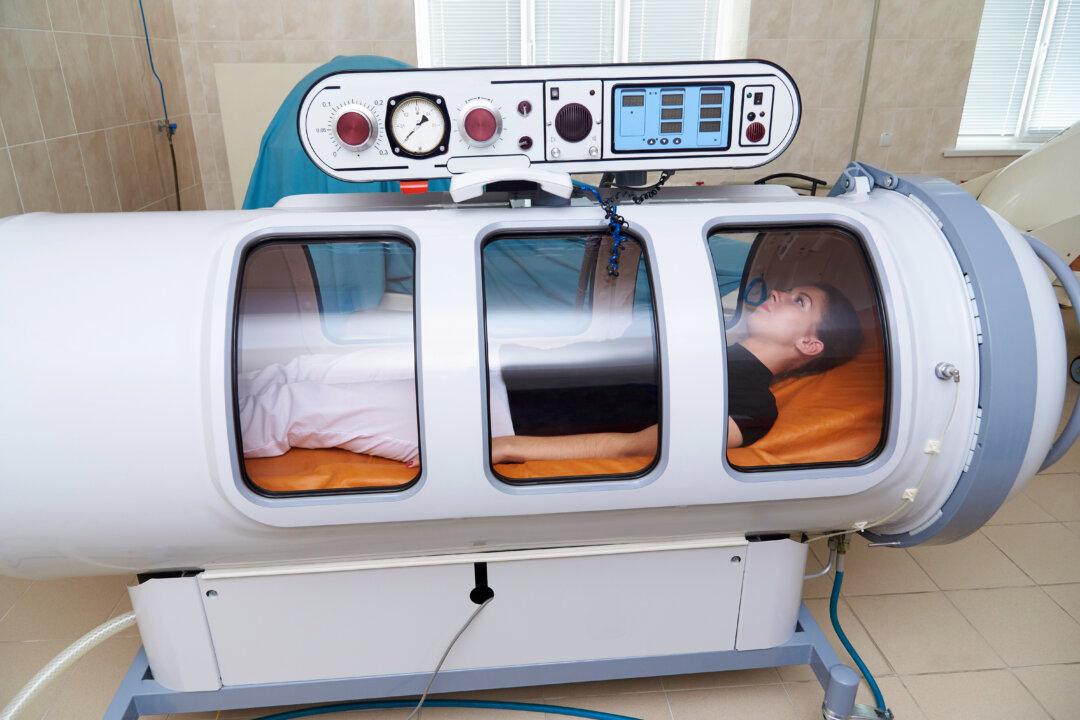
Ozone therapy is the process of administering ozone gas into the body to treat a disease or wound.
The first ozone generator for medical use was developed in 1857 and has been used to disinfect medical supplies and treat different health conditions for more than 100 years.
Ozone Therapies
Ozone therapy can be administered in different ways. Some of the methods are:
- Ozone autohaemotherapy (AHT): During this procedure, a certain volume of the patient’s blood is withdrawn through an IV line. The blood is then enriched with an ozone-oxygen gas mixture and then reinfused back into the patient.
- Direct ozone injection. The same gas mixture is introduced into one syringe, and blood from the vein is taken into another syringe, then carefully transferred into the syringe with the gases. The blood enriched with ozone is administered intramuscularly into the buttock.
- Ozone sauna. Humidity and heat open the pores, allowing ozone to penetrate the skin to the bloodstream, where it can travel to the fat and lymph tissue.
A Divided Scientific Community
Despite compelling research and studies spanning many years showing ozone to have a wide range of applications in treating various diseases because of its unique properties, the use of ozone therapy as a therapeutic agent currently remains controversial.
There is a perception that ozone is always toxic, but evidence indicates that when it’s applied following a specified method, ozone can be effective in the treatment of degenerative diseases.