Additional measles infections have been reported from South Carolina and Michigan, with nationwide case numbers, so far this year, exceeding the 2024 total.
“The two new cases bring the number of confirmed measles cases in South Carolina to 10 since July 9, 2025, eight of which have been in Spartanburg County,” DPH said.
“Some cases are travel-related exposures or close contacts of known cases. Other cases, such as the current outbreak, have no identified source, suggesting that measles is circulating in the community and could spread further.”
PHMC warned that citizens who were at the Trinity Health Urgent Care on Oct. 2 from 03:45 p.m. to 7 p.m. could have been exposed to the highly contagious disease.
Such individuals should watch out for any relevant symptoms through Oct. 23, PHMC said.
Symptoms such as rash, cough, fever, red and watery eyes, and runny nose typically appear within 7-14 days of exposure.
PHMC advised people who suspect any symptoms to remain at their homes and get in touch with a health care provider before seeking care.
“The risk of illness is always present, and we each have a responsibility to protect our health,” said PHMC Health Officer Kathy Moore.
Out of the 1,563 infections this year, 39 percent are among individuals aged 5-19, with 33 percent among those aged over 20, the agency said.
Of the total infected individuals, 12 percent have been hospitalized. Children under the age of five have seen the highest rate of hospitalizations, with 22 percent of them being admitted.
There have been three confirmed deaths from measles this year, according to the CDC.
Ear infection and diarrhea are some of the common complications arising from measles infections. Serious health effects include pneumonia and encephalitis, an inflammation of the brain.
If one person gets infected, nine out of 10 nearby individuals will also get infected if they are not protected, the CDC said.
“Measles was declared eliminated from the United States in 2000,” the agency added.
“However, measles is still common in many parts of the world. Every year, measles is brought into the United States by unvaccinated travelers who get measles while they are in other countries. These travelers are mostly Americans and sometimes international visitors.”
This year, 21 out of the 1,563 measles cases were identified among international visitors to the United States, according to the CDC’s Oct. 8 update.
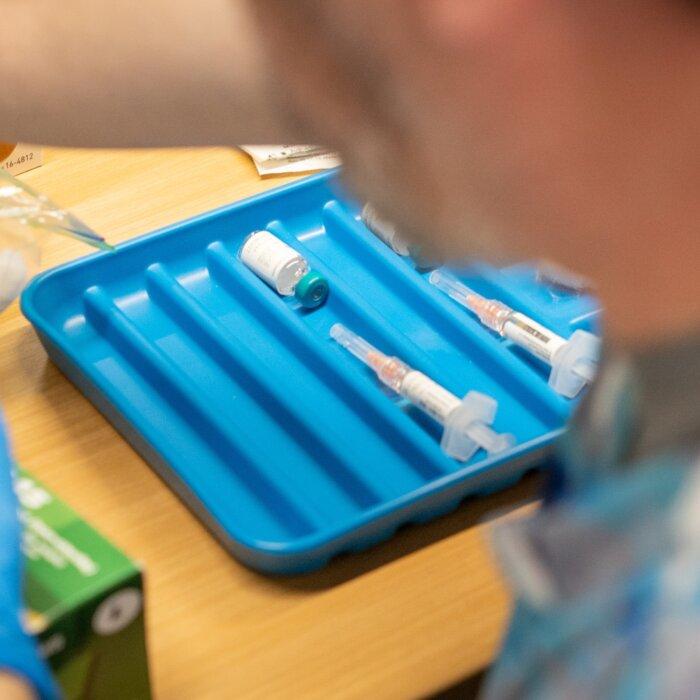
The agency advises using the measles, mumps, and rubella (MMR) vaccine, terming it “very safe and effective.”
According to the CDC, when over 95 percent of a population is vaccinated with the MMR vaccine, most people get protected due to herd immunity.
“However, vaccination coverage among U.S. kindergartners has decreased from 95.2 percent during the 2019–2020 school year to 92.7 percent in the 2023–2024 school year, leaving approximately 280,000 kindergartners at risk during the 2023–2024 school year,” the agency said.
“At local levels, vaccine coverage rates may vary considerably, and pockets of unvaccinated people can exist in states with high vaccination coverage. When measles gets into communities of unvaccinated people in the United States, outbreaks can occur.”
“I call on vaccine manufacturers to develop safe monovalent vaccines to replace the combined MMR and ‘break up the MMR shot into three totally separate shots,’” he said in an Oct. 6 post on X, quoting President Donald Trump, who last month suggested breaking up the vaccines.
MMR vaccines, introduced in the United States in 1971, can cause side effects such as fever and febrile seizures. MMR vaccines for the U.S. market are manufactured by GlaxoSmithKline and Merck.