The study was published by the University of California, San Francisco (UCSF) and other researchers and made available in the Journal of the American Medical Association (JAMA) on Aug. 11. The study spanned from 2017 to 2022. The survey results were collected from 9,003 adults aged 18 to over 60 in 2017, 5,979 of those same respondents in 2020, and 5,420 of those same respondents in 2021.
The researchers found that many respondents thought marijuana smoke was less harmful than tobacco smoke, and “these views do not reflect the existing science,” with 37 percent of respondents in 2017 saying smoking cannabis daily was safer than smoking tobacco daily, increasing to 44 percent in 2021.
Respondents also thought that secondhand smoke from marijuana was safer than tobacco, with 35 percent saying so in 2017 and 40 percent in 2021.
“There was a significant shift from 2017 to 2021 toward a more favorable perception of cannabis,” the study notes.
Only 4.8 percent of respondents believed it was safe for children, and 5.3 percent thought it was safe for pregnant women, which remained relatively unchanged over the survey period.
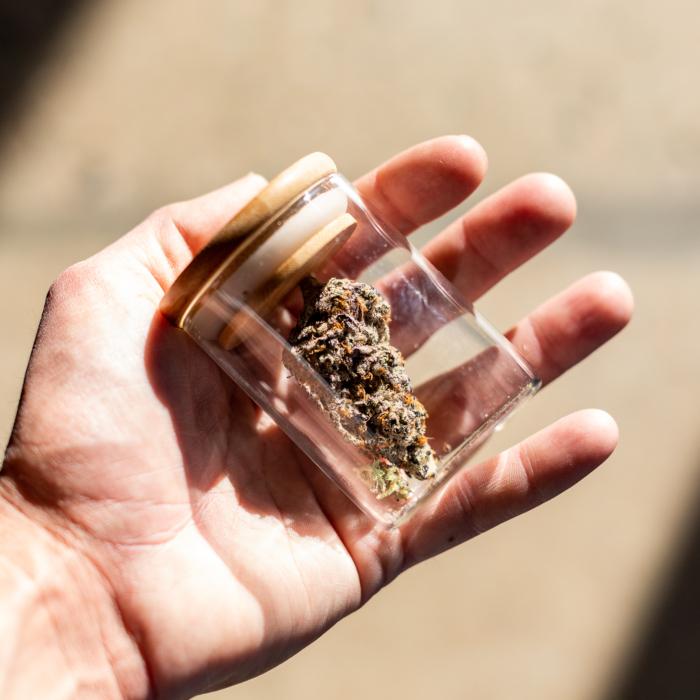
The study points out that smoking itself—inhaling combustion—is harmful and likely to contain carcinogens. Furthermore, emerging research shows smoking marijuana could be more dangerous than smoking tobacco.
“Studies have found that combustion of cannabis, whether through smoking or vaping, produces a greater amount of particulate matter than tobacco,” the study notes.
Secondhand Smoke
The study focused on smoking and perceptions of it, not the various ways marijuana can be used.Researchers noted that until health campaigns had been run to alert the public of the health risks of secondhand cigarette smoke, people were often unaware it was about as unhealthy as firsthand smoking. As awareness rose, society created smoke-free environments.
“Although other forms of cannabis are increasing in popularity, smoking is still the most common form,” the study notes. “Studies of cannabis use found that it was associated with multiple negative health outcomes, including cannabis dependence, increased respiratory symptoms, worse cognitive performance, and increased incidence of psychiatric disorders. Despite this, regulation of cannabis has tended to be less restrictive than that for tobacco.”
It said that while known medicinal benefits are associated with using some cannabinoid treatments, smoking was associated with adverse health outcomes.
“Tobacco and cannabis smoke share many chemical compounds that are known carcinogens, and smoking cannabis is associated with increased risk of head and neck and other cancers,” it reads. Other studies have also found that secondhand smoke, in particular, is associated with cardiovascular and lung disease.
But while marijuana accessibility has increased, public awareness of the health risks has not, the study pointed out. It is not the only survey that has had respondents say they believe marijuana is safe.
Larger Trend
The UCSF researchers noted that the change was not associated with respondents’ own states changing marijuana legalization status.“This suggests that the increasing perception of safety of cannabis may be a larger, national trend rather than a trend seen only in states with cannabis legalization,” the study reads.
The National Survey on Drug Use and Health, which surveys 70,000 people annually, similarly found increasingly favorable views of marijuana.
“About one fourth of people (27.4 percent) perceived great risk from smoking marijuana once or twice a week,” the survey found.
Various studies note the lack of public awareness of the harms of marijuana use.
“We found that less than 5% of the internet claims about the health benefits of cannabis use were proven to be true based on available evidence,” the researchers said.