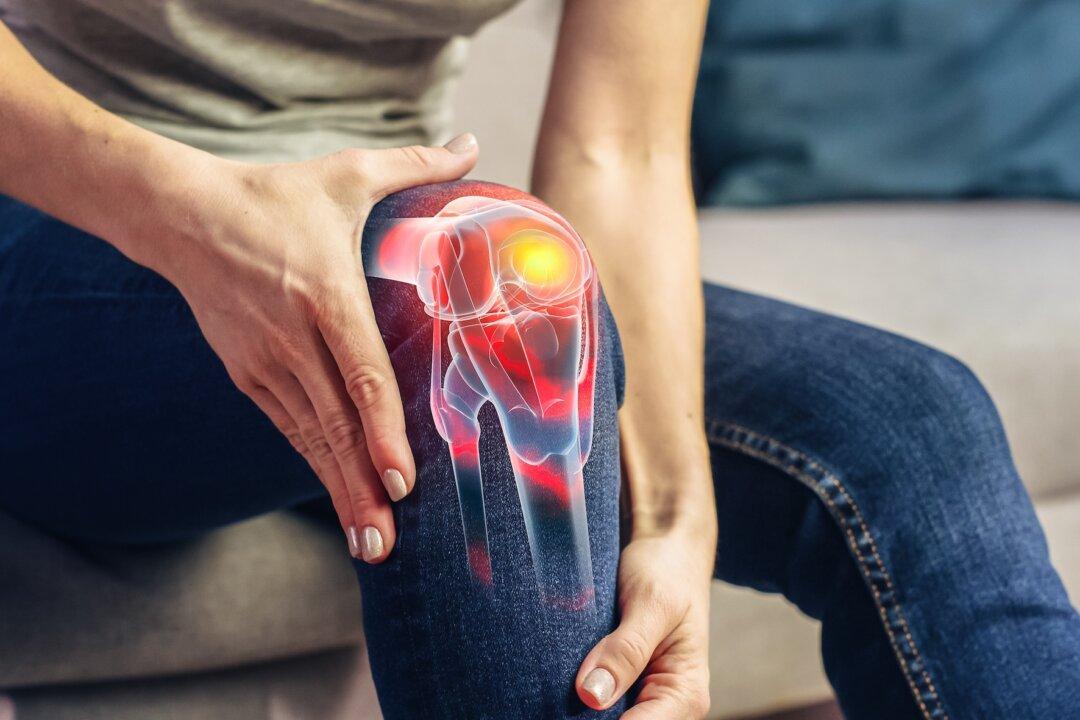
A review of 47 studies on 22,037 patients with knee osteoarthritis treated for at least 12 months showed no clear difference in controlling long-term pain between medications and placebos (JAMA, 2018;320(24):2564-2579). There was a slight time-limited pain control with a non-steroidal (celecoxib) and glucosamine.
- Nonsteroidal anti-inflammatory drugs (NSAIDs) such as ibuprofen and other pain medicines.
- Antioxidants.
- Bone strengtheners such as bisphosphonates.
- Joint injections such as hyaluronic acid and corticosteroids.
- Chemicals found in cartilage such as glucosamine and chondroitin sulfate.
- Disease-modifying agents such as cindunistat or sprifermin.
Know the Cause of Your Joint Pain
If you do not already have a diagnosis, check with a doctor to see if you have rheumatoid arthritis, psoriatic arthritis, gout, reactive arthritis from an infection, or some other known cause of joint pain. If you have sudden locking of your joint that gets better and then recurs, you may have “joint mice,” loose pieces of cartilage that slip between your cartilage to cause horrible pain. This can usually be cured by removing the loose pieces with arthroscopic surgery.What Causes Osteoarthritis?
A diagnosis of osteoarthritis used to mean that your doctor had ruled out other known causes of knee pain and had no idea what was causing your joint pain. Now we know that people with osteoarthritis have high blood levels of galectins that turn on a person’s immune system to cause inflammation, just as in rheumatoid arthritis or reactive arthritis (Journal of Immunology, Feb 15, 2016;196(4):1910-1921). If your immune system stays overactive, the same chemicals and cells that are used to attack germs can attack and destroy the cartilage in your joints.- Omega-3 oils in fish.
- Leafy green foods such as kale, spinach, and parsley.
- Weight reduction in people who are overweight (but not in thin people).
- Strengthening and flexibility exercises (Arthritis Care & Research, Dec 5, 2017;69(12) and aerobic exercise (The Knee, January 18, 2018).
- Avoidance of smoke.
- Restriction of alcohol.
Anti-Inflammatory Lifestyle to Treat Osteoarthritis
- Eat an anti-inflammatory diet that includes lots of fruits, vegetables, whole grains, beans, nuts, and other seeds, and restricts red meat, processed meats, foods with added sugar, all sugared drinks including fruit juices, and fried foods. People who eat an anti-inflammatory Mediterranean-style diet are at reduced likelihood to get osteoarthritis (Clin Nutr, Oct 8, 2016).
- Lose weight if overweight. Excess weight causes inflammation, and obesity is a major risk factor for osteoarthritis (Int J Obes Relat Metab Disord, 2001;25(5):622-627); Osteoarthritis Cartilage, Oct 27, 2015. S1063-4584(15)01364-3; Arthritis and Rheumatism, Sept 15, 2008;59(9):1207-13). Losing as little as 11 pounds reduced risk of developing knee osteoarthritis among women by 50 percent (Arthritis and Rheumatism, August 1998;41(8):1343-55).
- Move more. Osteoarthritis almost always worsens with inactivity. Exercise increases cartilage quality in osteoarthritis (Med and Sci in Sprts and Ex. Mar 23, 2017), and a review of 55 studies showed that weight-bearing exercise reduced pain and improved joint function (British Journal of Sports Medicine, September 24, 2015). Aerobic and strength training for 20 weeks markedly decreased knee pain and increased mobility (Arthritis Care & Research, Aug. 30, 2016). A review of six studies of 656 men and women with knee osteoarthritis found that exercise improves symptoms of knee pain in osteoarthritis and that it didn’t make much difference whether the knee exercise program was of low or high intensity (Cochrane Database Syst Rev, 2015 Oct 29;(10):CD010203). However, you need to be guided by pain and always stop if the pain worsens.
- Avoid impact sports. The force of your feet hitting the ground can break off cartilage in your knees. Do not run, jump, or participate in sports that involve the strong impact of your foot hitting the ground. Non-impact sports include cycling, swimming, water aerobics, and use of machines such as ellipticals or stair-steppers where your feet are supported by the equipment as you move.
Use Medications As Needed to Control Pain
It is acceptable to try to control your pain with NSAIDs [non-steroidal anti-inflammatory drugs] or other pain medications, but realize that they do nothing to stop progressive joint destruction and do not cure the pain. Take the lowest dose that helps to relieve your pain and use them only when needed.If the pain becomes so unbearable that it keeps you awake at night, it may be time to consider a knee replacement. However, joint replacements do not last forever; at this time most replacements last about 15 years, so put off the surgery as long as you can. Your surgeon should caution you that replacement joints increase risk for infections because any infection in your body can settle in the replaced joint since it has no local immunity.