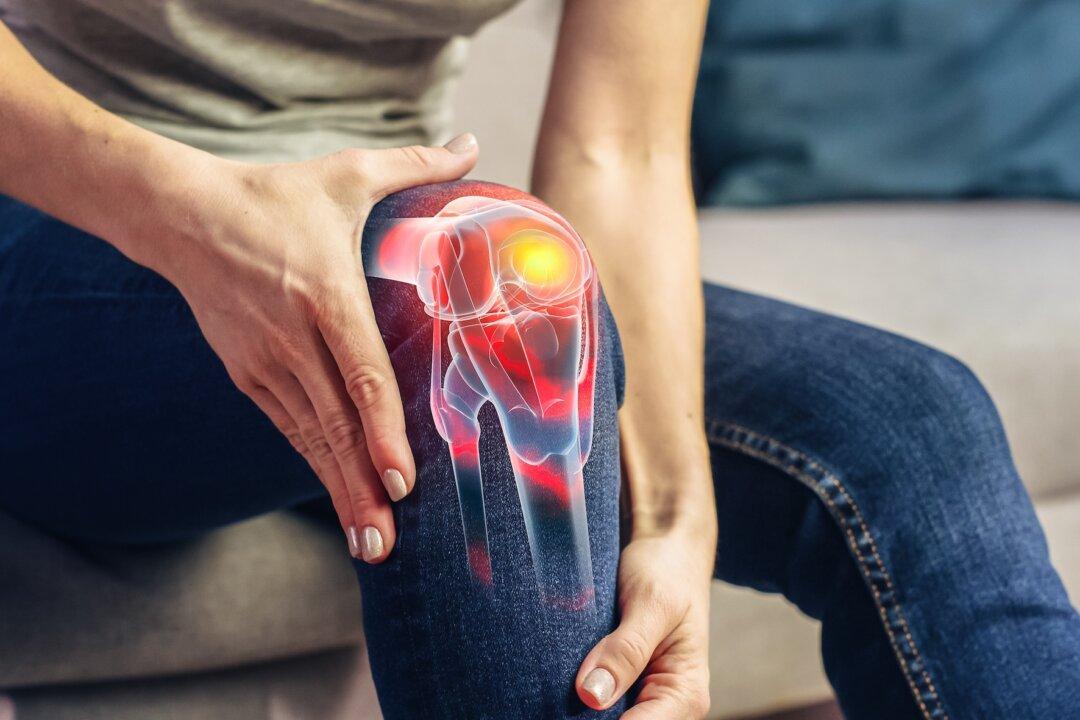
Exercise Therapy Improves Mobility and Reduces Knee Pain
A new randomized controlled study of 126 people with knee osteoarthritis and at least one of the following: heart disease, heart failure, type 2 diabetes, chronic obstructive pulmonary disease (COPD) or obesity (body mass index greater than 24), showed that aerobic and strength training for 20 weeks markedly decreased knee pain and increased mobility (Arthritis Care & Research, August 30, 2016). The exercise group did much better on:• an index that measures pain, mobility and movement called the Western Ontario and McMaster Universities Osteoarthritis Index (WOMAC), • scaled physical functioning, and • improvement in a six–minute walking test.
The patients were tested at the start of the study, after 20 weeks of graded exercise, and three months after the exercise program was finished. Three months after finishing the program, the exercise group had a 33 percent improvement in the WOMAC Index and 15 percent improvement in the six–minute walking test. No serious side effects occurred from the knee strength and conditioning program. This is a very good study because the control group that did not exercise had good medical care for their knees during the study period and were placed on a waiting list for exercise therapy.
Why So Much Surgery?
Medicine is a business and the bottom line of a business is profit. Fifteen years ago, the first of many studies showed that arthroscopic partial meniscectomy is no more effective than a placebo (N Engl J Med, 2002;347:81-8). Yet arthroscopic partial meniscectomy to trim a torn knee meniscus is one of the most common surgical procedures done in North America with more than 750,000 knee arthroscopies done in the United States each year.My Recommendations
- If your knee hurts, you should try to find out the cause of your pain. Check with your doctor to see if you have a generalized arthritis, infection, gout, psoriasis or some other known cause.
- If you have sudden locking of your joint and it gets better, and then recurs, you may have “joint mice”, loose pieces of cartilage that slip between the cartilages to cause horrible pain. Your doctor can remove these loose pieces by arthroscopy.
- If your doctor cannot find a cause for your knee pain, you will probably be told that you have knee osteoarthritis, which just means that there is no known cause for your pain.
- Recent research suggests that osteoarthritis is an inflammatory condition with increased risk if you are overweight, diabetic or have heart disease. Therefore, you should try to lose weight if overweight and follow all of the dietary rules for anti-imflammatory and pro-inflammatory foods.
- Osteoarthritis gets worse with inactivity, so you need to keep on moving. However, you need to be guided by pain and stop what you are doing if the pain gets worse.
- You should not participate in sports that involve impact since the force of your foot hitting the ground can break off cartilage. Do not run, jump or participate in sports that involve hard impact of your foot hitting the ground. You can cycle because your feet never leave the pedals, so pedaling is not an impact sport. You can use exercise equipment such as elliptical and stair-climbing machines that allow you to move without pounding. Swimming and water aerobics are also good non-impact sports.
- It is acceptable to try to control your pain with non-steroidal anti-inflammatory drugs, but they are only pain medications and do nothing to cure knee problems. You should take the lowest dose possible to relieve the pain.
- If the pain is so unbearable that it keeps you awake at night, your doctor will probably recommend a knee replacement. However, people with knee replacements should not return to sports that involve running or jumping. Replacing your joint requires driving a spike into the middle of the bones of your leg, which pushes aside the shock-absorbing marrow and weakens the bone to increase your chances of breaking the bones if you fall. If that happens, the knee cannot be replaced again until the broken bones heal. You may be unable to walk or be bedridden for a very long time.