So unless you commit acts of rebellion here and there, you are born, hanging around for decades, and then retire and die in the conventional medical system.
Indeed, you and I may have other plans for how we choose to live, rather than a passive slide along Pharma’s conveyor belt.
And I think we have lots of company.
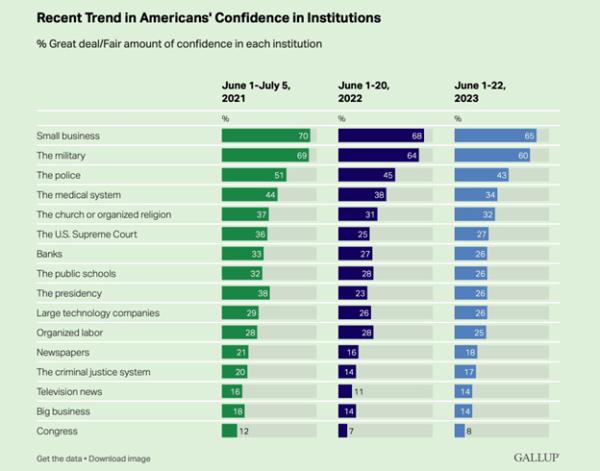
Now that a whopping 66 percent of us are not expressing confidence in the medical system that is provided and urged on us, we are starting to see quite a large and growing gap between the health interventions Americans seem to be choosing versus those we are expected and guided to take.
How Did the Medical System Lose Its Credibility and the Public’s Confidence?
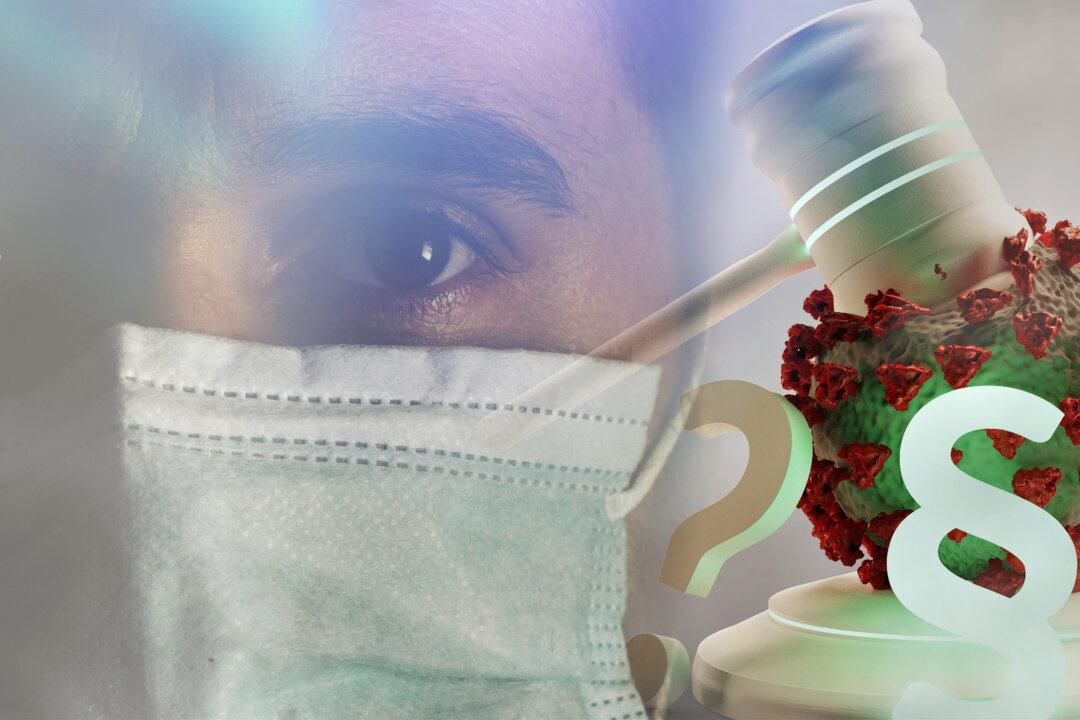
Consider masks, for example. If someone living in the United States through the last three-and-a-half years never accessed the internet, never read a newspaper or journal, never zoomed into the workplace or other meetings, but traveled even a tiny bit, maybe over to the local hardware store or post office, that person could not have escaped the following observation. He or she would have seen a vast majority—nearly all—masked faces in any public place, and would also see that nearly nobody wears a mask now, three years later. At some point, masks were widely accepted as a valuable tool to accomplish something not now seen as valuable. Nearly everybody masked back then, and nearly nobody does now. What could explain such a massive change in social behavior to the offline observer?However, the medical community soldiers on and stubbornly cling to their masks and forcing COVID vaccines on their employees. Despite overwhelming evidence of both negative efficacy and bodily injury of both, as I’ve shown in over 900 medical studies cited in my last two books, and now beginning to be acknowledged around the world, most medical venues still insist on both masks and COVID vaccines, perhaps only due to fear of litigation if they now reverse their stance and/or acknowledge the harms of each. In its recalcitrant stance, the conventional medical industry has boxed itself into a place of increasingly foolish appearance to a now awakening public.
In the same Gallup poll, newspapers and television news are even less trusted, at 18 percent and 14 percent, respectively. Only 8 percent have confidence in Congress.
Mass complacency and corruption of elites are comfortable interdependent bedfellows that enable and reinforce each other. But the disgusting duo repels the rest of us, an increasing number of people who lack confidence in the big institutions’ incestuous nests and self-serving behaviors. For the rest of us, we see complacent lemmings entrusting the control over health to those who make an industry from sickness.
Is skepticism a healthy response to a Pharma-controlled medical system or a captured government and media elite? Or is skepticism so demoralizing that corruption will become more entrenched and the masses detached and without hope? Only the future will show us whether current and future generations can create new institutions from the wreckage of the current malfunctioning, morally bankrupt, and public-nuisance ones.