



Drinking tea is a traditional custom in China and other Asian countries. However, tea culture has gained popularity in the United States in recent years due to its multiple health benefits. Tea is the most widely consumed beverage in the world next to water and can be found in almost 80 percent of all U.S. households, according to the Tea Association of America. The age of the emerging tea-drinking class in the United States is no longer more than 50 years old; young people in their 20s have also begun to drink tea, including Lady Gaga. Many people drink tea daily and use it as a health and wellness “secret weapon.” Recently, scientists have found that habitual tea drinking can reduce the incidence of cardiovascular events by 42 percent and cognitive dysfunction by 74 percent. This suggests that tea can help prevent heart disease and Alzheimer’s disease.
Habitual Tea Consumption Can Prevent Alzheimer’s Disease
In August 2022, a study published in the journal Frontiers in Aging Neuroscience claimed that a higher frequency of tea consumption had a protective effect on cognitive function. The study collected data on green tea consumption and ratings of cognitive performance from 264 adults aged 50 to 70 years. Researchers found that drinking more than 1 L of green tea per day reduced the risk of cognitive impairment by 74 percent. Even drinking as little as 300 mL per day reduced the risk of cognitive impairment by 51 percent. The researchers also addressed whether green tea could alleviate Alzheimer’s disease-related pathological changes (serum pTau and total Aβ-amyloid), and improve resistance to oxidative stress, which is one of the main risk factors of Alzheimer’s disease. Their findings seem to suggest that drinking tea may reduce the risk of Alzheimer’s disease in middle-aged and older populations.What is the science behind green tea’s reduction of Alzheimer’s disease? The answer is epigallocatechin-3-gallate (EGCG), a key substance for improving cognitive function, which is found in green tea extract, according to a recent study. Many studies have demonstrated the important role of EGCG in neuroprotection. In addition, it may be associated with rescuing nerve cells, promoting nerve growth, and promoting nerve cell survival.
Tea Consumption Can Also Prevent Heart Disease
Tea has long been known as a healthy beverage, and many studies have revealed its potential benefits for the heart. Researchers have evaluated the relationship between tea consumption and the risk of ischemic heart disease. A study of a total of 199,293 men and 288,082 women showed that tea consumption was negatively associated with the risk of ischemic heart disease and major coronary events. In the past year, those who drank more than 100 mL of tea per day showed an 8 percent reduction in the risk of ischemic heart disease and a 10 percent reduction in the risk of major coronary arteries. In addition, more tea consumption was associated with a decreased risk of heart disease, cerebral infarction, and overall mortality. In November 2022, black tea’s ability to reduce the risk of heart disease was also confirmed. This study found that older adults who drank 200 mL, 400 mL, and 600 mL of black tea per day were 16 percent, 30 percent, and 42 percent less likely to develop heart disease, respectively.Black tea is rich in flavonoids, theaflavins, catechins, and other active substances, which are effective anti-inflammatories and antioxidants, and can protect the brain from vascular damage and neurodegenerative lesions.
Tea Can Reduce Depression and Mental Distress
Researchers at Tohoku University in Japan have found that drinking several cups of green tea (≥400 mL) a day can help alleviate depression in older adults. Geriatric depression is a common psychological disorder in older adults, and chronic depression or stress is an important predisposing factor for geriatric depression. The study surveyed 1,058 older adults aged 70 years or older. Researchers comprehensively analyzed the social, economic, gender, dietary, medical history, and antidepressant medications taken by the survey participants and subsequently concluded that people over 70 who drank more than 400 mL of green tea a day had a 44 percent lower risk of developing depression.Previously, other researchers in Japan confirmed that increasing the amount of green tea drunk can help reduce psychological distress. They found that drinking more than 500 mL of green tea per day reduced the risk of psychological distress in middle-aged and older adults by 20 percent, compared to subjects who drank <100 mL of green tea per day. The theanine in tea can calm the mind and can achieve a soothing effect on the nerves. For people who are stressed and prone to anxiety, drinking tea is a good choice because it is natural and can have a stabilizing effect on emotions.
How to Brew Black Tea to Make It Taste Better
Black tea is a fully fermented tea suitable for both young and old. It is popular among many types of people; even those who are new to tea will appreciate its mild taste. With the following tips, you can make your black tea taste better:- Use approximately 203 F (95 C) water to brew the tea. You need to prepare two tea cups—one with a lid and the other without a lid. Put the tea leaves in the cup with a lid. Then add water and cover it.
- The recommended brew time for black tea is between three to five minutes. Afterward, pour the whole tea broth into another empty cup and drink it slowly.
- Black tea can be brewed three to four times, but you should try to drain the tea leaves each time after you pour out the tea broth. Otherwise, it will affect the flavor of the next tea broth.
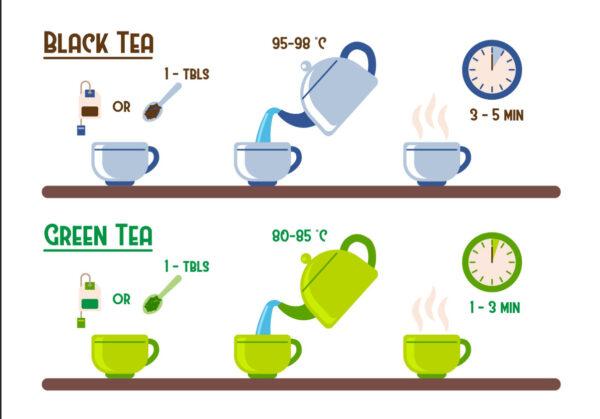
Follow these steps to improve the taste of your black or green tea. Shutterstock
How Should You Drink Green Tea?
Green tea is a common tea known by many people for its refreshing aroma and invigorating effects. You can make your green tea taste better by following these tips:- The brewing water temperature is best at about 185 F (85 C). Too high a temperature will lead to the destruction of vitamin C and tea polyphenols, a decrease in the fresh taste, and a darker color.
- Pour boiling water into a 250-ml cup, filling 70 percent of the cup. Whether you add tea leaves first or water first will not affect your delicious cup of tea.
- Open the lid of the cup for a better taste. Covering the cup affects the aroma of the green tea, making the aroma impure and affecting the taste.
- Add honey or lemon. Honey or lemon slices add flavor to green tea while offsetting the bitterness. But do not add milk, as it may overpower the flavor of the tea.


