





Public water fluoridation was implemented in the United States in 1954 and was recommended by the World Health Organization (WHO) as the main delivery method of fluoride to improve oral health.
Fluoride is unique in that it’s the only preventive chemical that most in the United States don’t have a choice about taking because it’s added to approximately 75 percent of the public water supply.
Although the Indiana Department of Health argues that the courts have ruled that “fluoride is a nutrient ... not a medication” and that “mandating fluoridation is a valid use of police power,” it also notes that nobody is forced to drink fluoridated water and one could employ reverse-osmosis or distillation.
Before 1945, health authorities had sought only to remove fluoride from water, according to “The Fluoride Deception,” a book by investigative journalist Christopher Bryson.
So how did fluoride go from being a toxic chemical that molted teeth, causing a range of health issues, to being the magic bullet said to cure tooth decay? Here are some key milestones and notable figures.
The Cavity Epidemic
Tooth decay and cavities don’t seem like a big deal today—although they remain the most prevalent preventable chronic disease in both children and adults. In the mid-1900s, however, tooth decay was a major health issue.
In her paper published in the American Journal of Public Health in 2015, historian Catherine Carstairs noted that during the mid-1900s, if not treated, cavities led to tooth loss, mastication problems, malnutrition, and infectious complications. Carstairs also noted that a contributing factor may have been the significant shortage of dentists in the United States at that time.
In the early 1950s, two public health researchers said that on average, young men between the ages of 20 and 35 years had already lost an average of 4.2 teeth, and 90 percent of them required bridges or full or partial dentures, Carstairs wrote.
Leaders such as Wisconsin’s state dental director, Frances Bull, “argued that cavities could be decreased by practicing good oral hygiene, restricting sugar consumption, and improving diet.” He also didn’t believe that the public was likely to do these things.
“Fluoride, in his view, offered the first real preventive for dental caries,” Carstairs wrote.
The war also brought the extent of dental disease in the United States into sharp focus. A 2016 American Water Works Association article notes that in 1938, the military had a rule that you had to have six teeth touch to get into the service
“When the war came, they dropped that rule because they needed more people. Forty percent of new inductees into the service had to have immediate treatment for dental pain,” the article reads.
Colorado Brown Stain
Per the National Institute of Dental and Craniofacial Research (NIDR), the research into fluoride in the United States began in 1901, when dental graduate Frederick McKay opened his practice in Colorado Springs, Colorado, and discovered that many of the local children had severe brown permanent stains that sometimes covered the whole tooth.
The condition was referred to as Colorado Brown Stain and was later given the medical title of dental fluorosis. McKay recruited the help of his colleague Dr. G.V. Black, and, determined to find a cure, they set out to find the root cause of the disorder.
In the 1920s, the same brown stains were found in Oakley, Idaho. McKay went to investigate and was able to link them to a water source from a newly constructed communal water pipeline, although he didn’t yet know exactly why the water was causing the tooth deformities. The town leaders shut down the pipeline and used a different water source, and within years, a new generation of children was no longer sprouting brown-stained teeth.
A breakthrough came when McKay traveled to the industrial town of Bauxite, Arkansas, to investigate reports of a brown stain epidemic among children in the town. He noted that towns only five miles away had no tooth deformity issues.
Bauxite was owned by the Aluminum Company of America (ALCOA), and because of this, McKay’s findings there made their way to ALCOA’s chief chemist, H. V. Churchill.
At the time, there were claims that aluminum cookware was poisonous, so Churchill was motivated to ensure that the ALCOA wasn’t responsible.
Churchill had more sophisticated technology than McKay and, in the course of his research, was able to detect high levels of fluoride in the Bauxite water supply. This discovery led to the testing of water samples from other areas afflicted with brown stains and, within months, it was confirmed that high levels of water-borne fluoride caused the discoloration of tooth enamel.
This finding sparked extensive research by McKay and Black over the following years.
According to the Centers for Disease Control and Prevention’s (CDC) timeline of community water fluoridation, McKay and Black’s initial papers in 1916 uncovered a contradiction at the core of their investigation: “Contrary to what might be expected [mottling] does not seem to increase the susceptibility of the teeth to decay.”
The Investigation Continues
Now that researchers had connected fluoride in drinking water to an effect on teeth, they wanted to learn more.In 1925, the results of the study conducted by the Department of Chemical Hygiene, the School of Hygiene and Public Health, and Johns Hopkins University, Baltimore revealed some unexpected findings.
Researchers wanted to know if a deficiency of fluorine in food might lead to tooth decay and how adding fluoride to a rat’s diet affected the quality of its teeth. The study included 226 parts per million of the fluorine element in the form of sodium fluoride in the rat’s diet.
They found that ingestion of fluorine in amounts little above those that have been reported to occur in natural foods significantly disturbed the structure of the rat’s teeth.
The study also found that the skulls of the rats under the fluorine treatment didn’t seem to be as good in quality compared to normal cortical bone.
The study concluded that “a clear demonstration that over ingestion of an element which is regularly found in both food and tissues in small amounts may exert a detrimental effect when the amount ingested is increased to but little more than certain samples of foods are known to contain.”
Dr. H. Trendley Dean was another notable character in the story of fluoride. He was head of the dental hygiene unit at the National Institute of Health and conducted many of the fluoride studies starting in the 1930s in the United States that eventually led to the addition of the chemical fluoride additive into the public water supply.
Per the NIDR, “one of his primary research concerns was determining how high fluoride levels could be in drinking water before fluorosis occurred.”
In the late 1930s, Dean discovered that fluoride levels of up to 1 part per million in drinking water didn’t cause dental fluorosis in most people and only mild enamel fluorosis in a small percentage of people.
This revelation, combined with McKay’s previous observation that children with dental fluorosis may not have increased susceptibility for dental decay, sparked the very first 15-year experiment done on a group of children in the United States and the subsequent formation of the NIDR, where Dean claimed his new title as director.
In 1945, the first real-world experiment commenced in Grand Rapids, Michigan, making it the first city in the world to fluoridate its drinking water. Two additional cities, Newburgh, New York, and Evanston, Illinois, also joined the trials in the months ahead.
In Grand Rapids, almost 30,000 schoolchildren were monitored for their rate of tooth decay. After 11 years of observations, researchers announced that dental caries dropped by more than 60 percent in children born after fluoride was added to the water supply. The two additional cities showed a caries reduction of 50 percent to 70 percent among children.
This initial trial was supposed to last 15 years, but just two years after it began, the city of Madison, Wisconsin began adding synthetic fluoride to its public water in 1948 at the direction of the Common Council.
In June 1950, before any of the trials were ever completed, the American Dental Association, Association of State and Territorial Dental Directors, and U.S. Public Health Service all issued statements endorsing community water fluoridation, and the surgeon general declared that any community wishing to fluoridate its water supply should be “strongly encouraged” to proceed, as noted in the CDC timeline.
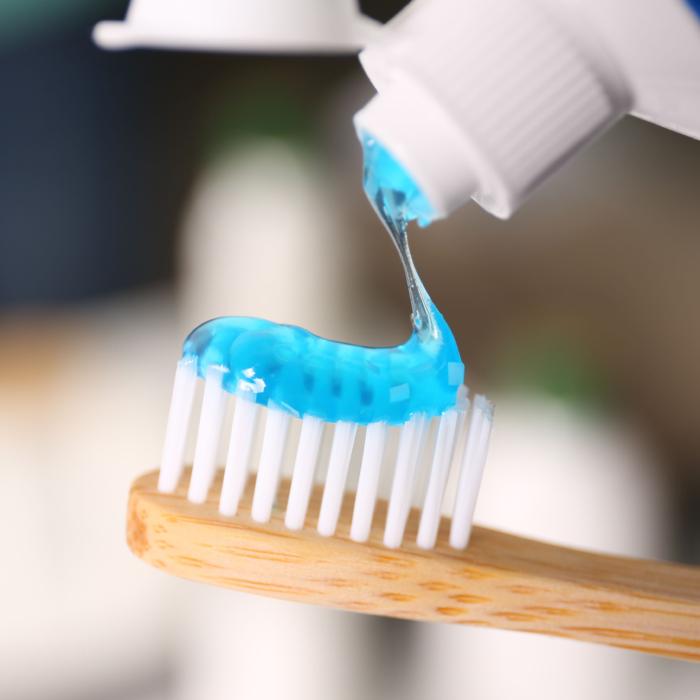
By the end of the 1950s, approximately 1.5 million Americans were drinking fluoridated tap water, and Crest, the world’s first fluoride toothpaste, was released nationally just six years later in 1956, years before the real-world population study was complete.








Across the Pond
At about the same time that fluoride research was ramping up in the United States, Danish physician Kaj Roholm was researching the cause of widespread illness among workers at Oresund Chemical Works in Copenhagen, Denmark. In “The Fluoride Deception,” Bryson detailed this history and how a heavy cloud of cryolite dust filled the factory air there. Cryolite contains more than 50 percent fluoride.The afflictions of the workers included a crippling skeletal issue called poker back, chronic skin rashes, nervous disorders, and severe stomach problems. After extensive research, Roholm named the disease “fluorine intoxication” and suspected that it was fluorine’s ability to poison enzymes that made it a threat on so many biological fronts.
In 1937, he published an extensive book on fluoride pollution called “Fluorine Intoxication” and strongly opposed giving fluoride to children.
Like many vitamins, minerals, and various compounds, the same substance can have different effects. These early years of research revealed the same of fluoride.A paper written by Dr. Barry Durrant-Peatfield, medical adviser to Thyroid UK, notes that in the 1930s, Dr. Viktor Gorlitzer von Mundy used fluoride to treat overactive thyroid illness.
Patients either drank fluoridated water, swallowed fluoride pills, or were bathed in fluoridated bath water, and, as a result, their thyroid function was greatly depressed.
While these kinds of targeted therapeutic uses of fluoride may have important medical benefits, the widespread use of water fluoridation hasn’t become any less controversial over the years. Few European countries now fluoridate their water, and the United States is among the few heavily fluoridated countries in the world.