The number of deaths fell from 777,000 at the beginning of the century to 95,000 last year, the WHO said. The 2024 figure is “among the lowest annual estimates.”
Compared with 2019, deaths are down 11 percent. Since 2019, the African region has seen a 50 percent decline in deaths, which was offset by a 71 percent jump in the Eastern Mediterranean region and a 27 percent increase in the Southeast Asia region.
Worldwide, there were 11 million measles cases in 2024. Although this was a 71 percent dip from 2000, it was up 8 percent compared with levels before the COVID-19 pandemic.
“The divergence between rising estimates of cases and decreasing numbers of deaths is partly explained by the increase in the number of cases in middle-income countries, where case-fatality rates are lower, and the decrease in the number of cases in low-income countries between 2019 and 2024,” the WHO said.
The organization estimates that 58.7 million deaths have been prevented globally between 2000 and 2024 by the global measles vaccination program.
However, eliminating measles remains a challenge that requires sufficient resources, strong political commitment from national leaders, and sustained vaccination coverage, while reinforcing surveillance and outbreak responses, the report stated.
According to the WHO, first-dose vaccination coverage peaked in 2019 but “decreased sharply” during the COVID-19 pandemic. Although global coverage has been rising since 2021, it has not returned to pre-pandemic levels. Second-dose vaccination is well below the 95 percent threshold required to interrupt disease transmission.
“In this context, it is unsurprising that the number of countries experiencing large or disruptive outbreaks in 2024 was the highest since 2019,” WHO said.
“Apart from 2019, the past 2 years have seen the highest number of large, disruptive measles outbreaks since 2003.”
WHO Director-General Dr. Tedros Adhanom Ghebreyesus warned that measles was the “most contagious virus” in the world and that any gap in global collective defenses will be exploited by the infection.
The US Situation
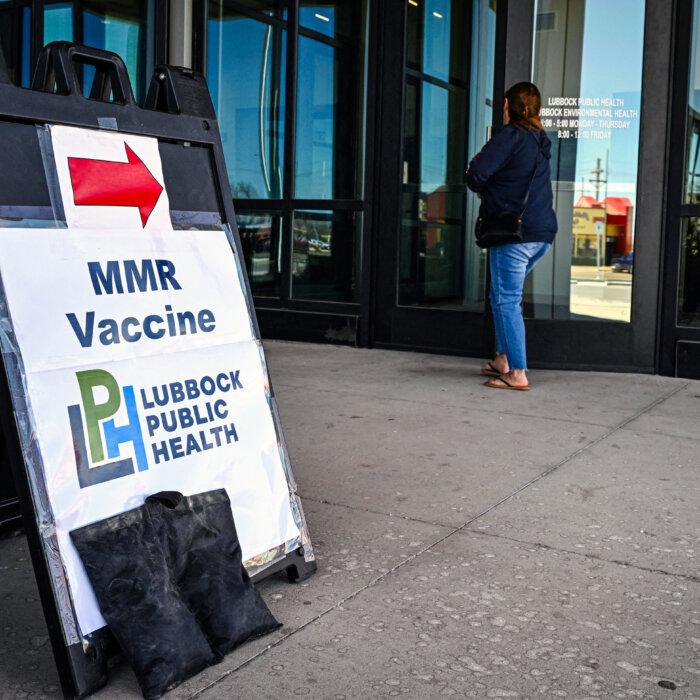
In the United States, there have been 1,798 measles infections so far this year, according to a Nov. 26 update from the Centers for Disease Control and Prevention.The most affected age group was children aged 5–19, who accounted for 40 percent of the cases. This was followed by the 20-plus age group and children under 5.
According to the CDC, 92 percent of infected cases are among people who are either unvaccinated or whose vaccination status is unknown.
Of the 1,798 cases, 212 (12 percent) have been hospitalized. Children aged under 5 accounted for 21 percent of hospitalized patients. There have been three confirmed deaths from measles this year.
Despite the higher number this year, weekly case numbers peaked around March and have been declining since then. Texas is the most affected state, accounting for 803 cases in 2024 and 2025. New Mexico, Arizona, and Utah have reported 100 or more cases each.
“Measles was officially eliminated from the United States in 2000, meaning there is no measles spreading within the country and new cases are only found when someone contracts measles abroad and returns to the country,” the CDC said.
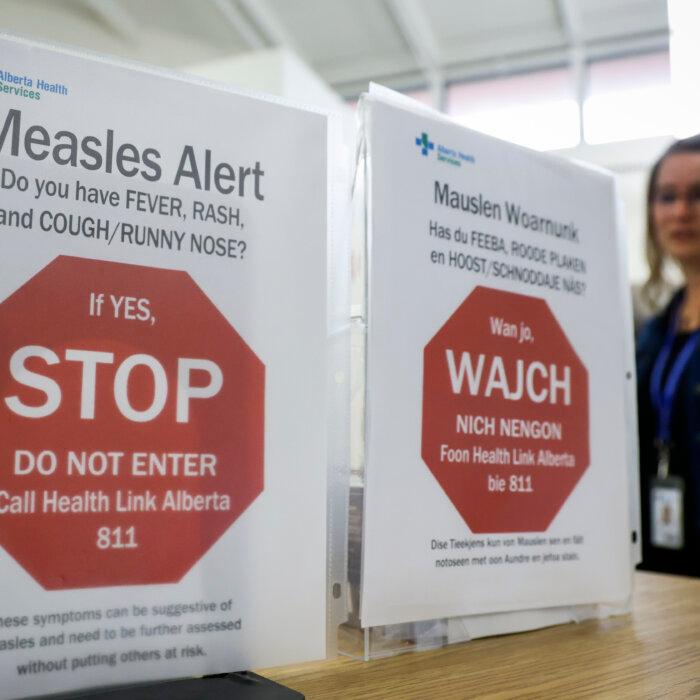
More than 4,800 measles cases have been confirmed in Canada this year, according to the Public Health Agency of Canada (PHAC). Ontario was the most affected region, followed by Alberta.
“While transmission has slowed recently, the outbreak has persisted for over 12 months, primarily within under-vaccinated communities,” PHAC said in a statement.
Even though case numbers in the United States are low, the country could lose its measles-free designation in 2026 because of sustained outbreaks.