From 2015 to 2022, rates of babesiosis, a tick-borne parasitic disease sometimes dubbed “American malaria,” have increased an average of 9 percent per year in the United States, with four in 10 patients co-infected with another tick-borne illness such as Lyme disease, according to a new study by researchers at Penn State Health Milton S. Hershey Medical Center.
‘American Malaria’
Data from the Centers for Disease Control and Prevention (CDC) show cases rising to 50,856 in 2019 from 40,795 reported in 2011.“Ticks can carry other bacteria that cause Lyme disease and other tick-borne diseases like anaplasmosis and ehrlichiosis,” the statement reads.
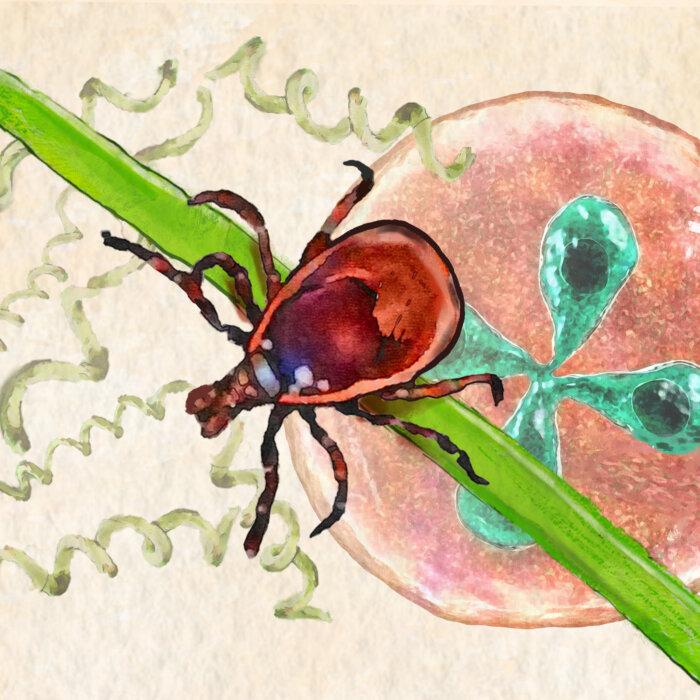
- Both babesiosis and malaria are caused by parasites that infect red blood cells.
- Babesiosis and malaria both cause fever, chills, headache, nausea, vomiting, and other symptoms.
- Vectors, or transmitters, of the disease are insects. Ticks transmit babesiosis, while mosquitoes transmit malaria.
- Like malaria, babesiosis is transmitted from animals to humans. In the United States, it’s most common in the upper Midwest and Northeast, but it can also be found in other parts of the world. The disease is caused by a microscopic parasite called Babesia that ticks carry.
Higher Mortality
For this study, researchers used data from the TriNetX national database to analyze clinical data from more than 250 million individuals to identify 3,521 babesiosis cases reported between October 2015 and December 2022.Unsurprisingly, they found that cases peaked during the summer months.
Ssentongo pointed to climate change as a potential factor influencing the prevalence of babesiosis. Altered temperature, humidity, rainfall, and season length can affect the distribution of ticks and the animal population that serves as a host, he said in the statement. As a result, ticks may be spreading to a wider geographical area.
Dr. Adrian Popp, chair of infectious disease at Huntington Hospital in Long Island, New York, told The Epoch Times that he has observed increased rates of babesiosis in Long Island over the past two years.
“What drives this increase is multifactorial, and has to do [with] No. 1: Babesiosis is a tick-related disease,” he said. “That has to do with more deer, because deer are the host of these ticks. So the more deer, the more ticks.”
Ssentongo noted that they found no significant differences in complication risks between those with only babesiosis and those with co-infections, although mortality risk was found to be higher among the babesiosis-only patients.
“Having both babesiosis and Lyme disease seemed not to be associated with worse mortality,” he said.
Treatment and Prevention
Current treatment for babesiosis varies by severity and typically involves a combination of azithromycin and atovaquone, while red blood cell exchange is considered for severe cases.Popp said deer ticks are alive from after the last frost in spring until the next frost comes in late fall.
“So now with longer springs and delayed falls, the period of time when these ticks are active is longer than it used to be,” he said, noting that how best to prevent infection is a “tough question.”
“Why? Because we’re exposed to ticks by going into grassy or forested areas where these ticks live, [where] the ticks fall off deer and then wait for the next host to walk around and they jump on that next host.”
For everyone exposed to these areas, Popp recommends making it a habit at the end of the day to do a thorough tick examination, which can be done with the help of a buddy.
“Basically, take your clothes off and double-check every site of your body for the potential presence of a tick,” he said. “Bear in mind: These ticks are tiny; it’s like a tip of a pencil.”
The size of these parasites means that finding them can be tricky, especially in areas of the body covered in hair, according to Popp.
“So you have to actually look and palpate to see if you feel something,” he said.
Popp cautioned that tick bites tend to be painless, and the tick stays attached to the body for between 24 and 48 hours before falling off, leaving you unaware that you’ve been bitten.
“If you do this check after a day that you’ve been out and about and have somebody else help you to look on your back and in the areas where you can’t see, then you should be safe,” Popp said.
“That is the best way to prevent these diseases: making sure that you don’t have ticks and you don’t have bites.”