Having difficulty rising from a chair may signal higher risks of osteoarthritis and a lower quality of life in the coming years.
“Difficulty rising from a chair can serve as an early signal of declining physical and mental health,“ M. Azhar Hussain, the lead author, told The Epoch Times. ”Recognizing this sign early gives people an opportunity to take simple steps that may help prevent more serious problems later in life.”
The Health Implications of Chair-Rise Difficulty
Researchers surveyed 52,541 adults aged 50 and older across 15 European countries. Those who answered “yes” to a simple question in the Survey of Health, Ageing and Retirement in Europe, such as “Have you had persistent (lasting more than three months) difficulty getting up from a chair after sitting for a long time?” were implicated in several health conditions.“Difficulty rising from a chair reflects reduced leg strength, poor balance, and joint dysfunction,” Hussain said.
As part of natural aging, we lose muscle mass and strength in the upper and lower legs, hips and glutes, lower back, and abdomen—muscles that help us stand up and stabilize the body during the sit-to-stand motion.

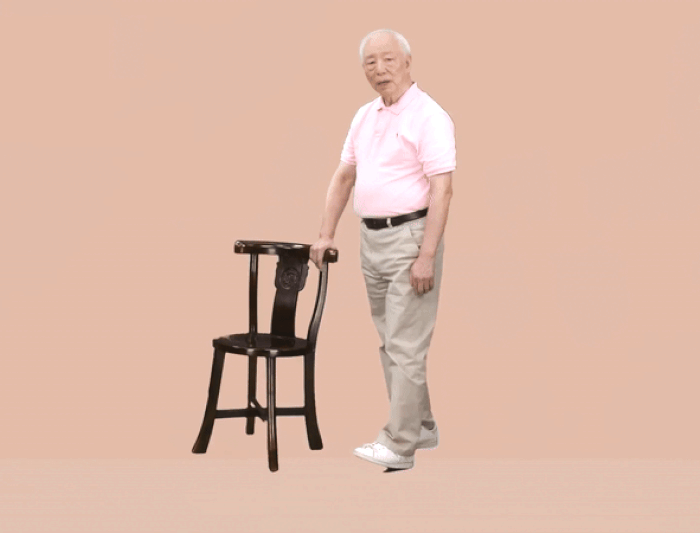
Many people walk and sit for most of their days, which does not adequately train the muscles needed to rise, especially with sedentary lifestyles and a lack of resistance training.
As muscle strength, balance, and control decline, daily activities such as rising from a chair can become increasingly difficult, making people more prone to falls, injuries, and reduced independence.
How Depression and Physical Health Influence Each Other
“The relationship between function and mental health is reciprocal—one impacts the other,” Peter Lichtenberg, a distinguished professor of psychology and gerontology at Wayne State University, told The Epoch Times. “Physical, mental health, and cognitive abilities are often linked.”Take “chair-rising” as an example.
“Struggling with a basic task [chair-rising] can also reduce confidence, restrict social participation, and increase feelings of dependency, which may contribute to depressive symptoms,” Hussain said.
Depression, on the other hand, can lower motivation for self-care and regular exercise, while triggering emotional coping mechanisms such as binge eating, negatively affecting physical health.
Certain Groups Are Particularly Vulnerable
“Older adults, particularly those aged 70 and above, were the most vulnerable, as chair‑rise difficulty increased sharply with age and was more strongly linked to later health problems,” Hussain said. Women, on the other hand, were more likely to develop depressive symptoms and poorer quality of life.Notice Early, Act Early
“Chair-rising difficulty is a risk factor that something is wrong now, but left unchecked will increase risk for a variety of negative health and mental health outcomes,” Lichtenberg said.Noticing physical decline early through a simple task, such as standing up from a chair, gives people a chance to act in time and help prevent more serious issues from arising.
“Most of the higher risks we observed, such as poorer quality of life, depressive symptoms, and osteoarthritis, tended to emerge within roughly two to six years after the difficulty was first reported rather than immediately,” Hussain said.
Lichtenberg said: “This [chair-rise] difficulty is among the most reversible. Even those who do not exercise can gain considerable gains in strength and balance when they engage in strength or balance training—it is never too late to gain function.”
For people who are already experiencing early signs such as chair-rise difficulty, Hussain and Lichtenberg suggested taking the following simple steps to prevent further decline: Build a routine that includes strength and balance exercises, such as yoga; stay active; reduce prolonged sitting and move around more; maintain a healthy weight; join a supportive exercise program; and address existing medical conditions with a healthcare provider.
“Paying attention to simple changes in everyday physical tasks can provide valuable insight into overall health,” Hussain said. “Small difficulties, like standing up from a chair, are easy to overlook but can offer an early opportunity to act, stay active, and maintain long‑term independence and well‑being.”
Lichtenberg encourages older adults to “engage with aging.”