Schedule Aligned With Other Countries
A review, prompted by a 2025 directive from President Donald Trump, showed that the United States was “a global outlier among peer nations in the number of target diseases included in its childhood vaccination schedule and in the total number of recommended vaccine doses,” health officials wrote in an assessment that underpinned the changes.Dr. Tracy Beth Hoeg, a top Food and Drug Administration official, and Martin Kulldorff, chief science officer at the Department of Health and Human Services’ Office of the Assistant Secretary for Planning and Evaluation, authored the assessment.
They advised officials to keep in place recommendations for certain vaccines, including the measles shot, in part because there is a consensus for the vaccines across peer nations, including Denmark. They also said the CDC should stop broadly recommending six other shots, including the hepatitis A vaccine, pointing to how some other similar countries do not recommend them for all, or any, children.
“Childhood vaccination recommendations must ... be based on the best available evidence and the best practices of peer, developed nations,” they wrote. “If there is a clear benefit of the vaccine, as for measles vaccines, the risks will need to be more substantial to outweigh the benefit. On the other hand, if the benefits are limited, as for the hepatitis A vaccine, even a small risk will tip the balance, where harms outweigh the benefits. For such vaccines, it is prudent to adopt a more conservative approach.”
Acting CDC Director Jim O'Neill approved the changes.
“After an exhaustive review of the evidence, we are aligning the U.S. childhood vaccine schedule with international consensus while strengthening transparency and informed consent,” Health Secretary Robert F. Kennedy Jr. added.
“Changing the pediatric vaccine schedule based on no scientific input on safety risks and little transparency will cause unnecessary fear for patients and doctors, and will make America sicker,” he wrote.
Dr. Renata Moon, a pediatrician and senior fellow with the Independent Medical Alliance, said that the overhaul of the schedule “is a courageous step in the direction of common sense!”
“Thank you to HHS Secretary Kennedy and team for recognizing that we must make bold data-driven changes when possible, and for revealing that much of the alleged ‘scientific evidence’ of vaccine safety ... has simply never existed,” she told The Epoch Times in an email.
Key Changes
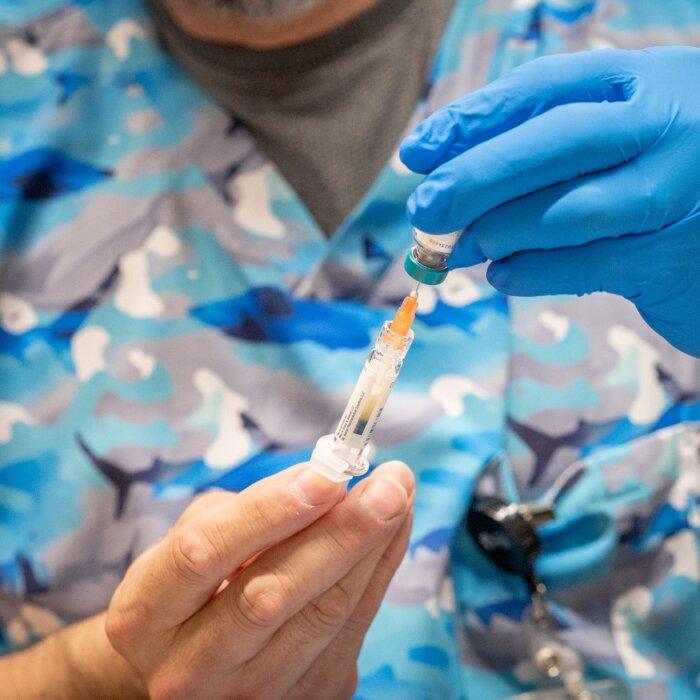
The new schedule takes the number of vaccines broadly recommended for children from 14 to eight. It also lowers the number of doses routinely recommended across childhood from about 50 to 22 or 23.Previously, hepatitis A, influenza, meningococcal, and rotavirus vaccines were advised for all children. They are now recommended for certain high-risk groups. For other children, parents are advised to consult with their health care professional on the suitability of these vaccines for their children, according to the CDC.
The RSV monoclonal antibody injection, which works through passive immunization, was recommended for all children whose mothers did not receive a maternal RSV vaccine before birth and for some infants whose mothers received a vaccine before giving birth. It is now only recommended for children whose mothers did not get the vaccine before delivery.
Only eight of the 20 peer countries whose guidance was reviewed recommend universal vaccination against influenza, 15 broadly recommend meningococcal vaccination, and 17 broadly recommend rotavirus vaccination.
The new schedule retains recommendations that all children receive vaccines against diphtheria; tetanus; acellular pertussis, or whooping cough; Haemophilus influenzae type B; pneumococcal disease; polio; measles; mumps; rubella; varicella, also known as chickenpox; and human papillomavirus.
All 20 of the peer countries broadly recommended these vaccines, with the exception of mumps in Japan and chickenpox in some countries, Hoeg and Kulldorff said.
U.S. officials will keep broadly recommending the chickenpox vaccine over concerns that deemphasizing the shot “could increase the average age at which the population naturally gets chickenpox when this disease could cause more complications,” O'Neill of the CDC said.

What Experts Say
Some experts support the update, while others do not.“This is a long-overdue recalibration of the number of vaccines administered to newborns and young children at the very outset of life,” Dr. Joseph Varon, president and chief medical officer of the Independent Medical Alliance, told The Epoch Times in an email.
Varon noted that the childhood vaccination schedule has expanded by 10 vaccines over the years, from four vaccines in 1983. He said the expansion often took place “with insufficient consideration for cumulative exposure and long-term health outcomes.”
Nahass said that many other peer countries have universal health care and parental leave, which can help prevent diseases, boost early care for children, and contribute to lower disease prevalence.
“It is irresponsible to haphazardly change vaccine recommendations without a solid scientific basis and transparent process. The commitment the U.S. has made to protecting children from vaccine-preventable illness and death must remain a top priority,” Nahass added.
What Drove the Update?
The schedule was updated in part because of a lack of information about the risks of vaccines and a decline in trust in public health, officials said.Trials of the shots before approval are typically relatively limited in volume and short-term, while post-approval surveillance is challenging in that one of the main systems is voluntary, a Trump administration official told reporters on a call Monday.
Randomized, controlled trials can help fill the gap that exists, in addition to observational studies, officials said on the call. The CDC has already begun some trials, and others are starting at the FDA and the National Institutes of Health. Certain trials will follow participants for years, one of the officials said.
“We hope that this change will help address decreased uptake of vaccines, especially of the most important diseases, and increase trust in public health,” a health official told reporters on the call.
Jen Kates, senior vice president of global and public health policy at Kaiser Family Foundation (KFF), said it is unclear what will happen after the policy updates.
What About Insurance, Liability Protection?
Insurance companies are required, with limited exceptions, to cover vaccines recommended by the CDC under federal laws such as the Affordable Care Act.Officials this week said the changes to the childhood schedule will not result in any changes to insurance coverage.
That may not be true, according to some experts.
Kennedy had previously criticized the AAP for recommending COVID-19 vaccines beyond the CDC’s childhood schedule, warning that it could lead to doctors being sued.
The National Childhood Vaccine Injury Act of 1986 introduced liability protection for vaccine companies and administrators while creating a program that compensates people for vaccine injuries.
On the call with reporters, an HHS official said that “HHS lawyers have assured us there will be no changes in liability protection for those vaccines.”