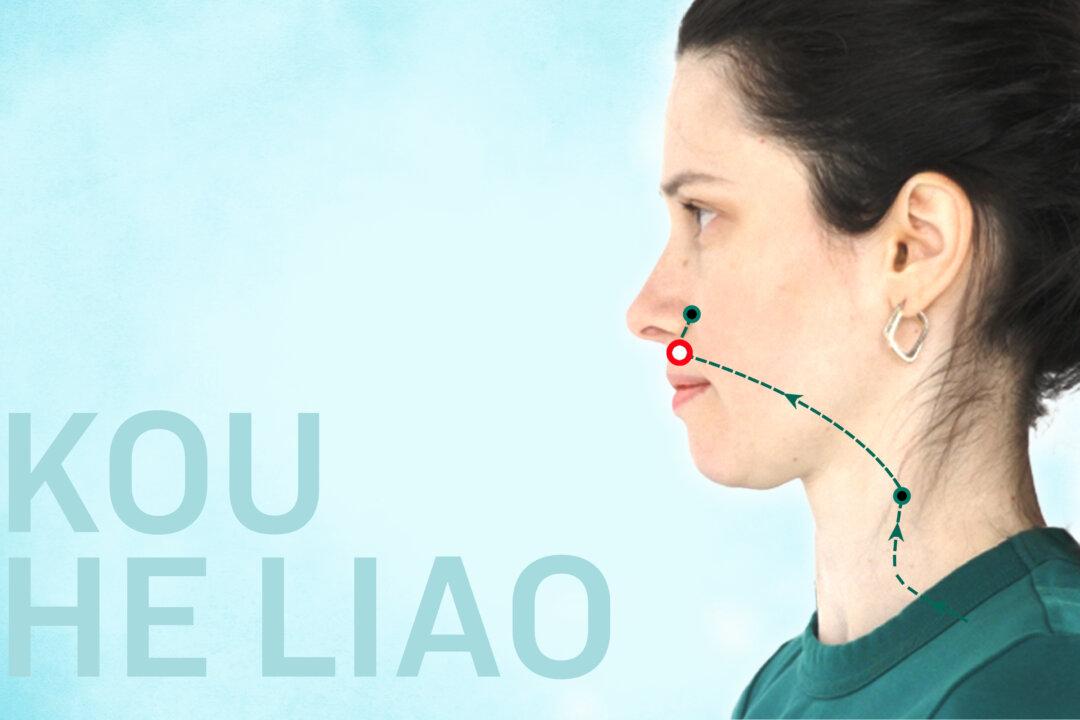
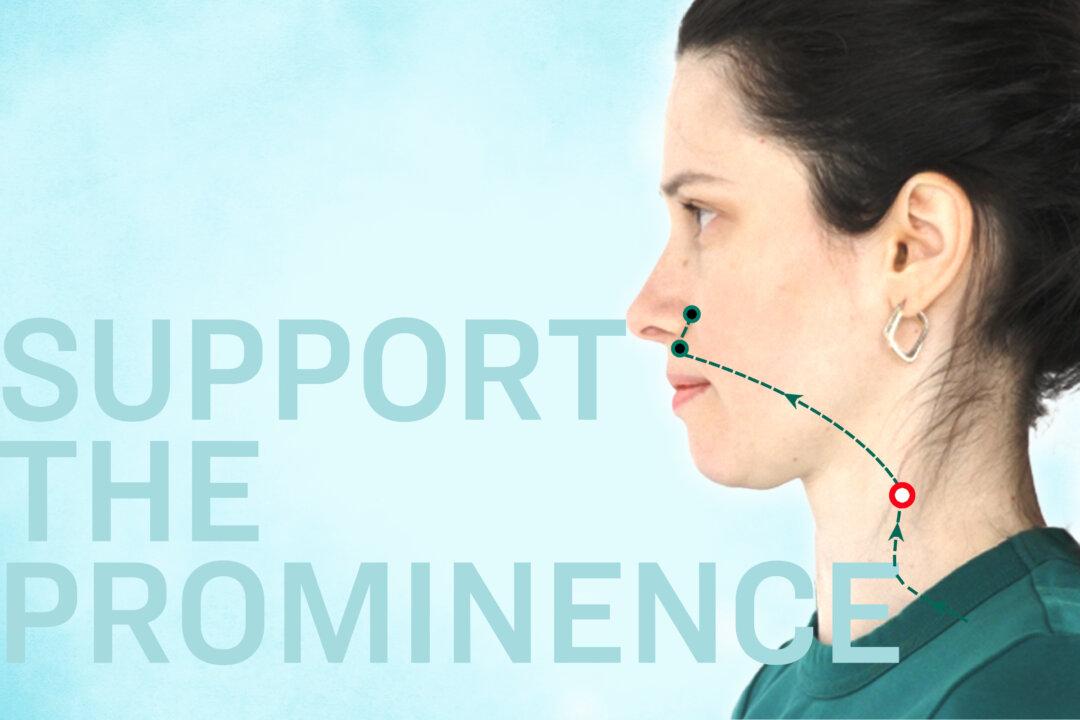
Traditional Chinese medicine (TCM) often surprises people with how many everyday issues it can address—especially those that seem too minor to warrant a trip to the doctor. The acupoint we’re exploring today, Earth Granary (di cang, ST4), offers a time-tested solution for both serious facial nerve conditions and more discreet, quality-of-life issues that don’t often get enough attention. Located near the mouth, this point has stood the test of time for a reason.
An Ancient Acupoint That Strengthens Facial Muscles
First recorded in the classical acupuncture text “Zhen Jiu Jia Yi Jing (The A-B Classic of Acupuncture and Moxibustion),” di cang sits on the stomach meridian. In TCM, acupoints have the potential to treat the location where the meridian flows, and since the stomach meridian runs through the face, di cang is well-positioned to affect facial muscles and nerves directly. Di cang is also praised for its ability to release what TCM calls “pathogenic wind”—a condition that manifests as sudden, disruptive symptoms like paralysis or nerve pain. That makes it a staple in treatment protocols for trigeminal neuralgia—a nerve condition that causes stabbing pain in the face—and facial paralysis.Daily Uses
What sets di cang apart in daily practice is its ability to help with more than just nerve conditions. It’s particularly effective for patients on both ends of the age spectrum who struggle with mouth control. Drooling, difficulty swallowing, or losing water while drinking may seem minor, but they have real effects on confidence, hygiene, and nutrition. Stimulating this point is a gentle, noninvasive way to improve muscle control in very young children or older people. Acupressure at di cang is a safe, easy-to-apply treatment, making it a realistic addition to home care routines for caregivers and families.Modern Research Affirms Its Role
Di cang is not just a relic of historical practice—it has also earned its place in modern clinical settings. In a large randomized controlled trial on stroke rehabilitation, patients were divided into two groups: one received standard physical therapy and the other received acupuncture. Di cang was included in one of the acupuncture groups using classical points. That group showed significant improvements in neurological function, particularly facial and oral motor recovery, based on the National Institutes of Health Stroke Scale. These findings support what ancient practitioners already knew: di cang helps restore the strength of facial muscles.Another systematic review of 33 high-quality clinical trials focused on peripheral facial paralysis, a condition often marked by facial drooping and nerve dysfunction. Di cang was one of the most frequently used acupoints in successful treatment protocols.
How to Locate and Stimulate Di Cang
Locating di cang is easy. Look directly forward and trace a vertical line downward from your pupil until your finger aligns with the edge of your mouth. Feel for a tender or sore spot—that’s your target. In TCM, these sensitive areas are called “ashi” points, and they help practitioners pinpoint exactly where to work.How to Stimulate Di Cang
You can activate di cang through simple techniques:- Press firmly for three to five seconds, then relax for three seconds. Repeat this for one to three minutes on each side of the face.
- Massage the area gently in circles using your index finger or thumb.
- Apply an herbal patch overnight for longer-lasting support—just be sure to choose one with natural, nonirritating ingredients.
Precautions
Avoid using this point if you’ve had recent dental work or have injuries in the area.Simple Support for Sensitive Needs
Whether it’s a toddler still learning to coordinate mouth movements or an aging parent losing muscle tone, problems around the mouth deserve attention—not embarrassment. Di cang offers a simple, effective, and time-tested way to help. TCM doesn’t just aim to mask symptoms; it supports the body’s ability to function independently. And that means helping people of all ages maintain the ability to eat, drink, and smile with confidence. So whether you’re a caregiver or someone just exploring self-care, di cang might just be the small touch that makes a big difference.TCM expert Shihhsiang Hung reviewed this article for accuracy and clarity.