



Vapes are unquestionably popular, with many who vape saying they are trying to quit or cut down on cigarettes. “Recreational” vapers of any age with no interest in quitting will find themselves frozen out.
Myth of the ‘Hardened Smokers’
First, let’s bust a widely believed myth. With smoking at an all-time low, some experts argue today’s smokers are die-hard addicts—frequently relapsing smokers who just can’t quit.Whenever this hypothesis has been tested it has been found wanting. In nations where smoking prevalence has fallen most, we would expect (if the hypothesis was true) that indicators of hardened smokers (such as average number of cigarettes smoked per day) would be rising because the remaining smokers would be over-represented by heavy, addicted smokers.
“Some have argued that a greater emphasis on harm reduction and more intensive or dependence-based treatments are needed because remaining smokers are those who are less likely to stop with current methods. This review finds no or little evidence for this assumption.”In other words, there is no evidence long-term smokers are impervious to the suite of tobacco control policies and campaigns that have driven hundreds of millions of smokers around the world to quit.
Vapes Don’t Help Smokers Cut Back
The idea that vaping helps people smoke fewer cigarettes isn’t supported by the evidence. Studies of the number of cigarettes foregone by vapers who still smoke have shown that, compared with smokers who never vape, the average daily cigarette consumption is very similar.“No statistically significant associations were found between changes in use of e-cigarettes […] while smoking and daily cigarette consumption. Neither did we find clear evidence for an association between e-cigarette use […] specifically for smoking reduction and temporary abstinence, respectively, and changes in daily cigarette consumption.
How Effective Are Vapes in Quitting?
The most recent Cochrane review of randomized controlled trials compared vaping with nicotine replacement therapy (such as drugs, gums, and patches). It found about 82 percent of people who vape are still smoking when followed up six or more months later.This was better than those using nicotine replacement therapy where 90 people were still smoking.
Neither nicotine replacement therapy nor vapes are hugely disruptive of smoking. You certainly wouldn’t be confident using a drug for any health issue that had an 82–90 percent failure rate.

Randomized controlled trials also poorly reflect the ways vapes and nicotine replacement therapy are used in the real world and aren’t representative of all smokers wanting to quit.
What Does Real-world Evidence Show?
The best evidence we have about how vapes perform comes from studies where large numbers of vapers are followed for several years. The U.S. Population Assessment of Tobacco and Health (PATH) project, for example, has been collecting national cohort data on 46,000 Americans since 2013.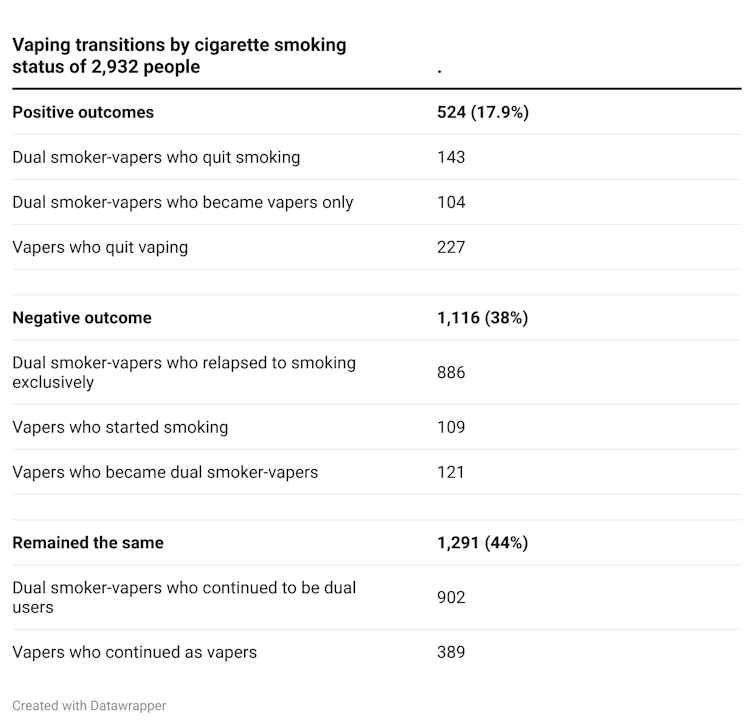
The Upshot?
The prescription vapes access scheme’s most important population effect is likely to be that it will massively reduce access to vapes by children. State governments will start hitting retailers illegally selling with massive fines and border security will do the same with importing suppliers.

