





Advance Directives Aren’t a Panacea
In its simple intent to help people complete their end-of-life paperwork before they’re seriously ill, advance care planning seems like a clear process. However, as the 2018 review exposed, when bureaucratic and cumbersome health care systems mix with complex human and medical issues, the clarity is quickly muddled.In essence, death haunts humans. Completing paperwork in advance of the inevitable feels daunting and unnecessary when you’re busy living a healthy life.
What’s more, many palliative care providers lament that doctors don’t have the time and training to be bothered with death. Physicians are wired to save lives and cure illnesses, not walk with patients through their dying journey.
And how can advance paperwork foresee all possible complexities to one’s future medical conditions? Combine this challenge with a confusing health care system buried in electronic and paper documents, and it isn’t surprising we’re behind on the government’s 1991 mandate.
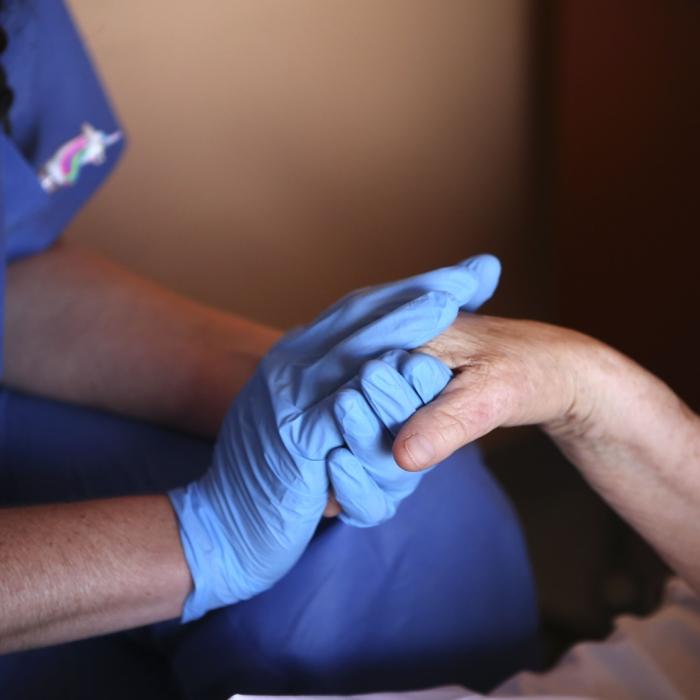
Astonishingly—after 30 years of work—patients, nurses, and palliative care providers continue to lament that many health care providers, from first responders to physicians, dismiss advance directives and living wills or apathetically neglect to locate them.
What’s the Answer?
Most palliative care experts aren’t ready to trash ACP altogether. They argue that it isn’t the paperwork that increases a patient’s likelihood of receiving the care they want at the end of life. Instead, honest and ongoing conversations with loved ones and health care providers empower advance directives.Without the conversations, documents are emotionally detached papers filed in an easily forgotten black hole.
“People who feel confident about what they think their family member would want are the ones who can recall the conversation,” said Lisa Pahl, a veteran hospice social worker. “They don’t remember Mom’s checklist on the advance directive ... They remember what Mom said.”
As a co-founder of The Death Deck, an end-of-life conversation tool, Ms. Pahl fiercely advocates for early, honest, and ongoing talks about one’s dying wishes.
She told The Epoch Times that it fills her with “joy” to walk into a room of a dying patient and loved ones who are prepared.
“The grieving process is exponentially smoother when people have already done the work,” she said.
“I do think that the preparation is one of the key pieces [to dying well], because it affects everything.”
In the end, the authors of the provocative 2018 analysis agree. The 1,600 studies they reviewed had inconsistent outcomes and varied methods. Still, they identified “recurrent features” causing some ACP programs to be more effective.
One such feature is continual and joint discussion in which everyone involved in the patient’s dying journey is included, from physicians and nurses to loved ones and surrogate decision-makers. Since the human element may be the most potent determinant of concordant care, involving a patient’s entire support team in the conversation appears to lead to success in eventually honoring the patient’s wishes.






How to Start Your Advance Care Planning
- Start the conversation with loved ones, no matter how young you are and how difficult it is.
- Choose a health proxy, your medical power of attorney, to make treatment decisions if you can’t speak for yourself. Appoint someone who can handle the weight when the going gets tough. Sometimes the best person isn’t a family member.
- Research your state’s legal end-of-life documents. If you’re healthy, complete advance directives with general instructions for your medical treatment if you become incoherent. If you are diagnosed with a serious illness, early talks and in-the-moment, detailed updates to your paperwork become essential in finding peace and appropriate care along the journey.
- Seek a palliative care specialist to work with your disease specialist if you are diagnosed with a serious condition such as cancer or organ failure, whether you have days to live or years. Multiple studies reveal that having a palliative care specialist on your support team helps you make a plan and live better for longer.
- Make copies of your end-of-life instructions for your loved ones, health proxy, primary care provider, and palliative care specialists. If your end-of-life wishes become more urgent, post your directives in an easy-to-find location where first responders can find them.
- Keep the conversation going. Repeated talks as medical conditions progress prepare you and your loved ones to make urgent and stressful decisions if your health worsens quickly.
As palliative care physician Steven Pantilat writes in his book “Life After the Diagnosis,” “Planning won’t change the reality of your diagnosis, but it can change how you, your friends, and your family feel about and deal with your illness.”