No Universal Treatment Yet for Noise-Induced Hearing Loss
Noise-induced hearing loss has two forms: temporary threshold shift and permanent threshold shift. Temporary threshold shift, which manifests as ringing or muffled hearing after a loud concert, for instance, is reversible, Dr. Sreekant Cherukuri told The Epoch Times. Dr. Cherukuri, an ear, nose, and throat specialist and founder of ClearCast Hearing, a hearing-aid device, is not associated with the study.However, permanent threshold shift, which persistently impairs hearing, can occur after exposure to sudden loud noises such as gunfire or prolonged noise such as construction or workplace noise.
Currently, there are no universally accepted treatments for noise-induced hearing loss, although doctors have tried steroids and hyperbaric oxygen with varying success after acoustic trauma.
Dr. Cherukuri said he found the study’s findings “really exciting” because understanding the mechanism behind this form of hearing loss could lead to pharmaceutical interventions that prevent spikes in inner-ear zinc levels, thereby preventing permanent damage.
About 15 percent of U.S. adults aged 18 and older report hearing troubles, while an estimated 12.5 percent of people aged 6 to 19 years old and 17 percent of those aged 20 to 69 have experienced permanent hearing damage from excessive noise exposure, according to the U.S. Centers for Disease Control and Prevention.
Zinc Is Key to Hearing–and Hearing Loss
With the new finding, researchers may have identified not only why loud noise exposure permanently damages hearing but also a way to prevent it.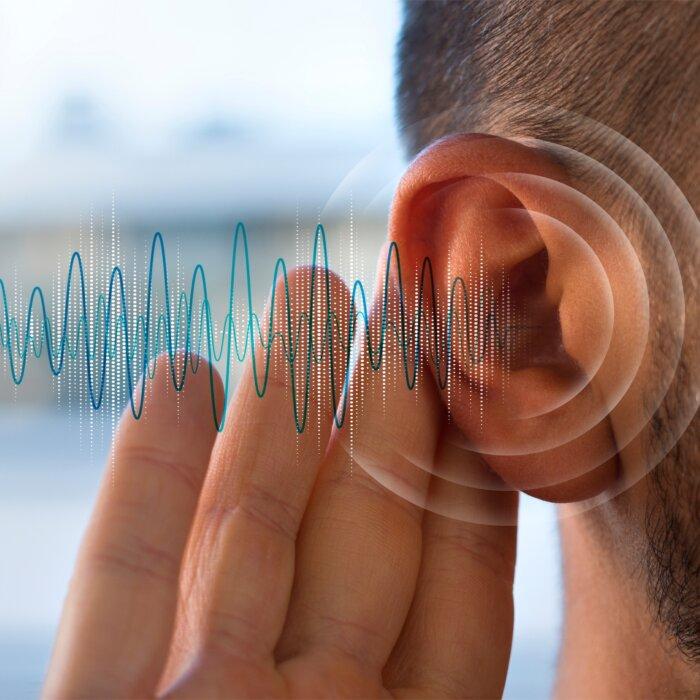
This form of hearing loss stems from cellular damage in the inner ear linked to an excess of free-floating zinc—an essential mineral crucial for proper cellular function and hearing.
New Study Is First to Pinpoint Zinc’s Role in Hearing Loss
The study is the first to pinpoint the precise location of free-floating (labile) zinc signaling in the inner ear, Mr. Tzounopoulos told The Epoch Times.“We also are the first to document the dysregulation of zinc signaling in the inner ear after loud noise exposure,” he said. “Most importantly, we are the first to show that noise-induced hearing loss can be mitigated by administering compounds that chelate, or trap, excess free zinc.”
While the study demonstrated zinc’s critical role in noise-induced hearing loss, Mr. Tzounopoulos acknowledged that they still don’t fully understand the reason behind the rapid zinc release after loud sound exposure or the mechanism of inner ear damage caused by a spike in free zinc.
“We are actively working on answering these questions,” he said.
It is difficult to predict how long it would take to get such a drug to the market, according to Mr. Tzounopoulos. As a first step, he and his team are working to define the therapeutic window in which the administration of a zinc chelator, the compound that traps excess zinc, can mitigate hearing loss after loud sound exposure.
Simple Steps to Protect Your Hearing
People can easily reduce the risk of noise-induced hearing loss by taking specific precautions regarding noise exposure. These include being aware of sources of loud sounds that can contribute to hearing loss—such as gas-powered lawnmowers, snowmobiles, power tools, gunfire, and loud music—to reduce exposure.- Turning down the volume when listening to media
- Moving away from sources of loud noise whenever possible
- Wearing ear protection when avoiding loud sounds is not an option