Maj. Zebulon Pike must have been pleased to see his 15-year-old son in uniform. The major had served in the Continental Army during the American Revolution and was now commander of the Third U.S. Infantry Regiment. The young cadet entered his father’s regiment and experienced a meteoric rise despite the relative peace and the fact of his being posted at forts along the frontier lands.
By 1799, at the age of 20, young Zebulon Pike was promoted to lieutenant. His primary role in the Army was that of quartermaster, where he ensured the forts were well supplied. It was hardly a life of adventure, but adventure would soon come.
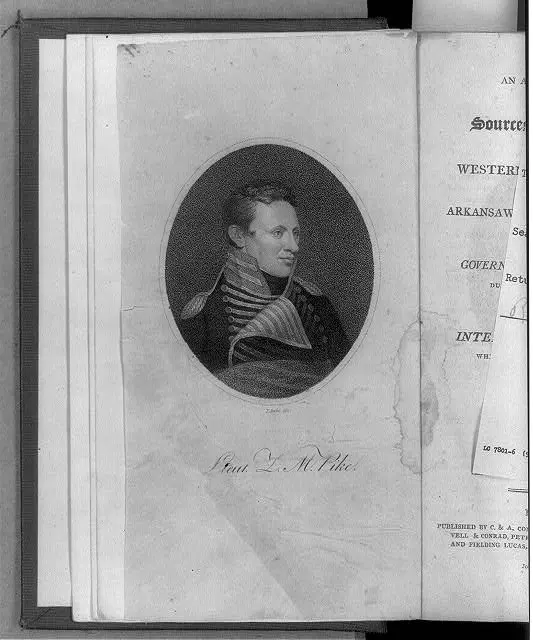
Pike had received a mediocre education, a fact that long bothered him. The young, handsome, and energetic officer was in constant pursuit of knowledge, always taking stacks of books with him wherever he went.
The Louisiana Purchase
The Louisiana Purchase had actually been acquired through unconstitutional methods. President Thomas Jefferson had sent representatives James Monroe and Robert Livingston to Paris to discuss the purchase of New Orleans. They were to offer no more than $10 million.France had recently signed the Treaty of Amiens with European states in 1802, which brought an end to the Wars of the Revolution. The treaty did not last long. By 1803, war again was on the horizon. In need of money, the French made an offer Monroe and Livingston knew they could not refuse. All of the Louisiana Territory—828,000 square miles—for $15 million. Monroe and Livingston accepted; Jefferson approved, despite knowing the Constitution required Senate approval first. The Senate did approve the purchase retroactively on Oct. 20, 1803.
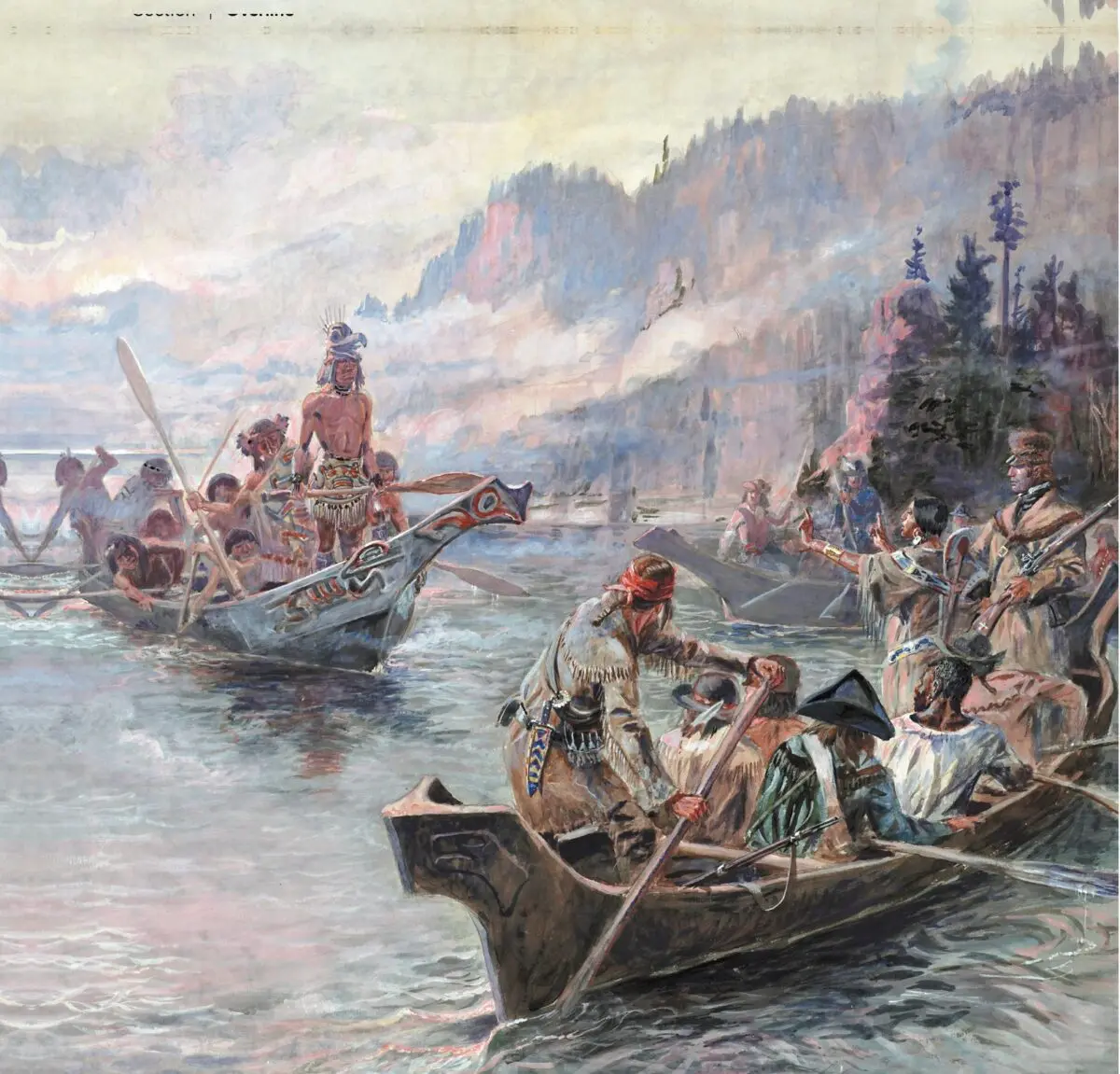
On May 14, 1804, the Lewis and Clark Expedition began with the Corps of Discovery paddling up the Missouri River. Jefferson had also appointed William Dunbar and George Hunter, both from Philadelphia and both men of science, to lead an expedition into the southern regions of the territory of what is today Louisiana and Texas.
The First Pike Expedition
The person appointed by Jefferson to be territorial governor of Louisiana was Gen. James Wilkinson (Wilkinson has gone down in American history as one of the nation’s most unscrupulous and duplicitous characters, especially for his collaborative efforts with Aaron Burr).Wilkinson, who was also the commanding general of the U.S. Army, contacted Pike, who was, by this time, commanding Fort Kaskaskia, and ordered him to St. Louis to prepare for an expedition to paddle up the Mississippi River in search of its headwaters. Along with this search, his expedition was to mark potential sites for U.S. Army outposts, communicate with the local Indian tribes, attempt diplomatic relations with the Ojibways and Sioux, and calculate how many British traders were in the area.
Pike recruited 18 soldiers from his First Infantry Regiment whom he later identified as his “Dam’d set of Rascals.” He added three others: Dr. John H. Robinson, as the expeditionary physician; Baronet Vasquez, as an interpreter; and the son of Wilkinson, Lt. James Biddle Wilkinson, who would be the expedition’s second-in-command.
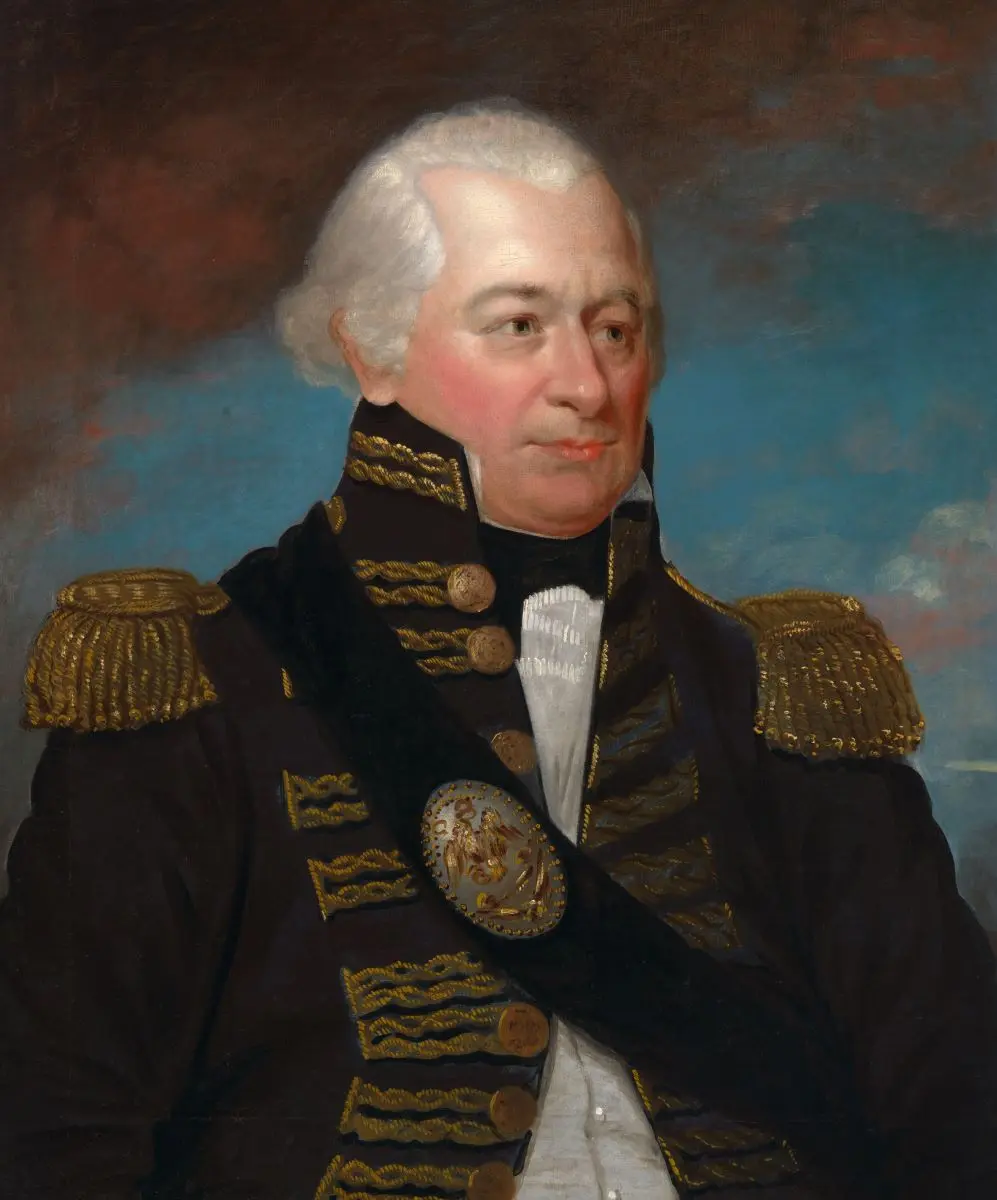
Assembling in St. Louis, the first Pike Expedition launched on Aug. 9, 1805, from Fort Belle Fontaine. Pike believed, incorrectly, that a body of water known today as Leech Lake in northern Minnesota was the source of the Mississippi River (there are other reports that he identified Red Cedar Lake, now Cass Lake, another large body of water in Minnesota, as the source). He was close, as the actual source, Lake Itasca, is only about 25 miles west of Leech.
“In the execution of this voyage I had no gentleman to aid me, and I literally performed the duties (as far as my limited abilities permitted) of astronomer, surveyor, commanding officer, clerk, spy, guide, and hunter; frequently preceding the party for miles in order to reconnoiter, and returning in the evening, hungry and fatigued, to sit down in the open air, by firelight, to copy the notes and plot the courses of the day.”
Of that list of duties, “spy” certainly stands out. The Americans wished to know where the Spanish were and how strong their forces were in the region. The Louisiana Territory did rightfully belong to America, but in numerous places around this massive tract of land, there were border disputes.
The Spanish were adamant that the Americans not cross over into their territory. Furthermore, the Spanish had an inside man who would tip them off regarding future explorations. Gen. Wilkinson had long been a double agent for the Spanish, taking money for information. He had actually tipped off the Spanish regarding the Lewis and Clark Expedition. The Spanish, however, were not able to locate the Corps of Discovery to stop their expedition.
The Second Pike Expedition
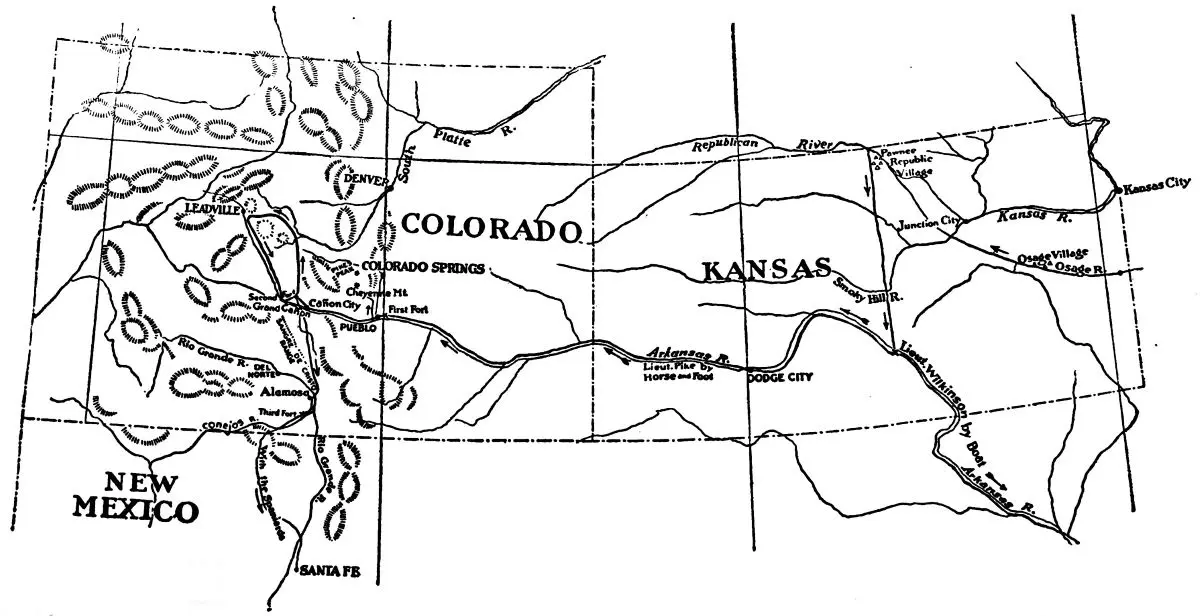
Considering his success exploring the Upper Mississippi, Pike was now commissioned to navigate and explore the region that had initially been assigned to the Hunter and Dunbar Expedition. Along with the exploration of the southern area of the Louisiana Territory, Pike was ordered to escort numerous Osage Indians back to their tribes, attempt to negotiate a peace between the Kansas and Pawnee tribes, contact the leaders of the Comanche, and of course spy the locations of the Spanish along the new southwestern border.
The objective was to reach close to Santa Fe, a small provincial capital in New Spain. Pike was informed that if he and his men were captured by the Spanish that he was to tell his captors that his expedition had gotten lost looking for Natchitoches, Louisiana.
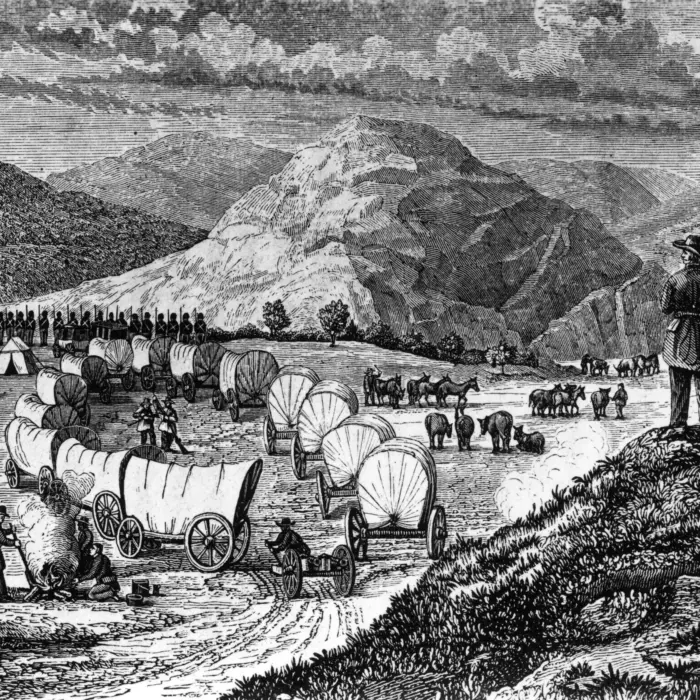
Pike assembled his “Dam’d set of Rascals” again in St. Louis. It was during this week in history, on July 15, 1806—less than three months after the end of his first expedition—that the Second Pike Expedition began. About 500 miles into the expedition, Pike and his men arrived at a Pawnee village (near today’s Guide Rock, Nebraska). The Pawnee had been ordered by the Spanish to keep any Americans from passing through—by force, if necessary. Heavily outnumbered by the Pawnee, Pike was undeterred.
“Nothing but death can stop us,” Pike informed the Pawnee chief, “It is my duty as I have already fully explained to you—if you think it is yours to obey the Spaniard, so to stop me, be it so: But be assured that the attempt will cost the lives of many brave men—this you may be sure of.”
A Dangerous Winter
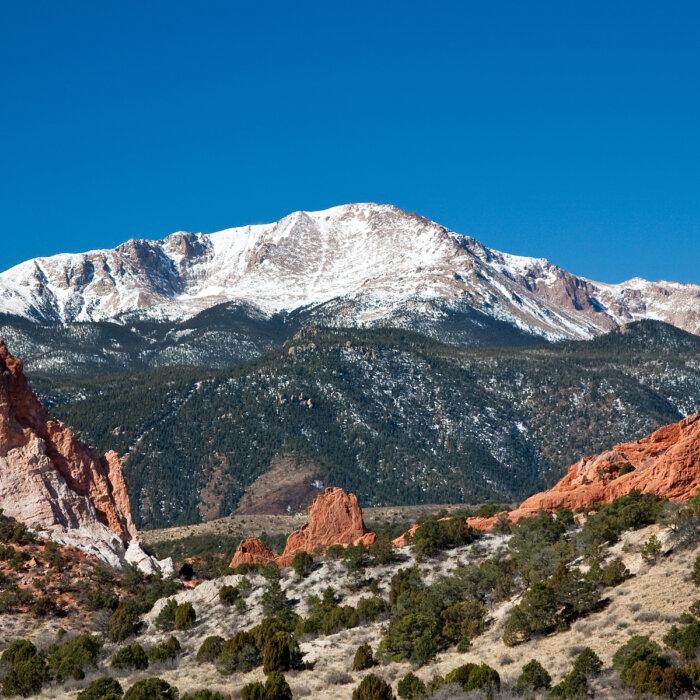
Pike and his 15 other men continued onward through Nebraska and into Colorado where, in November, he discovered a large mountain that peaked above the rest. Unsuccessful in his attempt to summit the mountain, he nonetheless charted it and named it Grand Peak. Over the ensuing decades, the mountain was later renamed Pikes Peak.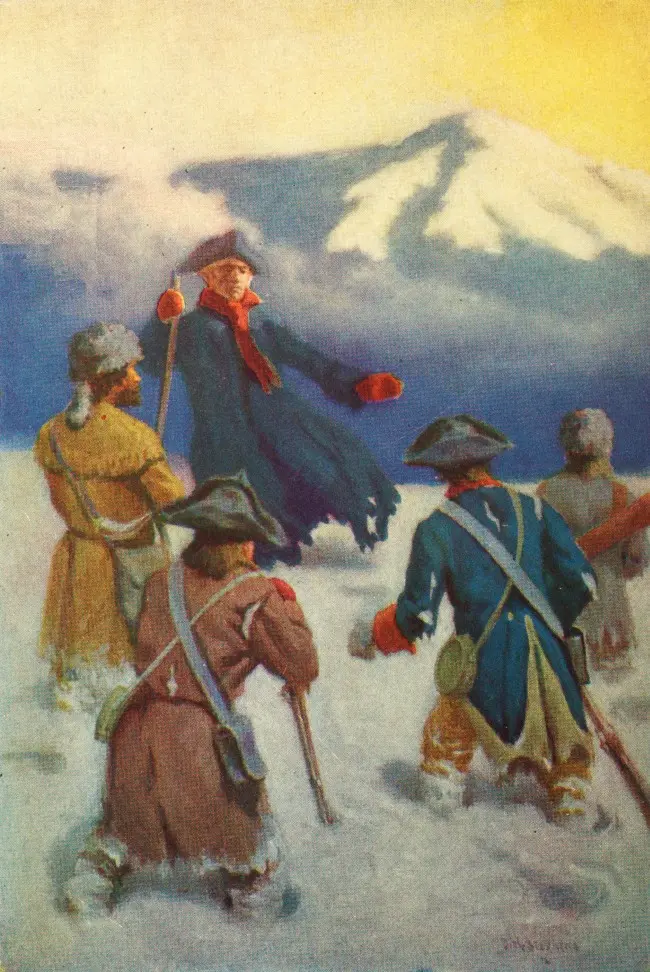
His arrival in the Rocky Mountains, and his attempt to summit the mountain was ill-conceived, as winter was fast approaching. Over the course of several weeks, the expedition reached the south fork of the South Platte River on Dec. 12. Crossing through mountain passes, Pike believed he had reached the Red River, but it was in fact the Arkansas. Traversing through the mountains and valleys and along rivers, the men realized they had done nothing more than travel a very large circle.
The expedition moved southward, but they were still in the southern stretch of the Rockies—Sangre de Cristo Mountains—when the worst of the winter storms hit in January. He and his men, wearing only their summer clothes, were both starving and freezing, most of whom were now frostbitten. Pike and a few men pressed through the thick snow in the Medano Pass, which is directly east of the Great Sand Dunes and approximately 150 miles north as the crow flies of Santa Fe.
The Second Pike Expedition made it through the pass and entered the Great Sand Dunes. Just south of the Dunes, Pike and his men built a stockade in today’s Alamosa, Colorado. At this point, Robinson, the expedition’s physician, received permission to reach Santa Fe. When Robinson met Spanish officials there, he told them he had been with a party of hunters. The officials became suspicious and sent a patrol to Alamosa where they found Pike and his men. They were all arrested, but treated well. Their arrest may have ensured the frostbitten and gangrenous men did not die.
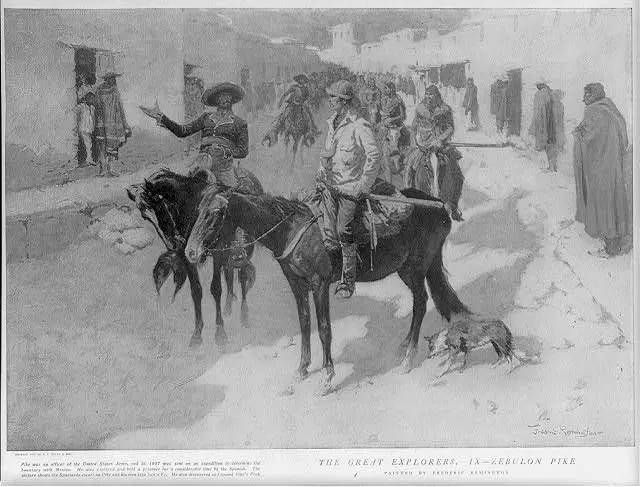
Pike stuck to his story about looking for Natchitoches, Louisiana. Pike and most of his men were escorted to Natchitoches, arriving July 1.
Pike published his exploring accounts in his successful memoir in 1810, which was published in England the following year, and then translated and published in French, Dutch, and German over the next two years. He was killed in Toronto during the War of 1812, ending his military career with the rank of brigadier general.