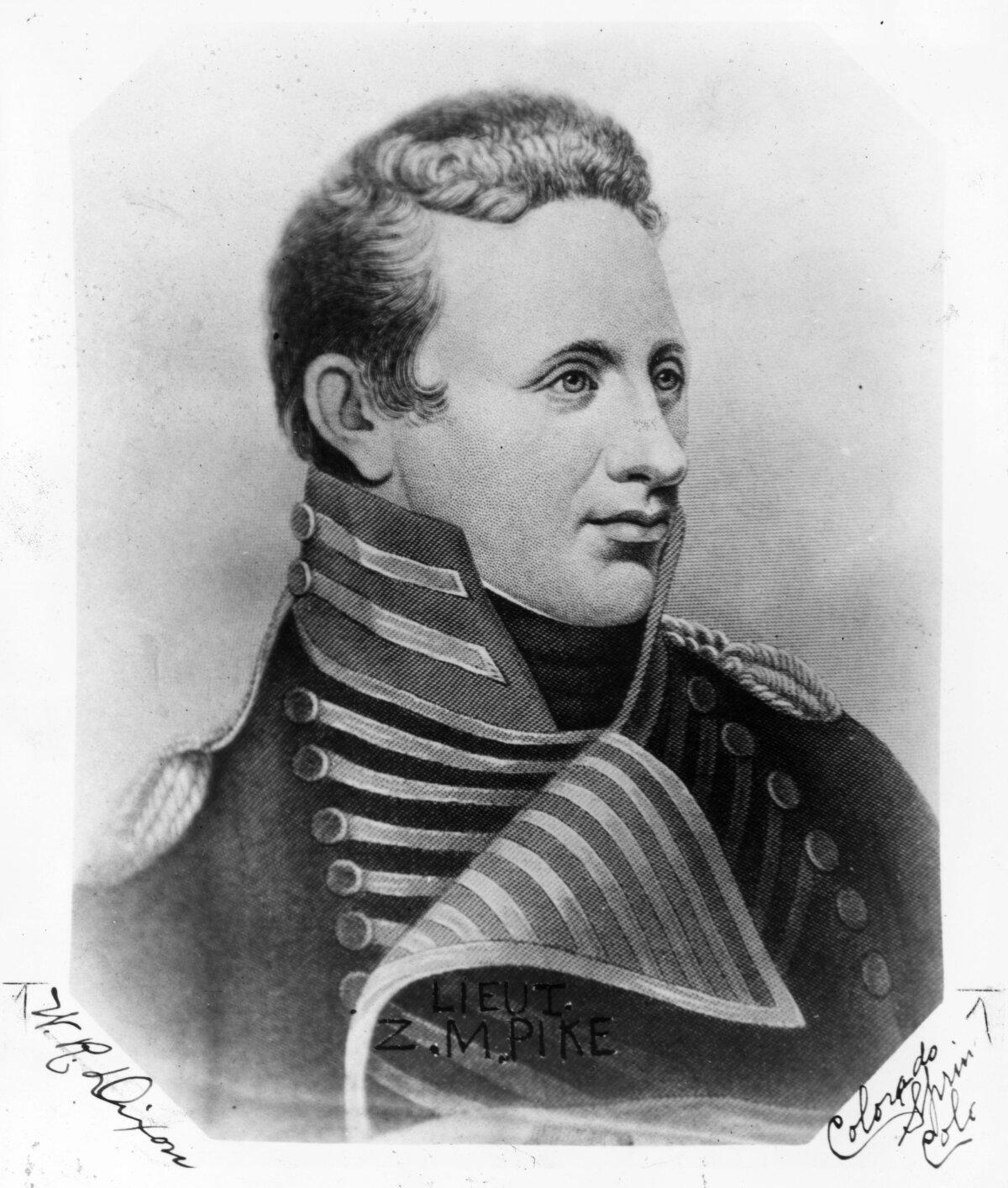
The Americans, led by Lt. Zebulon Pike, were determined to move past the Pawnee either peacefully or by force. They had already accomplished one geographic expedition, and now they were in the midst of their second. The Spanish, however, had strongly encouraged the Pawnee not to allow the Americans to move westward from their location in today’s Guide Rock, Nebraska.
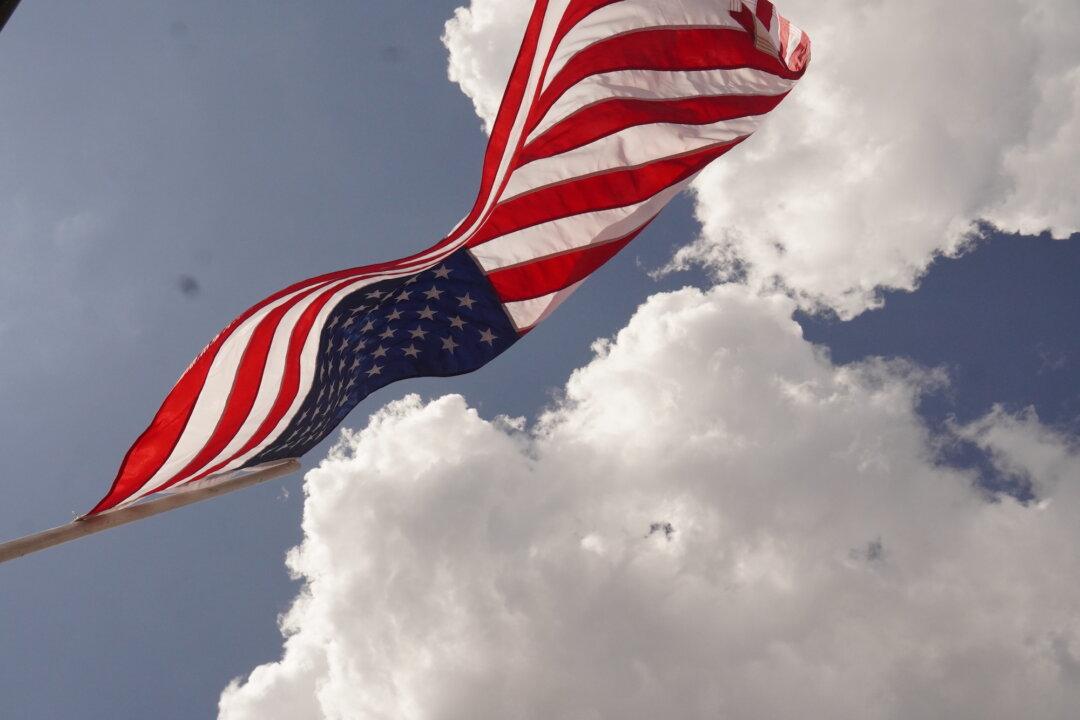
The 600 Spanish troops that had arrived in the Pawnee camp shortly before the Americans, had distributed Spanish flags throughout. They were not symbols of imperial domination against the native tribe, but a symbol to the Americans to stay out.
The year was 1806. The Louisiana Purchase of 1803 had left unspecified boundaries between New Spain and the newly purchased American lands. Nonetheless, Congress sponsored the Lewis and Clark Expedition—an 8,000 mile roundtrip that reached the Pacific Ocean at the mouth of the Columbia River along the northern section of the continent, and lasted from May 14, 1804 to Sept. 23, 1806.
The Pike Expeditions were established to explore the new territories in search of the headwaters of the Mississippi River, and later the Arkansas River. Having completed the first expedition at the end of April 1806 and having already begun the second, Pike made it clear to the chief that there was only one thing that could stop his expedition from moving forward.
“Nothing but death can stop us—it is my duty as I have already fully explained to you—if you think it is yours to obey the Spaniard, so to stop me, be it so: But be assured that the attempt will cost the lives of many brave men—this you may be sure of.”

Naming the ‘Small Blue Cloud’
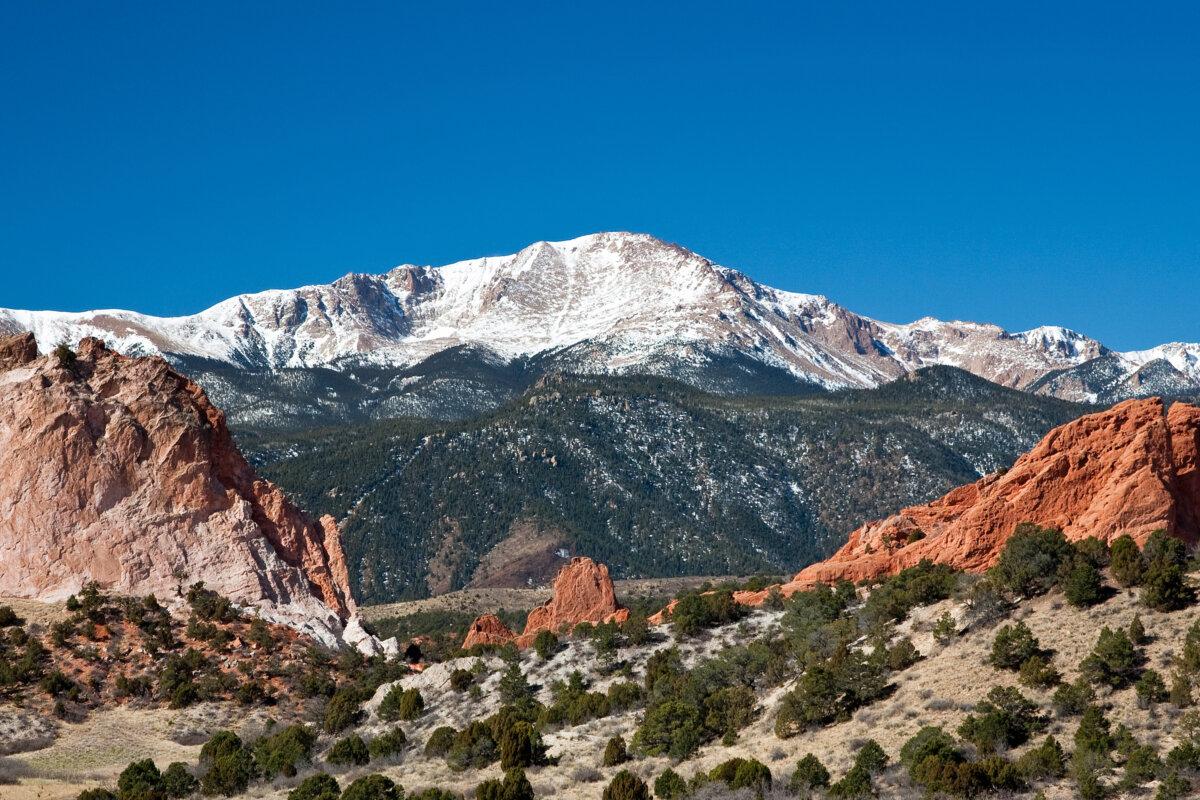
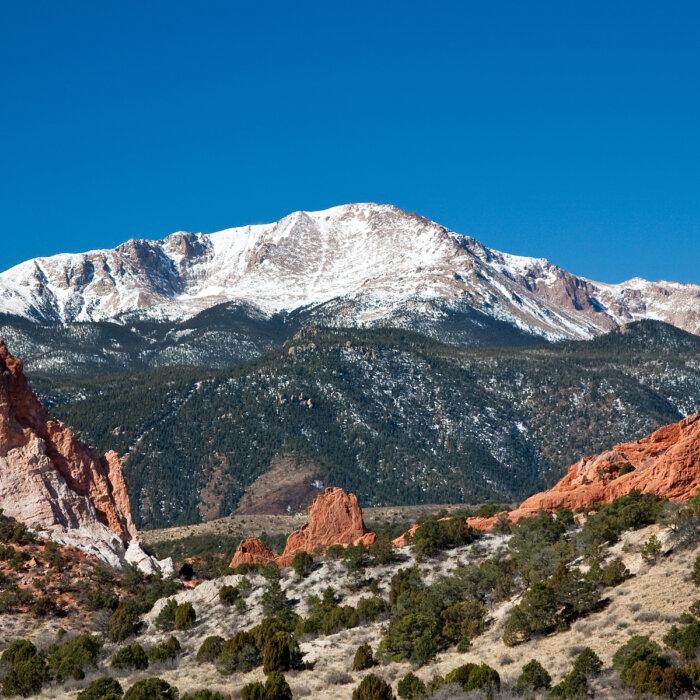
Continuing south into the plains of today’s Kansas, the expedition crossed over into Colorado by November. Surveying the Front Range of the Rockies, Pike noticed in the distance a “small blue cloud” jutting 14,115 feet into the sky. Gathering three other soldiers with him, they set out to climb to the top of this particular peak. With winter setting in, the men were turned back by the harsh weather and the deep snow. Unable to scale the mountain, Pike nonetheless named it. Grand Peak seemed a fitting name.
Seven years later, Pike was killed in battle during the War of 1812. Seven years after his death, Grand Peak was finally surmounted by members of the Long Expedition. Dr. Edwin James, a naturalist, and two others, climbed Grand Peak. James took copious notes of what he saw. When they returned from the mountain, Maj. Stephen Long, leader of the expedition, was impressed by James’s notes and discoveries, and renamed Grand Peak, James Peak.
Approximately 20 years later, the mountain was renamed again, this time by Maj. John C. Frémont, of the Army’s Topographical Corps and leader of the Frémont Expedition. This time the name stuck: Pike’s Peak. As a consolation, another mountain along Colorado’s Front Range was named James Peak.
The Rise of a Young Poet
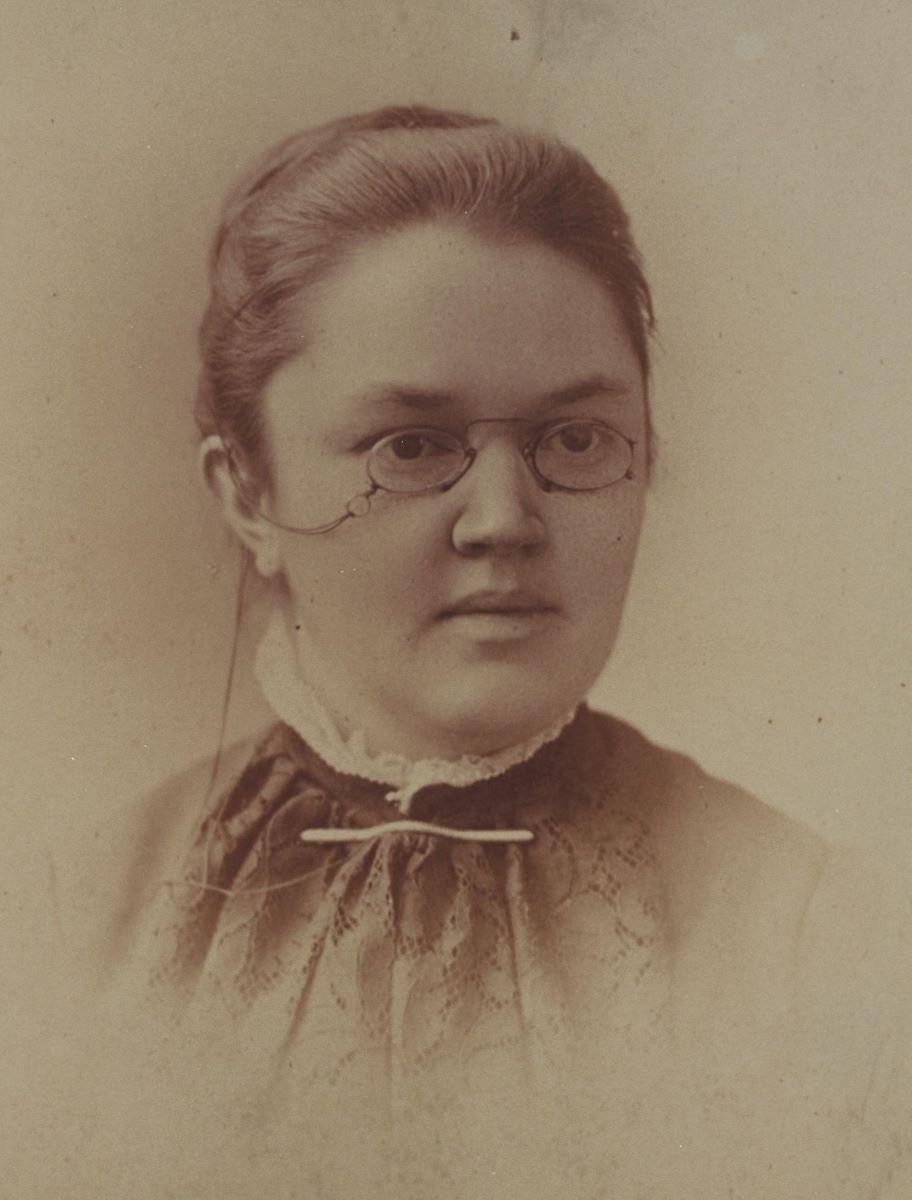
That same year, Katharine Lee Bates, a talented young American writer and poet was studying for her master’s degree at Oxford University. Born in Falmouth, Massachusetts in 1859, she was the only daughter of a minister, William, and his wife, Cornelia, a teacher. William, however, died less than a month after Bates’s birth.
Her brothers pivoted to the workforce in order to provide for the family, allowing their sister to pursue an education. Bates was sent to Wellesley High School, graduating in 1874, and then to Wellesley College, where she graduated in 1880. She began to garner attention for her literary talents, and in 1879, the Atlantic Monthly published her poem, “Sleep”—a poem that even Henry Wadsworth Longfellow complimented.
After graduating from Wellesley College, she taught Greek, Latin, and geometry at a local school. By 1885, she had become an English professor at Wellesley College. In 1890, she published a collection of poetry called “Sunshine and Other Verses for Children.” One of the poems, “Goody Santa Claus on a Sleigh Ride,” gave Mrs. Claus a bit of notoriety.
The year prior, her novel, “Rose and Thorn,” appeared as part of “The Pilgrim Prize Series,” awarded by the Congregational Sunday-School and Publishing Society. The prize provided the funds to travel to England, and from 1890 to 1891 she studied at Oxford.
The Great Exposition
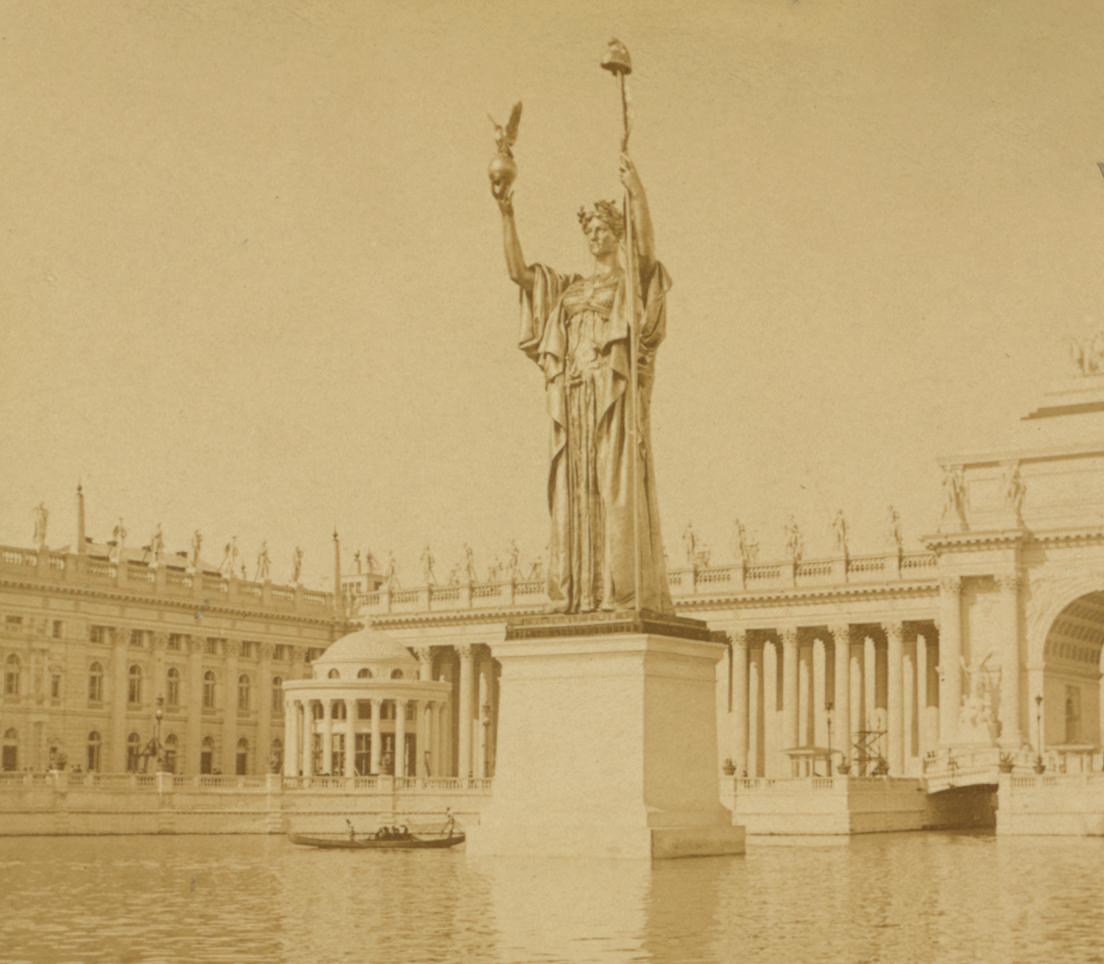
While Bates was completing her studies at Oxford, “the greatest meeting of artists since the fifteenth century” had assembled in Chicago to discuss how to design and create the Columbian Exposition—the world’s fair that was scheduled to coincide with the 400th anniversary of Christopher Columbus’s arrival in the New World.On May 1, 1893, the Exposition, constructed at Jackson Park along Lake Michigan, opened. The six monthslong world’s fair showcased numerous exhibit halls, like the Palace of Fine Arts, the U.S. Government Building, the Manufactures and Liberal Arts Building, the Electricity Building, and the Anthropological Building, all designed in neoclassical style. The exposition’s architectural centerpiece was the Court of Honor with its palace-like structures and Venetian waterways. It also featured the latest inventions, none more breathtaking than the electric lighting at night. Although Thomas Edison’s lightbulb had been around for nearly 15 years, most Americans had not witnessed it.
The greatest attraction, however, was the Midway, which hosted beauty contests, boxing matches, and magic shows. But most memorably, it boasted the world’s first Ferris wheel. This massive attraction was 250 feet in diameter, reaching as high as the crown of the Statue of Liberty.
From Chicago to Colorado
Bates left Boston on June 29, stopped by Niagara Falls on June 30, and arrived in Chicago on July 2. She was entranced by the grandeur of this 630-acre expanse with its white neoclassical structures and 65,000 exhibits. The Exposition was, in her words, “a thing of beauty.” Many of the buildings’ exteriors were made of a white material, leading to the fair’s moniker of the White City. Bates referenced them as “alabaster cities.”It was during this week in history, on July 22, 1893, that Bates, along with her fellow teachers, boarded the wagon and ventured up the mountain. As they neared the top, the ladies had to switch from riding the wagon to riding mules. It had been an exhausting journey, but when she made it to the top, her weariness seemed to recede.
An Inspiring View
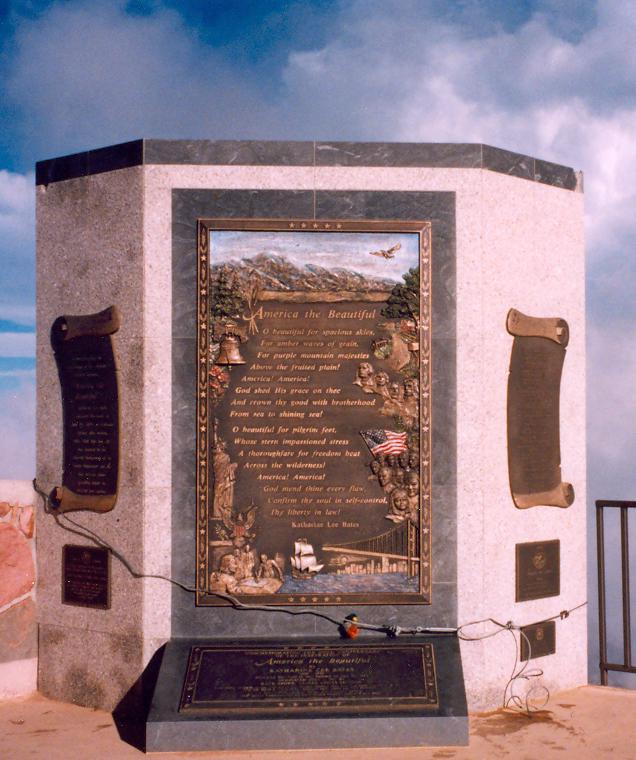
After taking in the view, she couldn’t wait to return to her lodgings at the Antlers Hotel and write about the “most glorious scenery I ever beheld.” She decided, as was her fashion, to write a poem about her experience, which she fittingly entitled “Pikes Peak.”O beautiful for spacious skies, For amber waves of grain, For purple mountain majesties Above the fruited plain!
Bates completed her four-stanza poem. It would undergo a few revisions over the following months, and on July 4, 1895, it was published by the weekly newspaper The Congregationalist. The poem was published under the title “America.” (Bates continued to make slight revisions to the poem throughout the years.) She gave permission to have the poem freely published in countless anthologies, hymnals, periodicals, and readers. The poem’s fame spread throughout the country.The poem was set to numerous tunes over the years, finally settling in 1910 on Samuel A. Ward’s tune, “Materna.” The song, known famously as “America the Beautiful,” has become the country’s unofficial national anthem.
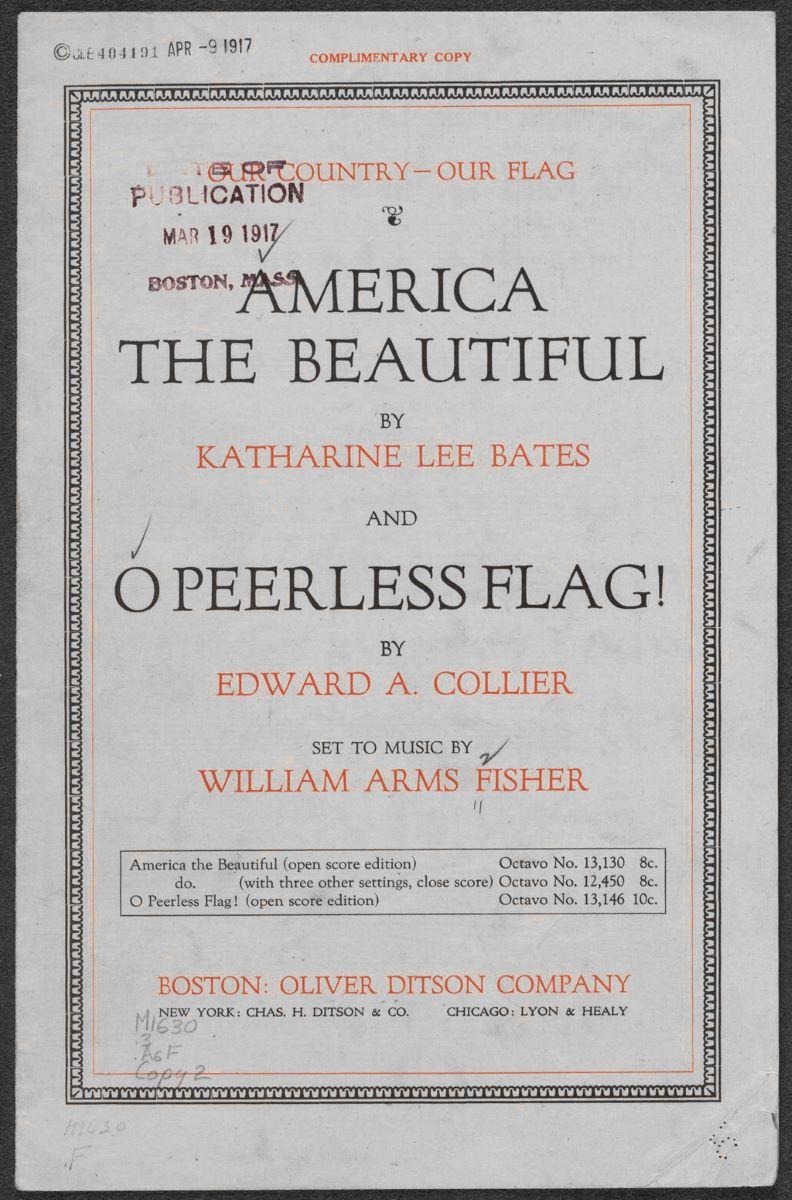
O beautiful for spacious skies, For amber waves of grain, For purple mountain majesties Above the fruited plain! America! America! God shed His grace on thee And crown thy good with brotherhood From sea to shining sea!
O beautiful for pilgrim feet, Whose stern, impassioned stress A thoroughfare for freedom beat Across the wilderness! America! America! God mend thine every flaw, Confirm thy soul in self-control, Thy liberty in law!
O beautiful for heroes proved In liberating strife, Who more than self their country loved, And mercy more than life! America! America! May God thy gold refine Till all success be nobleness, And every gain divine!
O beautiful for patriot dream That sees beyond the years Thine alabaster cities gleam Undimmed by human tears! America! America! God shed His grace on thee, And crown thy good with brotherhood From sea to shining sea!