Raising boys to be men is one of the great challenges of our time. Traditional notions of masculinity have been seriously obscured in recent decades, giving rise to a false dilemma of either toxic masculinity or mere effeminacy. Neither one, of course, is true masculinity. And directing boys toward these false solutions hurts both them and society.
How do we recover a proper understanding of masculinity and manhood, one that avoids both of the extremes described above? One place to look is in classic literature.
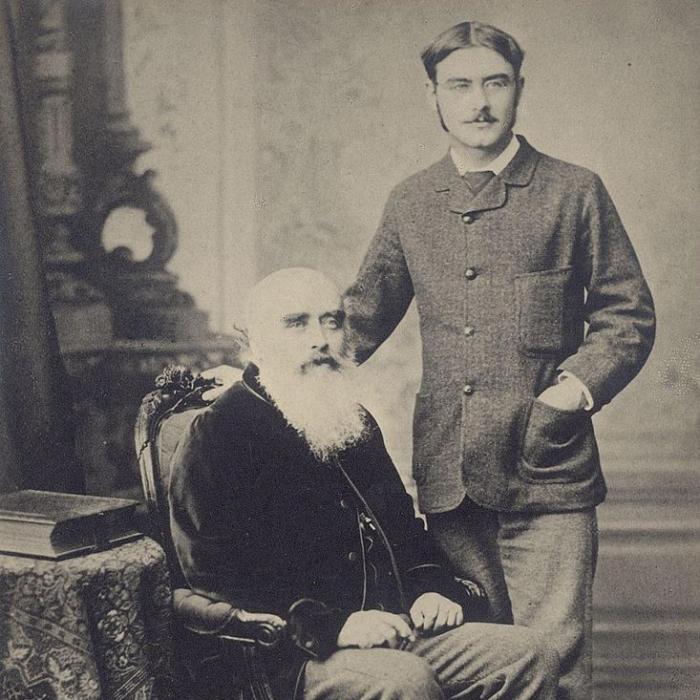
In his memoirs, Kipling wrote, “Among the verses in Rewards was one set called ‘If.’ … They were drawn from Jameson’s character, and contained counsels of perfection most easy to give.”
Self-Confidence
If you can keep your head when all about you Are losing theirs and blaming it on you, If you can trust yourself when all men doubt you, But make allowance for their doubting too;Here, Kipling reminds young men of the necessity of maintaining a quiet confidence in their own values, capabilities, and ideas—even when others are challenging them. Manhood requires a sense of identity rooted in what you stand for and what you know you are capable of accomplishing. A masculine man has principles and knows he is able to live up to them. This gives him a steadiness of character even in the most chaotic of situations.

Overcoming Human Respect
If you can wait and not be tired by waiting, Or being lied about, don’t deal in lies, Or being hated, don’t give way to hating, And yet don’t look too good, nor talk too wise;Because of his quiet confidence in himself and his beliefs, a man can withstand the false accusations or misrepresentations of others. He is not a slave to human respect. He doesn’t lose his calm even when others think badly of him or speak untruths about him. Since he knows that his value as a man doesn’t depend on what others think of him, he can maintain peace in the face of unjust criticism or even falsehoods. Like a man striding through a flurry of dried leaves, he doesn’t allow trivial things to divert him from his path.
Setting Goals and Facing Setbacks
If you can dream—and not make dreams your master; If you can think—and not make thoughts your aim; If you can meet with Triumph and Disaster And treat those two impostors just the same;The first two lines of this stanza include balanced halves, separated by the hyphen: “dream—and not make dreams your master”; ”think—and not make thoughts your aim.” Here, Kipling points to the necessity of balance in a man of true character. For instance, he should be ambitious and able to imagine better futures, yet not to the point that he allows his ambitions to dominate him or override his principles. Likewise, a man of character is a man of thought, but not only thought. He must be a man of action, too, whose thoughts and ideals bear fruit in the tangible world.

Persistence and Courage
If you can bear to hear the truth you’ve spoken Twisted by knaves to make a trap for fools, Or watch the things you gave your life to, broken, And stoop and build ’em up with worn-out tools:
If you can force your heart and nerve and sinew To serve your turn long after they are gone, And so hold on when there is nothing in you Except the Will which says to them: ‘Hold on!’One of the most inspiring stanzas of the poem, this one hones in on the necessity of determination. A true man is capable of making commitments and holding to them because he has the strength of will to “hold on” even when “heart and nerve and sinew” have given way—that is, even when his own feelings and body are rebelling against him. He remains master of himself through the strength of his will, which, once committed to some noble end, will not buckle under any amount of pressure.

Virtue and Identity
If you can talk with crowds and keep your virtue, Or walk with Kings—nor lose the common touch, If neither foes nor loving friends can hurt you, If all men count with you, but none too much;In this final stanza, Kipling returns to an idea articulated at the beginning: fidelity to yourself and your values. A true man will not be swayed from the path of virtue by those around him. He will not be degraded by the crowds nor puffed up into arrogance by “kings.” He will not scorn others, but neither will he allow them to dictate to him how he must behave. This gives him, again, a kind of freedom, such that he does not allow his identity to get tied up in pleasing friends or combatting enemies.

If you can fill the unforgiving minute With sixty seconds’ worth of distance run, Yours is the Earth and everything that’s in it, And—which is more—you’ll be a Man, my son!A few final notes are in order. Kipling closes with an indirect reference to the importance of time. The wise man knows how to make progress toward his goals—“distance run”—in even a single minute. This is the final “if” before the conclusion: “yours is the Earth and everything that’s in it.” The point here is that the man of virtue and character achieves a kind of mastery over the world, not in the sense of literally ruling everything, but in the sense that he is able to achieve goals, remain independent of the fickleness of human opinion, and rise above every challenge.
But of even greater value than this mastery over the world is what the boy who takes this advice will become: a “Man.” More important than all the worldly achievement that follows from true masculinity is the value inherent in living a life of virtue and becoming a man of character. Of course, the conditionality of that resounding “if” that runs through the poem expresses the difficulty of achieving the ideal laid out here. Yet it also suggests that the ideal is not out of reach for those willing to live with integrity.