The officers arrived in silence—no lights, no sirens, no jarring footsteps. They parked discretely and approached the young man in a mental health crisis about to jump from the sixth floor of a parkade in Sarasota, Florida.
And there was Officer Michal Banasiak, already present on the scene, putting his crisis intervention training to good use.
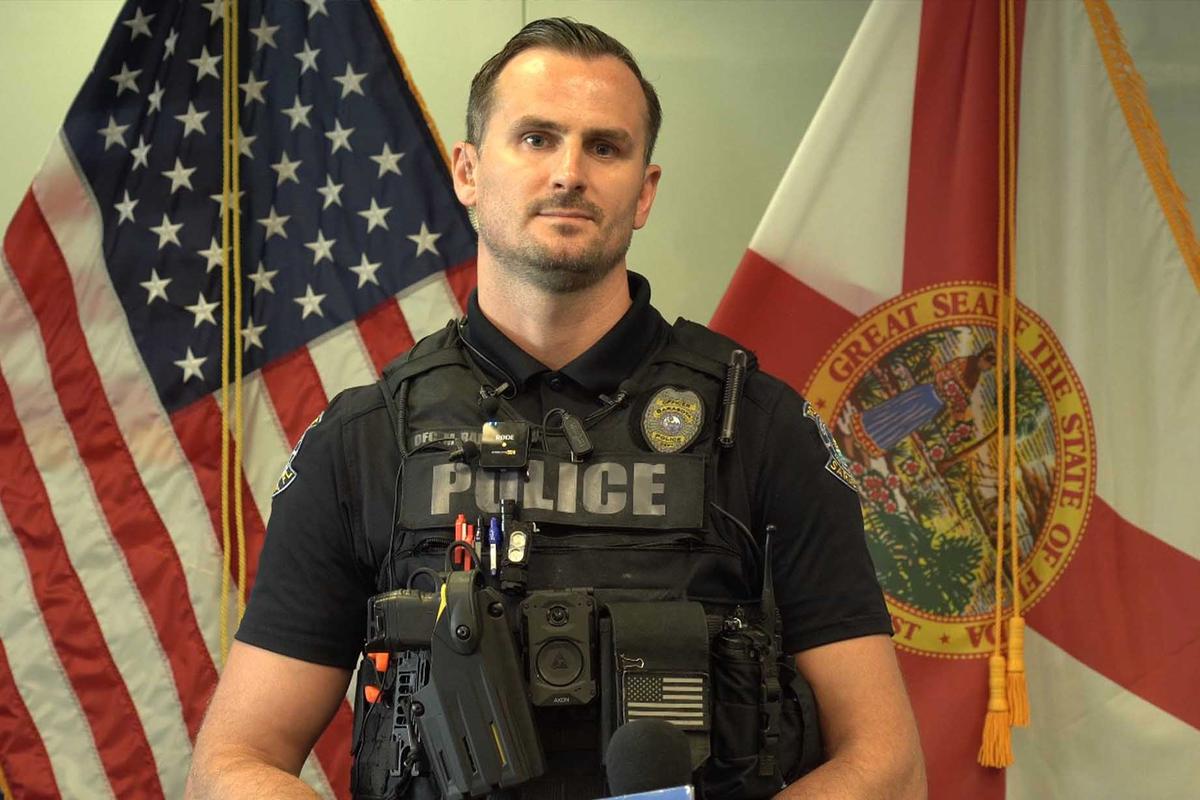
Responding to a call of a “suspicious person” on the morning of March 27, Banasiak, who joined the Sarasota Police Department (SPD) two years ago, found the distressed man on a ledge of the parkade. Unlike typical situations, where officers are called to firmly take charge, a suicidal encounter demands listening. The former restaurateur-turned-policeman is used to listening—that’s why he joined the force.
Footage from Banasiak’s bodycam showed it was dark outside, around 2 a.m. The video was being transmitted to his supervisors, allowing them to arrange for backup silently over the radio while he focused on building a rapport with the young man. Officers Orlando Perez and Kassidee Plumley had been instructed to arrive quietly.
“We have to just completely stop and just listen to that person. Now, in that situation, they are in charge,” Banasiak said in a statement the SPD provided to The Epoch Times. “If that person will tell me, ‘I do not want to talk to you,’ I will just walk back, and I'll wait for somebody else who can can get a better rapport with that person.”
Banasiak’s training taught him to “just be yourself” in that kind of situation, he said, because “that person has already made the decision to end their life.”
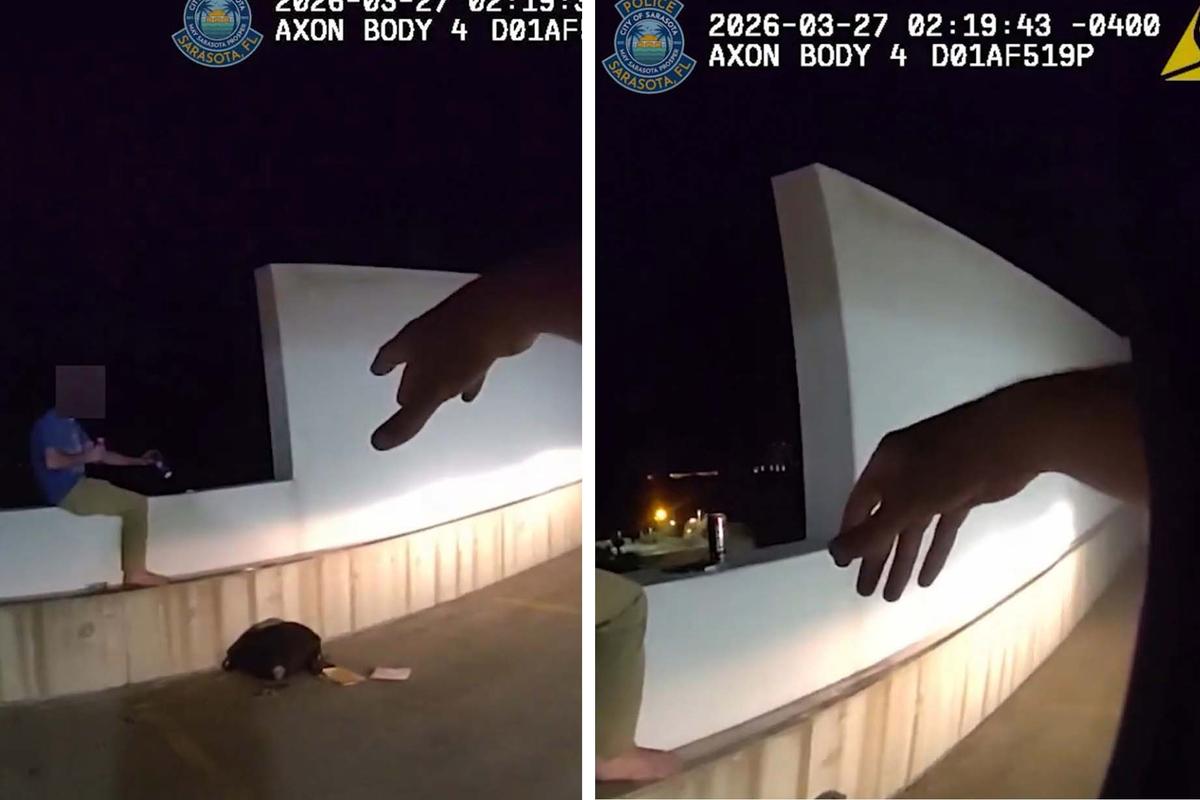
Footage shows the man straddling the concrete barrier between safety and certain death. After Banasiak told him he’s “in zero trouble” and gained his trust, and then was asked to approach and help open a container, the officer saw his chance. He grabbed the man’s arm, pulled him inside, and cuffed him on the ground with help from Perez and Plumley.
“That’s all that I’m thinking about: I’m trying to bring him to a safe place,” Banasiak said. “We can work out whatever happens next later, but he has to be safe. That’s the number one priority.”
Unlike other incidents the officer has faced, which can last hours, this one ended after about about five minutes.
They talked more in Banasiak’s car afterward. The man said he was “glad” they pulled him off the ledge, and that he felt sad and depressed. He was dealing issues he couldn’t resolve. But the real eye-opener for the officer was that the man seemed like a “regular person.”
“He has a job, he has a house, he’s a homeowner, he’s pretty successful in his life,” Banasiak said. “He is just one of us.”
A Post-Pandemic Mental Health Crisis
The incident underscores the extent of a nationwide, and global, post-pandemic mental health crisis, and the fact that Banasiak and his brothers and sisters in blue respond to suicide calls not weekly, but “every single day.”“There’s a lot of people that are struggling. There’s a lot of help that we can offer as well,” he said. “So please reach out, talk to someone, and take care of your mental health.”
Police departments like Banasiak’s now run mandatory 40-hour crisis intervention training for new officers. Some have evolved strategies to recruit officers with high emotional intelligence and genuine compassion for their community. Critics, however, say medical professionals are more suited to this work than police, who may “criminalize” mental illness, while it also takes a toll on officers’ mental health.
For Banasiak, he said he felt “extremely nervous” during the March 27 incident, though “immediately the training kicked in” and a calm washed over him. A sharp adrenaline dump and intense nervousness hit afterward.
“I was like, ‘Oh my God, this was a life and death situation,’” he said. “What just happened?”
He says he feels “good” it ended well, though no call is ever identical.
“I might be called into a very similar situation and might end up completely different,” he said. “You might go through 30 years of your career and never encounter a call like that. It happened to me two years in.”