Think “swashbuckler,” and what do you hear? Soaring strings, fanfares of brass, and bold gestures from a large, loud orchestra? Of course you do. Such is the soundtrack for “Captain Blood,” “The Adventures of Robin Hood,” and countless other quasi-historical movies of the 1930s and 1940s. And while, for 20 years or so, that sound was replaced by a cooler, jazzier sound in cinema, it returned in 1977, full blast, thanks to John Williams’s score to “Star Wars.” The distinctive sound continues today as the typical sonic backdrop to adventure films.
The Best of Berlioz
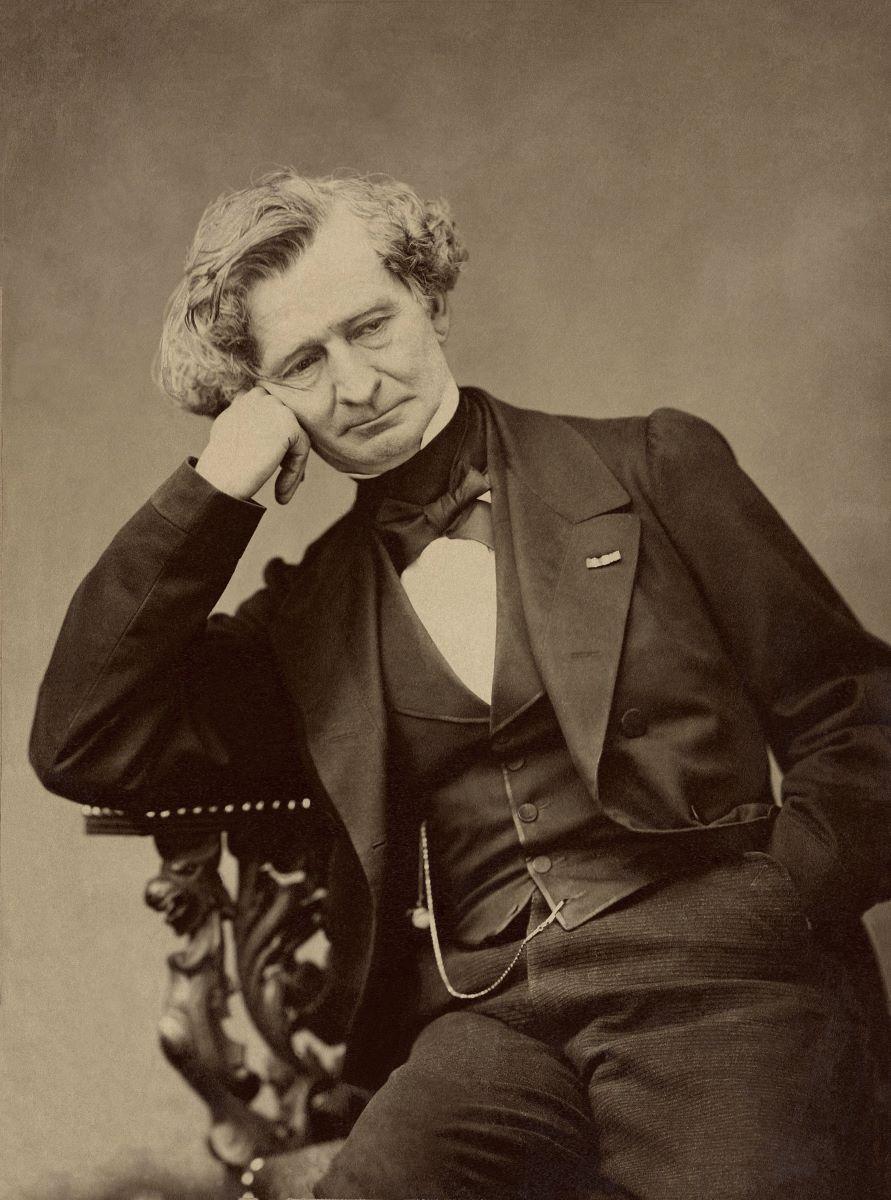
Hector Berlioz, in 1863, photographed by Pierre Petit. Public Domain
It is the Romantic sound, and it is nowhere better displayed than in the overtures of Hector Berlioz (1803–1869). Berlioz, a French composer probably best known for his “Symphonie Fantastique,” penned seven recorded overtures, short (seven to 12 minutes on average) orchestral works intended to begin longer performances of some kind. He wrote some of them to open the curtains on his operas and others as freestanding pieces generally placed at the head of a concert.
One of his most popular and recognized overtures was composed for the concert hall but used melodies from an earlier opera. In 1838, Berlioz had witnessed the crash-and-burn of his opera “Benvenuto Cellini,” yet he managed to salvage the opera’s overture for concert use.
In 1843, the composer decided to take two tunes from the opera that were not part of the opera’s overture, add new material, and shape a new concert overture he called “Roman Carnival.” (One of the borrowed melodies came from the opera’s carnival scene.) It was premiered in Paris in 1844, and Berlioz consequently made it a part of his repertoire when he traveled as a composer-conductor to Vienna in 1845. That December, he wrote to a friend:
“I am having an enormous success here. They call me back, ask for my music to be played twice or even three times. There is a piece, the overture to “Roman Carnival,” which the public wanted to hear three times in succession.”
It has been an orchestral staple ever since. Listen to the Berlin Philharmonic’s rendition, conducted by Mariss Jansons.
Sweeping Adventure
“Roman Carnival” begins with a swooping fanfare that lands, after 48 seconds or so, on a long-held note by French horn followed with an echo from the clarinet in low, “chalumeau” range. The stage is set for carnival, but first we hear, at 0:57, a plaintive love song incanted by the cor anglais (English horn). It seems our imaginary participation in festivity has been instantly interrupted by romantic infatuation. The solo exploits the human-like singing quality of the English horn in a way that would not be matched until the slow movement of Dvorak’s “New World Symphony.”
The full orchestra takes up the love theme, and starting at 3:01 it is punctuated by a gentle dance rhythm, which shortly fades. At 4:31 the swooping opening is recalled, and, at 5:17, the brass announce carnival festivities in the form of a medieval Italian dance music called the saltarello. The exultant joy persists, even getting a reboot of sorts at around 6:38. But all good carnival fun must come to end, and, at around 7:22, things start to die down. From here until the smashing chords of the final bars, we will hear the love theme in overlapping statements vie with the saltarello music.
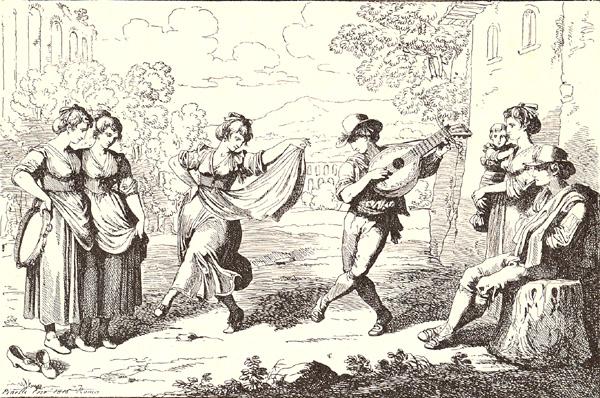
"Saltarello," illustration by Bartolomeo Pinelli. Public Domain
What arts and culture topics would you like us to cover? Please email ideas or feedback to [email protected]