After the English composer Edward Elgar (1857–1934) performed “Pomp and Circumstance” March No. 1 for his friends, he bragged “I’ve got a tune that will knock ’em—knock ’em flat,” and knock ’em flat it did.
Surrounded by Pomp
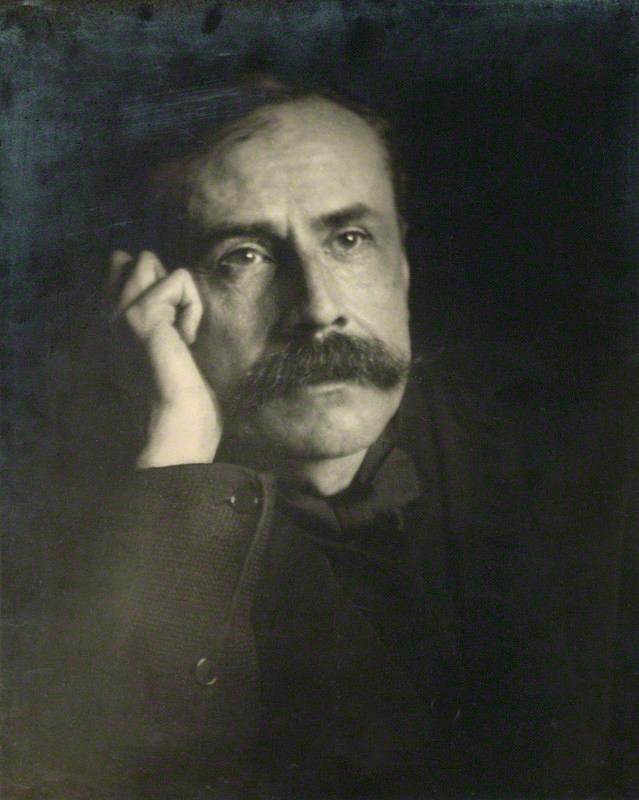
Elgar was born in the county of Worcestershire, nestled in the English countryside. Growing up, he called Victoria his queen and the British Empire his country. British imperialism was reaching its zenith, and like the hills of his childhood home, its dominance seemed unending.Yet Elgar was privy to the underlying fractures and uncertainty. He belonged to England’s religiously marginalized Roman Catholic majority. Furthermore, he was the son of a tradesman in a class-conscious society, far outside the aristocratic circles that traditionally supported classical music. He was also a dreamer desperate for recognition and approval from a pragmatic industrial society.
Although he rose beyond his circumstances, achieved knighthood, and married into socially prominent family, insecurity haunted Elgar throughout his life. He once turned down a dinner invitation, saying how he did not wish for them to be “disgraced by the presence of a piano-tuner’s son and his wife.” It comes, then, as a strange twist of fate that one who felt so outcast conceived a set of pieces that eventually became a celebration of the establishment.
The Irony of Circumstances
Elgar’s “Pomp and Circumstance” is a set of five orchestral marches (he intended to write six, but died before completing the final one). The title came from a line in Shakespeare’s “Othello,” which Elgar found after completing the second march. In the passage, Othello recalls past military glory while lamenting the loss of happiness after believing his wife had been unfaithful:“Farewell the neighing steed and the shrill trump, The spirit-stirring drum, th’ear-piercing fife, The royal banner and all quality, Pride, pomp and Circumstance of glorious war!”
Among the marches, one was intended “to be a soldier’s funeral march,” and along with the choice of title, it is by circumstance that the work gains a historical irony. When the first march was composed in 1901, the British Empire nearly covered a quarter of the world’s land and population; but by the time the fifth was completed in 1930, post-World War I Britain had changed rapidly. The empire began to diminish as nationalist movements emerged challenging British rule.Though Elgar could not have known about the decline of British power, what was taken as a celebration of imperial Britain now seems like a farewell to an era of military glory.

In the opening you hear the ceremonial fanfare-like brass introduce the first theme, and then at 01:58 the iconic trio section begins. While Americans recognize the expansive melody from their graduations, the English hear it as the patriotic song “Land of Hope and Glory.” Finally at 03:52, the material repeats, only this time the return of the trio, 05:00, takes on even grander dimensions.
Though Elgar’s “Pomp and Circumstance” marches evoke a paradox of feelings, one cannot deny its catchy melodies are packed with vim and vigor. It is a piece that despite its history and interpretations continues to “knock ‘em—knock ‘em flat.”