Johannes Brahms died in 1897, alone on a deathbed. He had spent a lifetime creating a wealth of works, clinging to the hope that his legacy could endure the erosion of time. Yet as youth receded into memory and life itself became a dream, perhaps Brahms had made peace with himself. Three years prior to his passing, he premiered his final works: the Clarinet Sonata No. 1 in F minor and Sonata No. 2 in E-flat major.
The first two movements of his F minor sonata serve as an emotional thesis for Brahms’s final works. In each movement he unveils, layer by layer, his inner thoughts. While the first finds reconciliation with mortality, the second reminisces over an impossible romance.
‘If I must depart’

The F minor sonata begins in the piano with a variation of the St Matthew Passion excerpt. It’s a candid utterance—unadorned and ambiguous—and the listener is left unsure of what Brahms will do. He doesn’t offer any idea of what the key is, and only hints at the mournful tonality of F minor. The entrance of the clarinet adds to the opening’s ambiguity: Its melancholic sound plays a klutzy jumping melody, equally evasive in key and meaning.
‘Do Not Depart From Me’
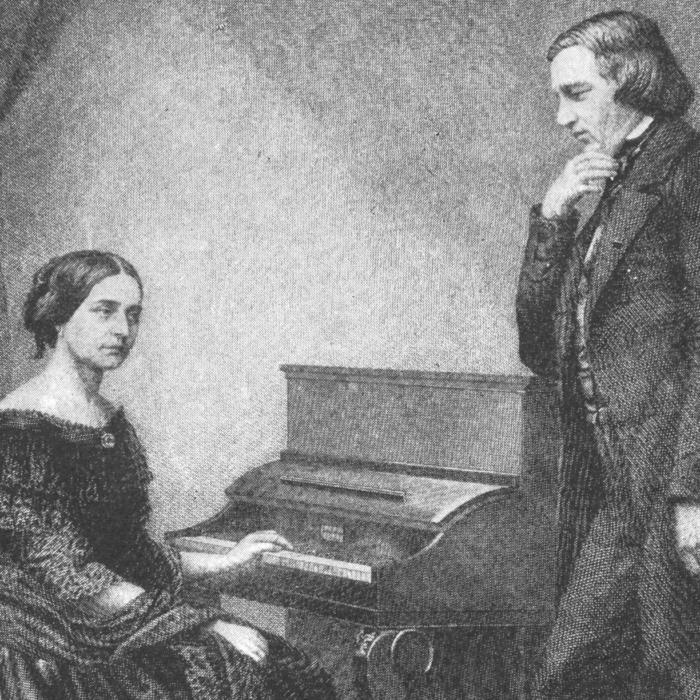
Clara was the wife of composer Robert Schumann and the love of Brahms’s life. Brahms and Clara had a mutual affection, but never developed it into more than a close friendship. Even after she was widowed, Clara never remarried, remaining faithful to the memory of her husband.Brahms’s love for Clara sometimes bled into his compositions through motifs and references. In the second movement we see him introduce a theme he used when referring to her—known as Clara’s Theme.
The entirety of the second movement is a series of musical sighs (a descending two-note gesture), followed by Clara’s Theme: The aged composer sighs repeatedly before saying her name. This tender phrase undergoes constant variations: He changes the harmony and he changes the shape. The feel of the music goes from a gentle glow to a sputtering flame; every restatement betrays his longing and regret.
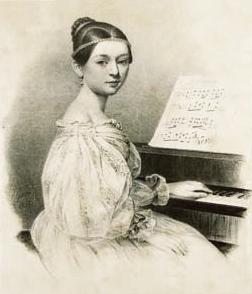
The eulogy for an impassioned and unfulfilled love concludes with Brahms whispering Clara’s name for the final time. Bliss and anguish, hope and resignation, linger on, softened by age yet inextinguishable by time.