Bach’s Genius
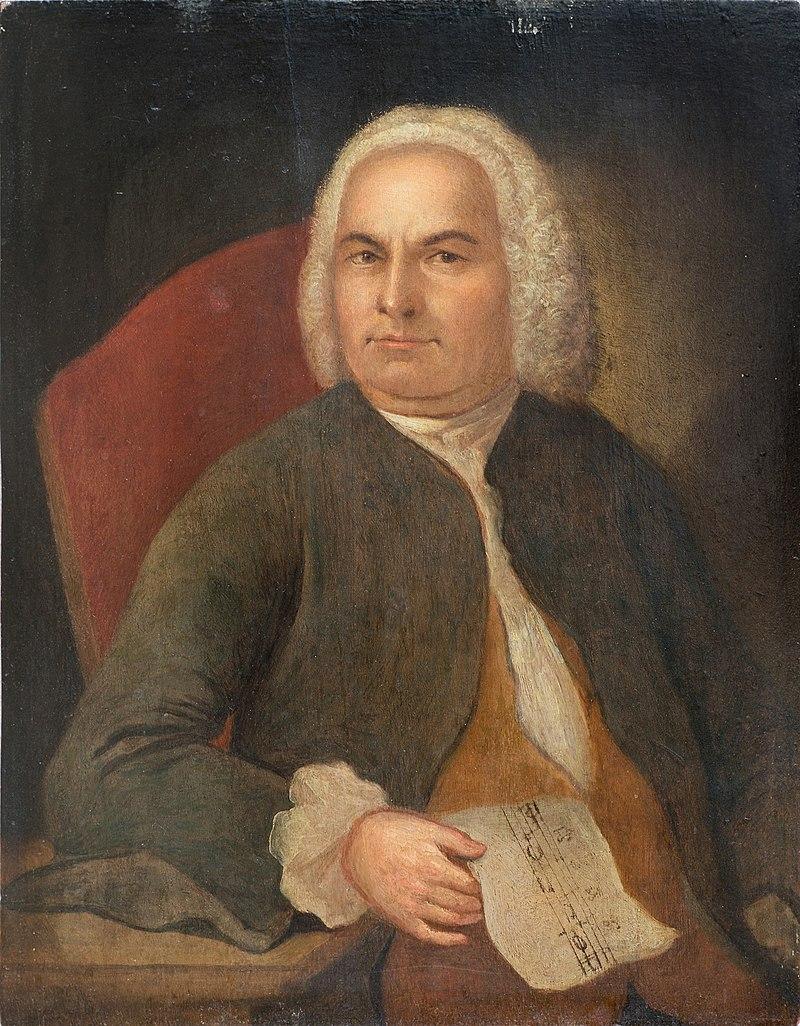
Johann Sebastian Bach (1685–1750) was not just an important composer in the history of Western art music, he was its summit, a composer who took everything that had gone before, every performance technique and every possibility of the major-minor key system, gathered these elements together, and produced a musical language that fueled both his own, vast ocean of musical works, and future centuries of masterpieces by others.
The Lutheran church was Bach’s musical anchor. From 1723 to his death 27 years later, Bach served as choirmaster for St. Thomas Church in Leipzig, Germany, a role that included overseeing music at four different Leipzig churches. He also taught Latin and music at St. Thomas school.
The Mass in B Minor

In scope and mastery, the Mass in B minor stands as a summation of Bach’s sacred music, a somewhat mysterious achievement given Bach’s Lutheranism. The ordinary of the Roman Catholic mass has five sections, but the Lutheran church recognized only the first two, the Kyrie and the Gloria.

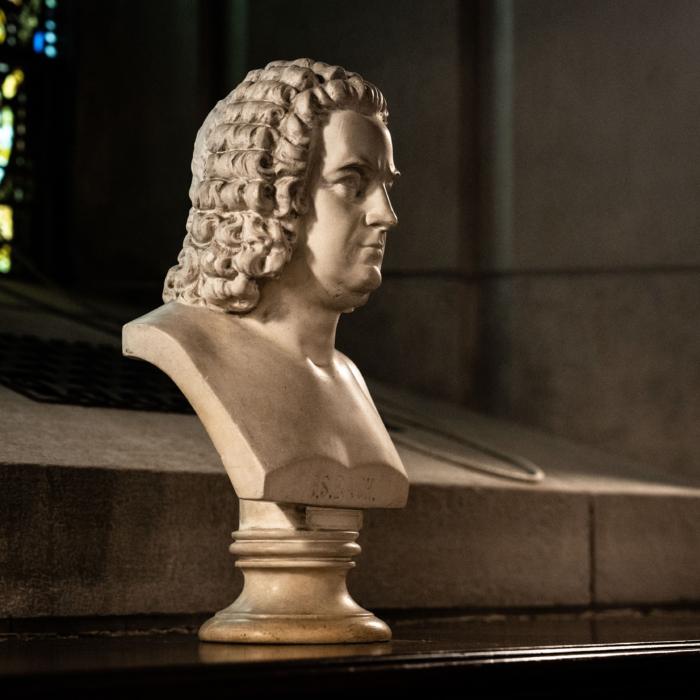
Bach set these two for choir and orchestra in 1733 after the death of Augustus the Strong, elector of Saxony and Bach’s sovereign, dedicating it to Augustus’ son and successor, Frederick August II. This selection is the final movement of this work, sometimes called “missa brevis” or short mass.
Then, near the end of his life and for no reason anyone has ascertained, Bach composed settings of the remaining sections: the Credo, Sanctus/Benedictus, and Agnus Dei, integrating them with the earlier Kyrie and Gloria for a complete mass scored for huge choral and instrumental forces, totaling nearly two hours in length.
The complete text of our selection is “Cum Sancto Spiritu in gloria Dei Patris. Amen.” “With the Holy Spirit in the Glory of God the Father, Amen.” These words cap the Gloria, the section of the mass given to the praise of God’s works.
Bach was the greatest master of fugue who ever lived, and, here, he uses his deft skills to introduce each voice separately in imitation until all five create a hypnotizing tapestry of sound. At 2:44, the expanded motif starts its final drive to the finish, a finale that feels also like a beginning.