Discord! Dissonance! Cacophony!
More, please.
“Danse Macabre” by Camille Saint-Saëns is one of those pieces you love for reasons opposite the usual. This short composition for solo violin and orchestra is not pretty; it is not grand nor profound. It’s rather a jarring ride into the depths of you-know-where. But fear not. The composer will be your Virgil.
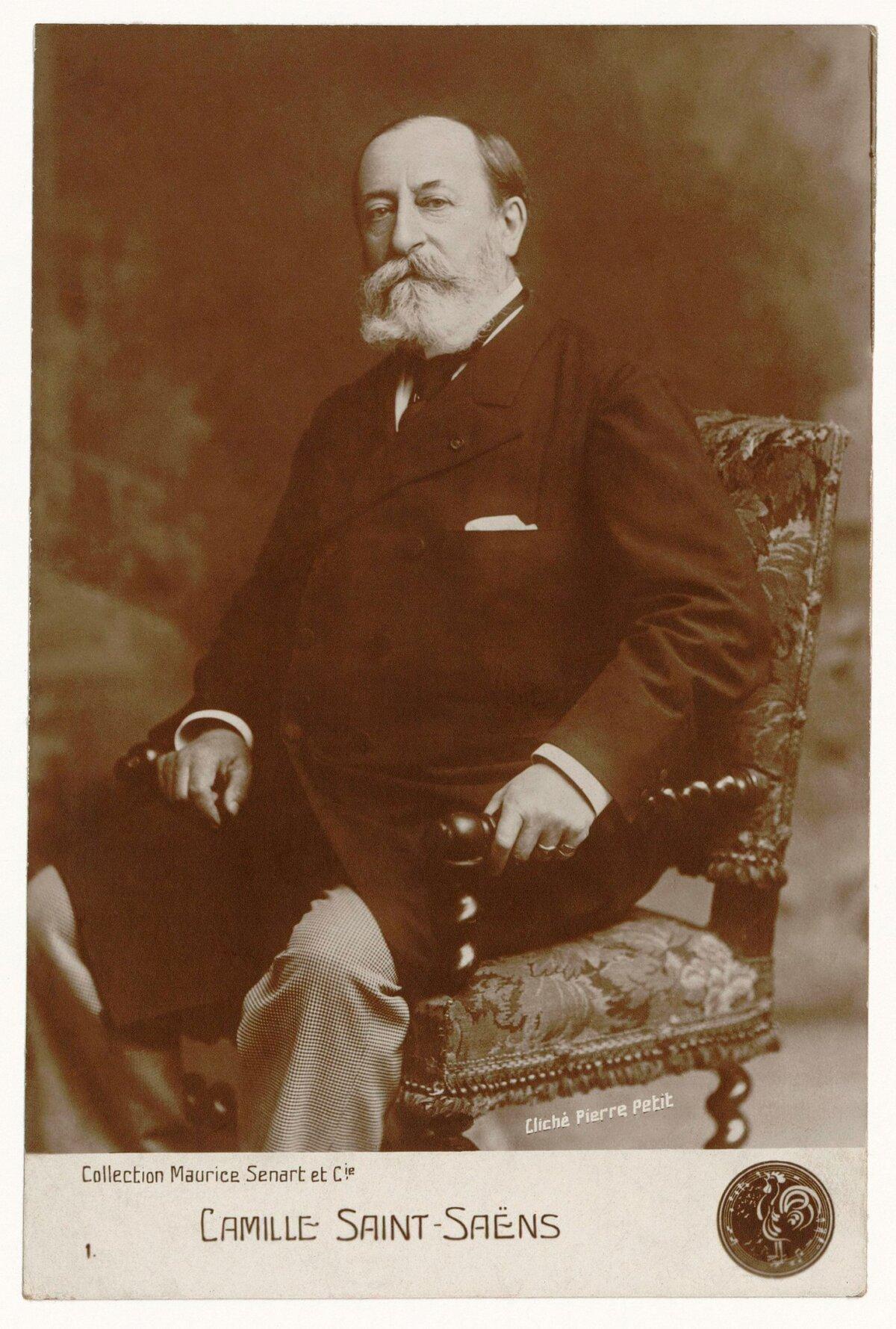
Saint-Saëns (1835–1921) was a French composer of symphonies, operas, and chamber music, whose best-known work is probably “The Carnival of the Animals.” The latter includes “The Swan,” a sweetly lyrical piece played by every cellist worthy of that title. If “Carnival” has a rival for Saint-Saëns’s most popular piece, it is surely “Danse Macabre.”
‘Danse Macabre’
The title comes from a medieval ritual: Death personified shows up at midnight on Halloween to claim the lives of people from every rank. Death leads them in a truly macabre dance to the grave. The purpose was to remind them of the false pursuit of vanity.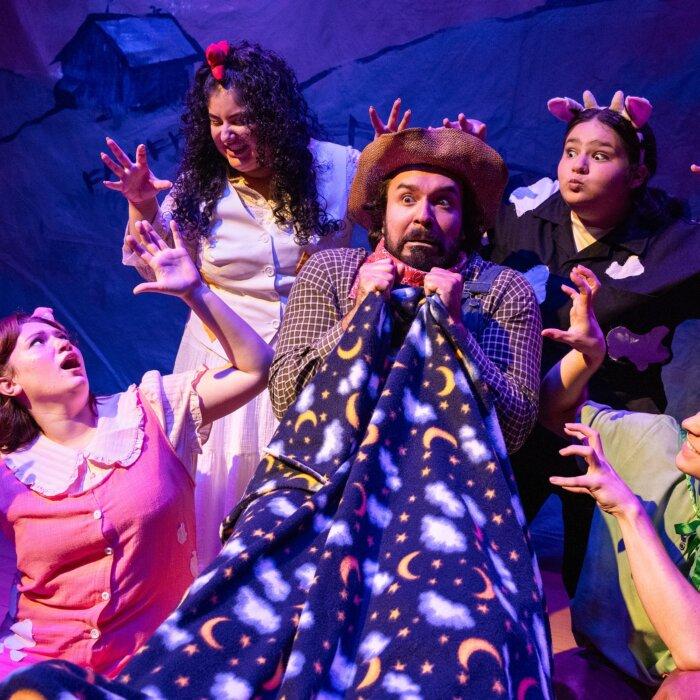

When Saint-Saëns unveiled his musical version of this allegory in 1875, it was not accepted with whole-hearted enthusiasm. According to music scholar Roger Nichols, some listeners complained about “horrible screeching from the violin” and “hypnotic repetitions.”
Today, however, “Danse Macabre” is frequently featured on pops programs at Halloween. It starts out as placidly as one might want: long notes on the harp, backdropped by soft horns and punctuated by even softer strings. This falls away as celli and basses pluck light pizzicato notes.
Then, what is that (0:26)? A solo violin (sometimes called “obbligato” because it does not exercise a concerto role) enters forte with the raucous dissonance of two notes that were once called “the devil in music.” In this case, the notes are A and E-flat. The top note, the E-flat, has an especially discordant feel to it as it is produced by re-tuning the violin’s top note from E-natural down to E-flat. Any ear accustomed to the violin’s usual tuning will be assaulted by this. In addition, the solo violin’s opening measures are generally played in “fiddle” style, without vibrato.
After this E-flat attack, the piece’s main theme (theme 1) is announced by a flute, backed by strings. It’s a simple, swirling waltz in G minor that soon transfers to the strings. The violin re-enters with theme 2 (0:47) that pulls down, ever down.
Most of the piece consists of the interplay of these two themes, including a treatment of the first theme by an unlikely instrument for the time, the xylophone (1:49). There is a spectacular passage at 5:35 that finds the strings playing theme 1 and the horns playing theme 2 in counterpoint.
For all its flurries of excitement, “Dance Macabre” ends gently, with a mournful, very un-dissonant melody in the solo violin.